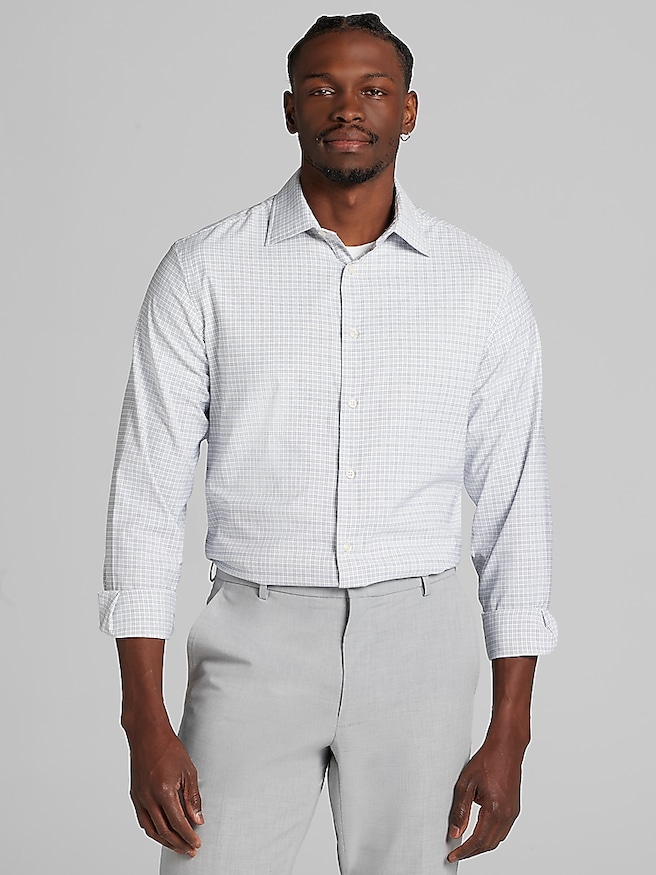
Medium check shirts bring the structure of a button-front shirt together with the easy character of a repeating pattern. Checks are formed by intersecting horizontal and vertical lines, creating squares that can look crisp and understated or relaxed and expressive. A medium-scale check sits between a tiny grid and a broad, oversized pattern, giving the fabric visible detail without letting the print dominate an outfit. Pattern scale and garment size are separate considerations: a shirt marked medium describes its sizing, not necessarily the dimensions of its checks. In many men’s size charts, medium corresponds to a chest measurement of approximately 38–40 inches, though neck, sleeve, and body measurements vary by maker and fit. Some charts associate medium with a 15–15.5-inch neck and 33–34-inch sleeves, but the individual size chart remains the more reliable reference. That distinction matters when choosing a shirt that needs to button comfortably at the collar, stay tucked through a full workday, or sit neatly over jeans. The pattern itself offers plenty of range. Two-color gingham has a regular, balanced appearance, while layered checks introduce additional lines and shades for more visual depth. Blue and white feels familiar alongside navy trousers; gray checks create a quieter contrast with black or charcoal; earthy combinations pair naturally with tan chinos and brown leather accessories. Softer contrasts tend to read as subtle texture from across a room, while sharply defined checks make a stronger impression. For office settings that welcome patterned shirts, dinners out, family gatherings, and everyday errands, this balance of color and structure makes checked shirting a useful wardrobe staple. It also suits someone building a first work wardrobe or looking for an alternative to solid shirts without moving into bold prints. As a gift, a checked shirt is most personal when its colors echo those the recipient already wears and its measurements match a shirt that fits comfortably.
Fabric gives medium check shirts much of their personality, affecting everything from the definition of the pattern to the way the sleeves fold back. Cotton is a familiar choice for its breathable feel and versatility, but the weave makes a noticeable difference. Poplin generally has a smooth surface that keeps check lines clear and looks tidy beneath a jacket. Oxford cloth has a more textured appearance and a substantial hand, making it a natural partner for chinos, denim, and less structured tailoring. Twill can offer a softer drape with a subtle diagonal texture, while brushed cotton adds a gently fuzzy finish that softens the look of the pattern. Linen and linen blends introduce visible texture and a relaxed character; their natural creasing is part of the appearance rather than a sign of poor quality. Cotton blends may provide easier care or added resilience, depending on the fibers and construction. A small amount of stretch can improve ease when reaching for a bag or sitting through a long meeting, although stretch does not replace adequate room across the chest and shoulders. Fit is especially noticeable in a checked shirt because pulling can distort the grid. A comfortable fit lets the front lie flat, with no strained gaps between buttons, and allows the shoulder seams to sit close to the shoulder edges. Slim cuts usually reduce excess fabric through the torso, while classic or regular cuts generally leave more space through the chest and waist. Those descriptions are not standardized, so measurements are more useful than the fit name alone. Sleeve length deserves the same attention: with arms relaxed, a long-sleeve cuff should reach around the wrist without swallowing the hand. Anyone comparing adjacent sizes can also explore Large Casual Shirts, keeping shoulder width, chest room, and sleeve length in mind rather than assuming that a larger label solves every fit issue. Hem length also shapes intended use, with longer shirttails supporting a secure tuck and shorter hems often looking more balanced worn untucked.
The most wearable checked shirts have details that make sense for the way they will be used. A button-down collar helps keep the collar points in place and gives the shirt an approachable appearance with chinos or dark denim. A spread or point collar can work well beneath a blazer, particularly when the fabric is smooth and the check has restrained contrast. For a business-casual outfit, navy trousers and a brown belt give a blue checked shirt a clear, uncomplicated setting. For a dinner reservation, dark jeans with a clean finish and leather shoes can carry the same shirt in a more relaxed direction. Checks also pair well with solid knitwear, leaving a little pattern visible at the collar and cuffs. When adding a tie, a solid color drawn from the shirt is an easy way to keep the outfit cohesive; another pattern needs enough difference in scale to remain visually distinct. Durability depends on fabric and construction as much as appearance. Even stitching, securely attached buttons, neatly finished seams, and well-formed buttonholes are useful quality indicators, especially for shirts that will see frequent wear. Pattern alignment at prominent seams or pockets can contribute to a polished finish, though it does not determine strength on its own. Care should follow the garment label, since fiber blends, finishes, and trims can require different treatment. For machine-washable shirts, washing with similar colors and avoiding excessive heat can help preserve the fabric and reduce unnecessary wear. Prompt removal after washing or drying makes wrinkles easier to manage, and smoothing the collar, placket, and cuffs before hanging helps retain a neat shape. Ironing or steaming, when permitted by the care label, gives crisp fabrics a cleaner finish without requiring every casual shirt to look pressed flat. With a comfortable fit, a useful color combination, and care suited to the fabric, a medium check shirt can move easily between professional and personal occasions while bringing more depth to an outfit than a plain solid.