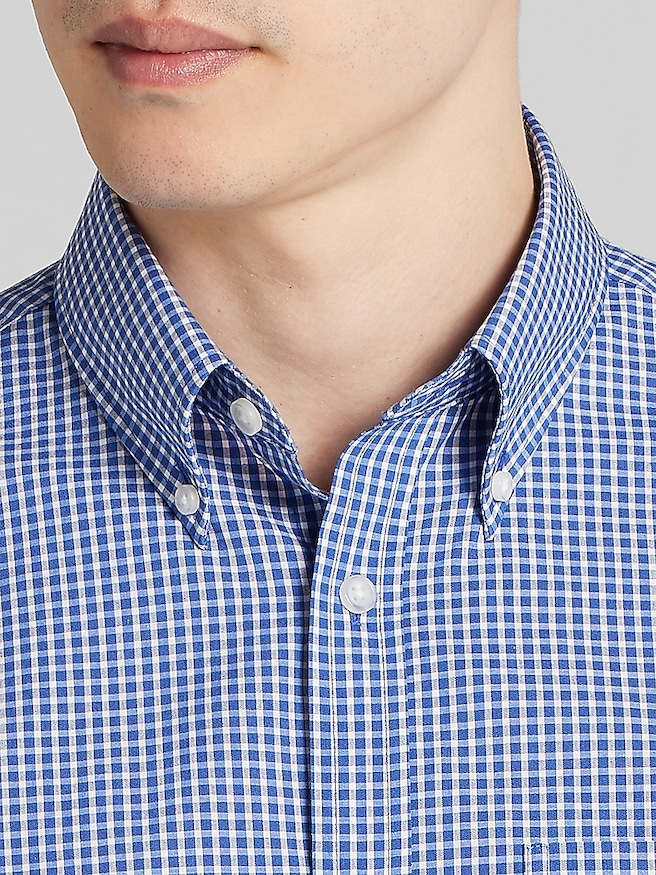
Men’s small-check shirts feature a closely spaced grid pattern that adds detail without dominating an outfit, making them a versatile choice for office wear, business-casual dressing, and relaxed occasions. The compact scale is their defining feature: small checks remain visible up close but often read as a subtle texture from across a room. Micro-check patterns take that effect further, with very fine lines and squares that can look almost solid at a distance. Unlike larger, bolder checks, these patterns sit comfortably beneath a suit jacket or sport coat without competing for attention. The result is a shirt with enough character to wear on its own and enough restraint to work with tailored clothing. Color contrast makes a meaningful difference, too. A pale background with fine blue or gray lines creates a quieter impression, while darker checks against a light ground give the pattern more definition. With solid dress pants, either approach brings visual interest to an otherwise straightforward outfit. Navy trousers and a light small-check shirt can feel composed for a client meeting, while the same shirt with chinos looks more relaxed at dinner. When a tie is part of the outfit, a solid color keeps the combination simple; a larger-scale stripe or other clearly distinct pattern can also work without creating a crowded effect. Collar construction helps determine the overall impression. A point or spread collar typically supports a dressier look, especially beneath a jacket, while a button-down collar brings a more relaxed character and keeps the collar points secured. Small checks can appear in both dress shirts and casual shirts, so the fabric, collar, cuffs, and hem matter as much as the pattern itself. That balance makes the category useful for men whose schedules move from a desk to a restaurant, a presentation to a gathering, or a polished weekday outfit to an easy weekend combination.
Fabric and fit shape how a small-check shirt feels over a full day. Cotton is a common choice because it is breathable, absorbent, and comfortable against the skin, though the weave changes its texture and drape. Poplin generally has a smooth, relatively crisp surface that gives fine checks a clean appearance. Twill has a diagonal weave and often a softer drape, while Oxford cloth has a more noticeable woven texture that tends to feel less formal. Cotton blends can offer additional wrinkle resistance or easier maintenance, depending on their composition and finish. Fabrics with a small amount of stretch may provide extra give when reaching across a desk or sitting for an extended period, but stretch does not replace a well-proportioned fit. The shoulders should sit near the natural shoulder edge, and the chest should allow movement without pulling the button placket open. A check pattern makes tension especially easy to notice because the grid can distort where the fabric is strained. At the waist, a comfortable amount of room helps the shirt fall cleanly rather than bunching beneath a jacket or billowing above a waistband. Slim, tailored, and traditional fits describe different silhouettes, but their measurements vary, so the size chart remains more useful than the fit name alone. Sleeve length matters as well: with the arms relaxed, a dress-shirt cuff should sit around the wrist, with enough ease to bend the elbow comfortably. A collar worn with a tie needs room to close without pinching or leaving an obvious gap. Importantly, “small check” describes the pattern, not the garment size; someone who needs a smaller shirt size can explore Men's Small Shirts while considering the same shoulder, chest, neck, and sleeve measurements. Hem length also affects everyday use. Longer, curved shirttails generally stay tucked more securely, while a shorter hem intended for untucked wear creates a cleaner casual line. These details help a shirt look intentional whether it is worn beneath a blazer, tucked into dress pants, or left untucked with well-fitting jeans.
Thoughtful care helps preserve both the appearance of the checks and the structure of the shirt. The care label should determine washing, drying, and ironing methods, since fiber blends, finishes, and construction can call for different treatment. For washable shirts, sorting by color and avoiding an overloaded machine can reduce unnecessary rubbing and allow more even cleaning. Promptly removing a shirt after the wash or drying cycle helps limit deep creases, and smoothing the collar, placket, and cuffs before hanging can make later pressing easier. When ironing is appropriate, the recommended heat setting matters more than trying to force every wrinkle out with extra heat. Easy-care and wrinkle-resistant finishes may reduce maintenance, but they do not necessarily eliminate the need for touch-ups. Durability also depends on details such as secure buttons, neat seams, and reinforced high-stress areas, along with a fit that does not place constant tension across the back or chest. Small checks can make a shirt practical across many occasions, but good construction and consistent care are what help it remain presentable through repeated wear. For a workday, a smooth finish and a clean tuck keep the pattern looking sharp; for a casual lunch, an open collar and neatly rolled sleeves give it an easier feel. Beneath a fine-gauge sweater, the checks provide a measured accent at the collar and cuffs without overwhelming the layers. As a gift for a partner, father, brother, or friend, a small-check shirt can be a useful choice when the recipient’s measurements, preferred fit, and usual dress habits are known. Someone who wears a tie regularly may appreciate a structured collar, while someone who mostly wears chinos may prefer a softer construction. The strongest match is not simply a pattern that looks appealing on a hanger, but a shirt whose proportions, fabric, and care requirements fit naturally into the wearer’s routine.