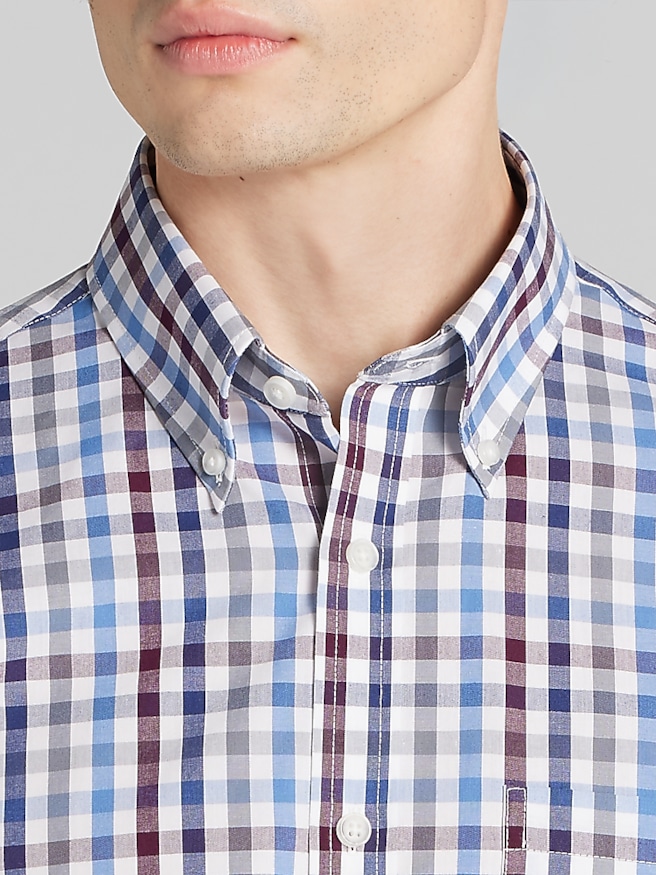
Men’s button-down check shirts bring a measured dose of pattern to everyday dressing, from a neat gingham worn with chinos to a small grid check tucked into tailored trousers. Their appeal lies in that balance: the pattern adds interest, while the familiar shirt shape keeps an outfit easy to put together. A true button-down collar has points that fasten to the shirt front, helping the collar stay in place whether it is worn open at the neck or beneath a jacket. That detail distinguishes a button-down from the broader button-up category, which describes shirts with a full front button closure. Within the wider family of Men's Button Shirts, checked button-downs bridge relaxed and more polished looks without requiring an elaborate outfit. Gingham typically uses evenly spaced, overlapping bands that create a regular check; windowpane patterns feature larger, open squares; and mini checks produce a quieter effect that can look almost solid from a distance. Plaid generally combines intersecting bands in varied widths and colors, giving it a less uniform appearance than a simple check. Pattern scale makes a noticeable difference in how a shirt reads. A fine blue-and-white check can sit comfortably beneath a navy sport coat for an office meeting, while a bolder grid pairs naturally with dark denim for dinner with friends. Lower-contrast colors tend to blend into an outfit, whereas crisp light-and-dark combinations make the shirt more prominent. Solid trousers provide a straightforward foundation for either approach. When a tie is appropriate, a solid texture or a pattern with a noticeably larger scale helps keep the combination from looking crowded. These shirts suit business-casual workplaces, campus days, family gatherings, and weekend plans, although a checked button-down generally has a more relaxed character than a plain dress shirt chosen for a strict formal dress code.
Fabric and construction shape the experience of wearing a checked shirt as much as its color does. Cotton is a familiar choice for its breathable feel and ability to soften with repeated washing, though its texture and weight depend on the weave. Poplin generally has a smooth, relatively flat surface that gives a small check a clean outline. Oxford cloth has a more visible basket-weave texture and a substantial hand, making it especially well suited to the easygoing character of a button-down collar. Twill is recognizable by its diagonal weave and often has a supple drape, while brushed cotton has a softer, more textured surface. Cotton blends may add wrinkle resistance or other easy-care qualities, depending on the fibers and finishing involved. Fabric with a small amount of stretch can provide extra give across the shoulders and elbows, particularly for someone who spends the day moving between a desk, a commute, and appointments. Stretch does not replace the need for a good fit, however. Shoulder seams should sit near the edge of the shoulders, and the button placket should lie flat rather than pull open across the chest or waist. A slim fit usually follows the torso more closely, a classic fit typically offers additional room, and a relaxed fit allows a looser silhouette; the exact proportions vary, so measurements matter more than the fit name alone. Sitting down, reaching forward, and bending the elbows reveal whether there is enough room for normal movement. Long sleeves should reach the wrist without swallowing the hand, with cuffs that close comfortably and accommodate a watch when needed. Hem length also affects intended use. A longer, curved hem helps a shirt remain tucked during a workday, while a shorter hem designed for untucked wear creates a tidier line over jeans or chinos. Under a sweater or jacket, a shirt with enough room to move but little excess fabric at the waist is less likely to bunch.
The most useful men’s check shirts are the ones whose fabric, fit, and care requirements suit the way they will actually be worn. For a desk-based work routine, a smooth fabric, restrained check, and collar that sits neatly beneath a jacket can make repeated outfit combinations feel consistent without looking identical. For casual use, a more pronounced texture or larger check gives simple trousers a distinct focal point. Small details influence that everyday usefulness: a chest pocket adds a casual note and a convenient place for lightweight essentials, adjustable cuffs help refine the wrist opening, and securely attached buttons support regular wear. Even stitching, neatly finished seams, and a placket that lies smoothly are practical construction details worth noticing. Pattern alignment at prominent seams or across the front can contribute to a more considered appearance, although perfect matching everywhere is not a universal feature. Long-term durability depends on both construction and maintenance. The care label should determine washing temperature, drying method, and whether ironing is appropriate, since cotton, blends, stretch fabrics, and special finishes do not all respond the same way. Separating light and dark colors and treating collar or cuff marks promptly can help preserve a crisp-looking check. Excessive dryer heat can contribute to shrinkage or wear, so following the recommended settings matters more than treating every shirt alike. Removing a washable shirt promptly after its cycle and smoothing the placket, collar, and cuffs can reduce creasing; wrinkle-resistant or non-iron descriptions do not mean that care instructions can be ignored. A checked button-down can also be a thoughtful gift for a graduate, a partner, or someone building a versatile work wardrobe. A familiar color combination and a fit based on a shirt the recipient already wears are more useful starting points than guessing from appearance alone. Whether worn tucked with leather shoes or untucked with clean sneakers, the lasting appeal is practical: recognizable pattern, comfortable movement, and enough polish for the ordinary occasions that fill a week.