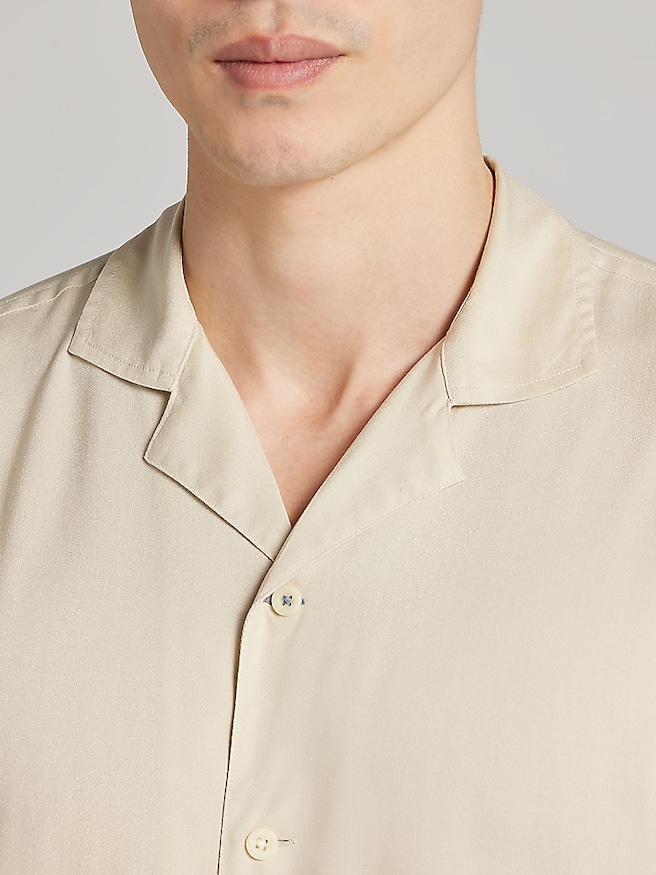
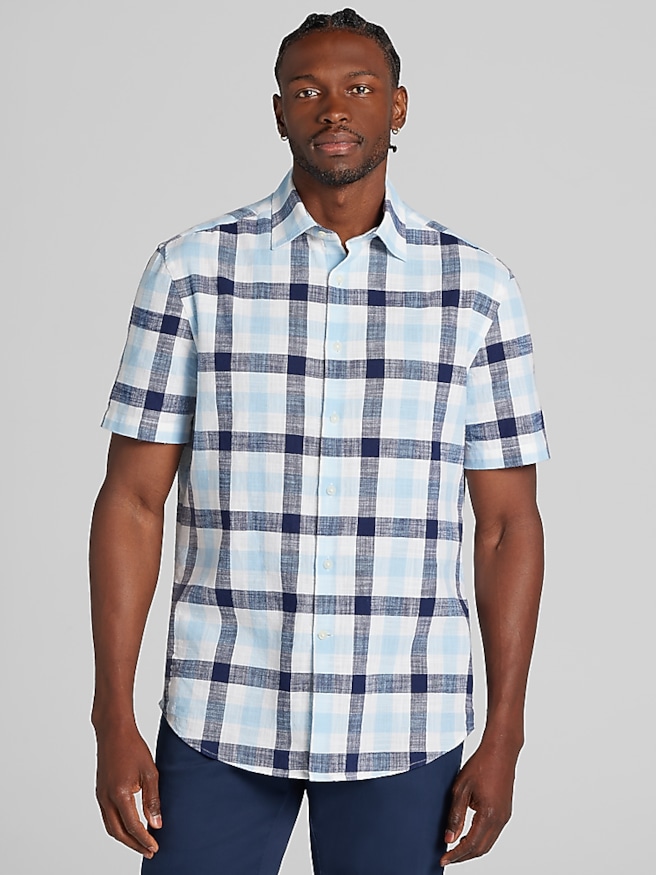
Large casual shirts are everyday tops in a large size, including casual button-front shirts, polos, and knit styles that work with jeans, chinos, and other easygoing wardrobe staples. The large designation describes size, not necessarily the shape of the shirt: a large slim-fit shirt can sit closer to the body than a large regular-fit or relaxed-fit style. It also does not automatically mean big-and-tall sizing, which may involve additional width, length, or both. Measurements matter more than the letter on the label, especially across shirts with distinct cuts and fabrics. Chest room, shoulder placement, sleeve length, and overall length all influence how a shirt looks and feels through a full day. On a traditional set-in sleeve, the shoulder seam generally sits near the edge of the shoulder, while the chest should have enough ease for reaching forward or sitting comfortably without pulling the buttons apart. A little room through the midsection helps the fabric fall naturally rather than cling or gather. For long sleeves, cuffs should rest near the wrist without slipping over the hand; short sleeves should allow comfortable movement without squeezing the upper arm. A shirt intended to be worn untucked usually looks balanced when its hem covers the waistband without extending so far that it overwhelms the pants. Shirts designed for tucking typically need more length to stay in place when the wearer bends or reaches. These details are especially noticeable in ordinary moments, such as leaning across a restaurant table, driving, or carrying a bag over one shoulder. Someone with broad shoulders may need more space across the upper back, while someone with a fuller midsection may prefer a straighter body shape. A roomy fit does not have to look shapeless, and a neat fit should not restrict movement. The most useful large casual shirts balance a clean outline with enough ease to make everyday activities feel natural.
Fabric gives a casual shirt much of its character, from the softness against the skin to the way the collar and hem hold their shape. Cotton is a familiar choice for its comfortable feel and absorbency, although its weight, weave, and finish can make one cotton shirt feel quite distinct from another. Cotton jersey has the flexible feel associated with T-shirts, while piqué offers the lightly textured surface often found in polos. Oxford cloth has a visible basketweave and a more substantial hand; chambray creates a subtle two-tone appearance through contrasting yarns. Twill has a diagonal weave that can give a shirt a smooth drape and sturdy feel. Linen has a distinctive texture and naturally develops creases, making it a good match for an easygoing appearance rather than a perfectly pressed finish. Cotton blends can combine familiar softness with other qualities, such as reduced wrinkling or quicker drying, depending on their composition. A small amount of stretch may help a woven shirt move more comfortably across the shoulders and elbows, but stretch does not replace choosing the correct size. Knit fabrics generally have more natural give than woven fabrics, so two shirts with similar measurements can feel noticeably different when worn. Fabric weight also affects whether a shirt falls softly, holds a crisp outline, or works comfortably over another top. For shoppers comparing roomier silhouettes, Casual Fit Shirts offers a related category to explore alongside large sizing. Durability depends on both the fabric and the construction, including even seams, secure buttons, and neatly finished edges. Collars, cuffs, and areas around buttonholes receive repeated handling, making their construction particularly relevant for frequently worn shirts. A substantial fabric may offer a structured look, while a lighter fabric may provide a softer drape; neither quality alone determines how long a shirt will last. Matching the fabric and finish to the way the shirt will be worn is more useful than judging quality by thickness alone.
Large casual shirts suit a wide range of routines, from a relaxed office setting to dinner with friends, family gatherings, and days spent running errands. A solid polo with chinos can look composed without the formality of a dress shirt, while a casual button-front shirt with dark denim offers a similarly balanced combination. Small checks, narrow stripes, and subtle textures add interest without requiring much coordination; broader patterns make the shirt a more visible part of the outfit. Color can serve a practical purpose, too. Neutral shades work easily with several pairs of pants, while a richer color can give familiar basics a fresh look. An open button-front shirt over a simple tee creates another option, provided there is enough room through the chest and arms for the extra layer. The neckline of a polo, the shape of a collar, and the length of a hem all contribute to how polished or relaxed the result feels. Care is equally important for keeping that appearance consistent. The garment’s care label is the best reference for washing, drying, and ironing because fabric blends, dyes, and finishes have distinct requirements. Excessive dryer heat can contribute to shrinkage in some fabrics, and leaving shirts tightly packed after drying can set in wrinkles. Promptly hanging or folding a clean shirt helps preserve its shape, while smoothing the collar and button placket can make everyday dressing simpler. Small repairs, such as securing a loose button before it detaches, can extend useful wear. Large casual shirts can also make thoughtful gifts for a partner, father, brother, or friend, especially when the recipient’s preferred size and fit are already known. A familiar color palette, comfortable fabric, and a silhouette similar to a well-liked shirt are practical starting points. For personal wardrobes and gifts alike, the lasting appeal comes from a shirt that feels comfortable, coordinates easily, and holds up to regular use.