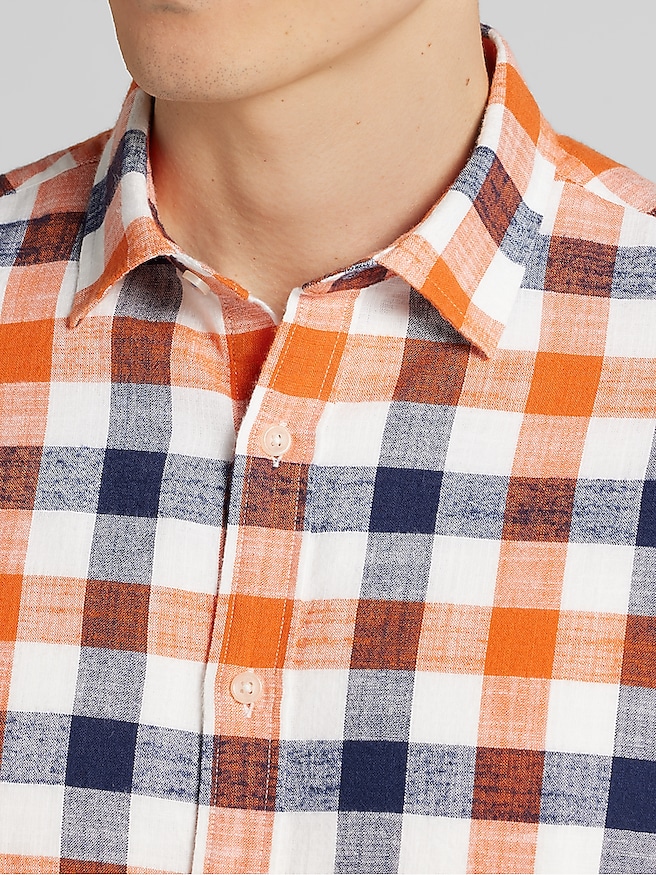
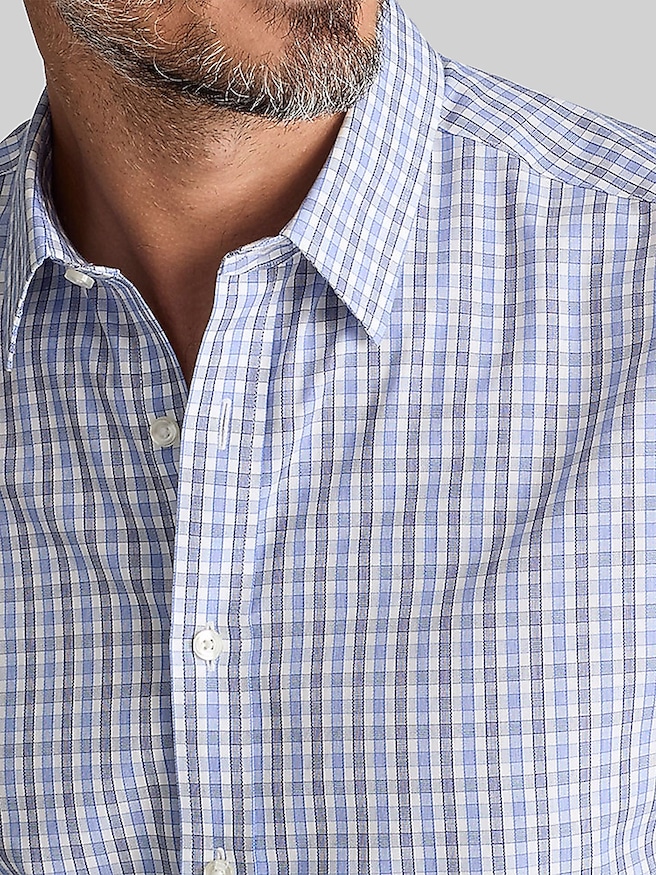
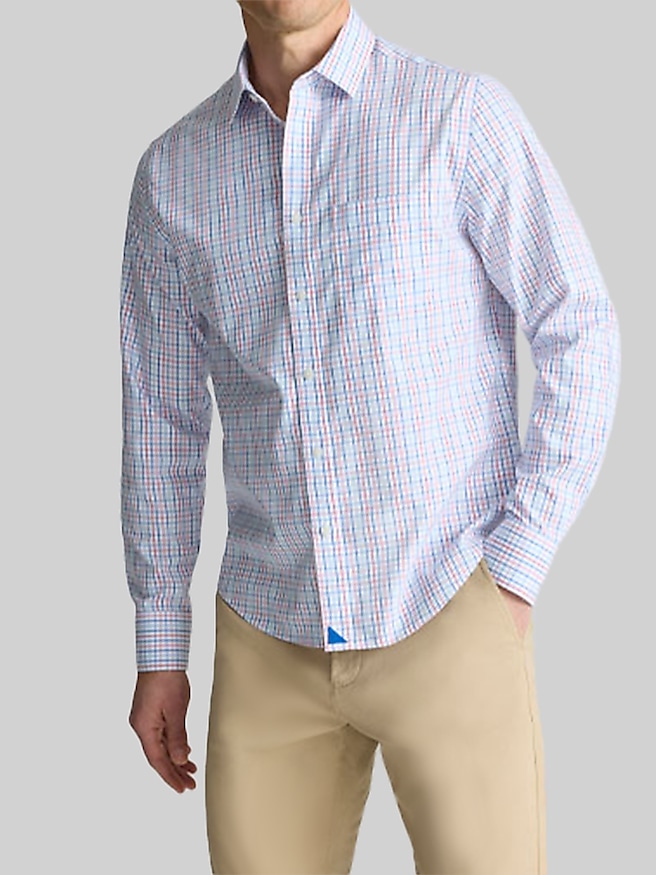
Blue check shirts for men bring color and definition to an outfit without demanding that everything else compete for attention. The appeal starts with the pattern: intersecting lines break up a solid field of blue, creating anything from a quiet, almost textured effect to a bolder grid that stands out across a room. Small checks generally feel more restrained, making them a natural companion to tailored pants and understated jackets. Larger checks have a more relaxed presence, particularly when the contrast between blue and white is pronounced. Pale blue checks can soften the look of a charcoal suit, while deeper navy patterns create a crisp outline against khaki chinos or light gray trousers. There is plenty of room between those two moods. A medium-scale check can look polished at a desk, comfortable at a family lunch, and considered enough for a dinner reservation without requiring a complete change of clothes. The key is how the pattern works with the rest of the outfit. Solid pants give the lines room to register, while a jacket in a subtle texture adds depth without introducing another strong motif. For an office that expects a tie, a solid navy option keeps the combination focused; a tie with a distinctly larger pattern can also work when its colors remain restrained. Blue is especially useful because it sits comfortably beside brown leather shoes, black accessories, gray tailoring, and the familiar tones of denim. Dark, clean-lined jeans tend to make the shirt feel more intentional than heavily distressed denim does. These shirts suit men who enjoy some visual interest but still want clothes that are easy to coordinate. They can become a dependable part of a work rotation, a familiar choice for social plans, or an approachable step beyond plain shirts for someone building a more varied wardrobe. The check supplies personality, while the blue foundation keeps the overall impression grounded.
Fabric and construction shape the experience of wearing a blue check shirt just as much as its color does. Cotton is valued for its softness and breathability, though the weave affects whether it feels smooth and crisp or more substantial and textured. Poplin typically has a fine, even surface that gives small checks clear definition. Oxford cloth has a more noticeable woven texture and often carries a relaxed character, while twill has a subtle diagonal structure that can lend the fabric a softer drape. Cotton blends may offer practical benefits such as easier wrinkle management or added flexibility, depending on the fibers and finishing involved. A small amount of stretch can make reaching for a laptop bag or sitting through a long meeting more comfortable, but it does not replace a well-proportioned fit. Across the shoulders, the shirt should lie smoothly rather than pull toward the neck or droop noticeably beyond the shoulder line. The chest needs enough room for natural movement without the button placket opening into small gaps. A slimmer cut creates a closer outline under a jacket, while a roomier cut can suit men who prefer more space through the torso. Neither silhouette should feel restrictive when seated. Sleeve length matters, too: cuffs should meet the wrist neatly rather than slide far over the hand, with enough ease to accommodate a watch. Collar shape adds another layer of character. A button-down collar holds its points in place and often looks comfortable worn open, whereas a spread or point collar can support a more tailored presentation. For a broader look at the pattern across that familiar shirt category, Men's Button Down Check Shirts offers a related direction to explore. Hem shape also influences intended use. Longer, curved tails help a shirt remain tucked during movement, while a shorter hem designed for untucked wear creates a cleaner finish over chinos or jeans. Small details like these determine whether a shirt feels natural throughout the day or needs repeated adjustment.
A blue check shirt earns its place in a wardrobe when it balances appearance with the practical demands of repeated wear. Smooth seams, secure buttons, and neatly finished buttonholes are useful details to assess because they affect both comfort and longevity. At the collar and cuffs, tidy construction helps preserve a clean outline in the areas that receive frequent handling. Pattern alignment can contribute to a composed appearance, especially along the front placket, though matching at every seam is not a universal measure of quality. Care requirements deserve equal attention. The garment’s care label is the best source for washing, drying, and pressing instructions, since fiber content, dyes, and finishes can call for distinct treatment. Separating compatible colors, treating marks promptly with an appropriate method, and avoiding unnecessary heat can help maintain the fabric’s appearance. Removing a washable shirt promptly at the end of the recommended cycle and smoothing the placket, collar, and cuffs before hanging can reduce the effort needed later. If ironing is permitted, the correct setting matters more than pressing harder; excessive heat can affect some blends and finishes. A sturdy hanger gives the shoulders support between wears, and allowing space around the shirt helps prevent fresh creases. These habits are particularly useful for men who rely on checked shirts for recurring office days, client visits, or regular dinners out. For travel, a blue check can anchor several outfits because it coordinates readily with a compact selection of solid pants and jackets, although wrinkle resistance depends on the fabric rather than the pattern itself. It can also make a thoughtful gift for a father, partner, brother, or friend whose size and preferred fit are known. Matching the recipient’s habits is more useful than choosing the boldest check: someone who usually wears understated tailoring may appreciate a fine blue grid, while someone drawn to casual outfits may prefer a larger pattern and a softer feel. With suitable proportions and thoughtful care, a blue check shirt can offer a balance of polish, comfort, and recognizable personal style.