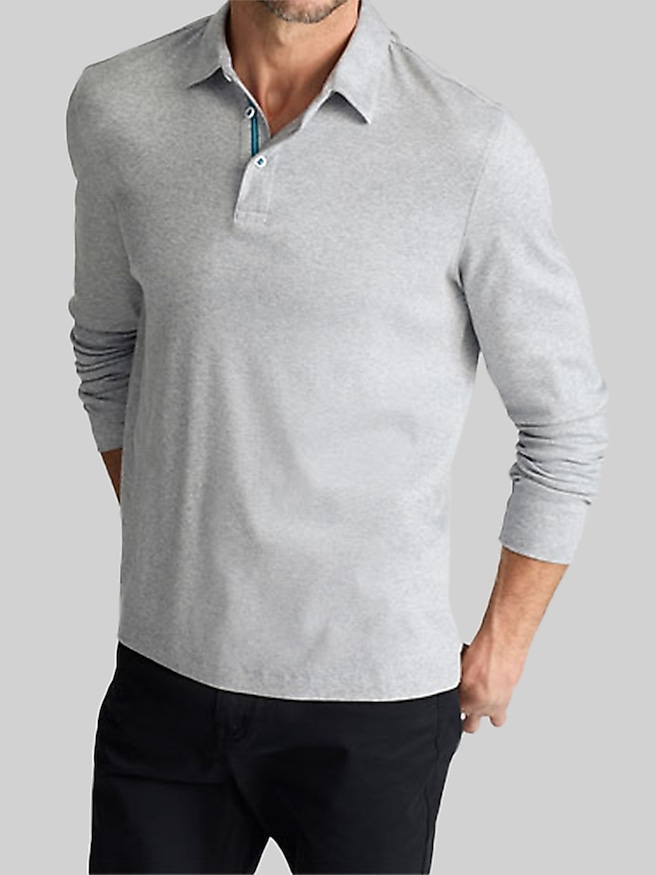
Long sleeve polo shirts combine the collar and buttoned neckline of a traditional polo with full-length sleeves, creating a comfortable option between a T-shirt and a woven button-down. Their appeal comes from that balance: a collar adds definition around the face, while a knit body allows the shirt to move naturally through a day of desk work, errands, or dinner with friends. For men whose workplace permits collared knit shirts, a long sleeve polo can pair neatly with chinos, leather loafers, and a simple belt. Dark denim and clean sneakers make the same silhouette more relaxed, while tailored trousers and a sport coat give it a sharper finish without requiring a tie. The collar should sit comfortably beneath a jacket rather than bunching against the lapels, and a relatively smooth fabric keeps the combination from looking bulky. Solid colors create an understated foundation, with navy, charcoal, and black offering easy coordination and lighter neutrals providing contrast against dark pants. Stripes and subtle textures add interest without needing extra accessories. Fit makes as much difference as color. A shoulder seam that sits close to the edge of the shoulder generally creates a clean outline, and the body should leave enough room to sit, reach, and bend without pulling across the chest or stomach. A slim silhouette follows the torso more closely; a regular fit provides additional ease without necessarily looking oversized. Sleeves work best when the cuffs meet the wrist without covering the hand or pulling upward during ordinary movement. Ribbed cuffs can help hold the sleeve in place, while an open cuff creates a looser finish. Shirt length also affects how a polo wears: a hem that falls comfortably below the waistband can look balanced untucked, while sufficient length helps a tucked shirt stay secure when seated. Side vents can give the hem room to move over the hips, especially when the shirt is worn outside the waistband.
Fabric gives long sleeve polos much of their character, influencing texture, drape, comfort, and care. Cotton piqué has a small, raised knit pattern that adds visual depth and can give the shirt a more structured appearance. Its texture is particularly noticeable in solid colors, where the fabric itself supplies interest. Cotton jersey has a smoother surface and often a softer, more relaxed drape, making it well suited to casual combinations with denim or unstructured pants. Interlock knits typically have a substantial, even surface that can feel smooth against the skin and create a tidy silhouette. Actual weight and softness vary with yarn quality and construction, so fabric names alone do not tell the whole story. Fine-gauge wool or merino wool can bring a sweater-like quality to a polo, with a refined surface that works well alongside tailored clothing. Cotton blends may combine the familiar feel of cotton with fibers chosen for resilience, stretch, or drying performance. A small amount of elastane can provide flexibility through the shoulders and elbows, useful for driving, reaching across a desk, or moving through a busy day. Polyester and nylon blends may dry more quickly than all-cotton fabrics, though moisture management and wrinkle resistance depend on the complete fabric and any finishing treatments. For active use, freedom of movement and how the fabric handles perspiration matter more than the polo silhouette alone. Construction deserves attention as well. Even stitching, secure buttons, and a neatly finished placket help a shirt maintain a polished appearance through repeated wear. A collar with enough structure to lie flat frames the neckline more cleanly than one that curls or collapses. Dense knitting can support shape retention, but excessive weight is not automatically a sign of better quality. The most useful balance is a fabric that feels comfortable, falls cleanly, and has seams and edges suited to regular use.
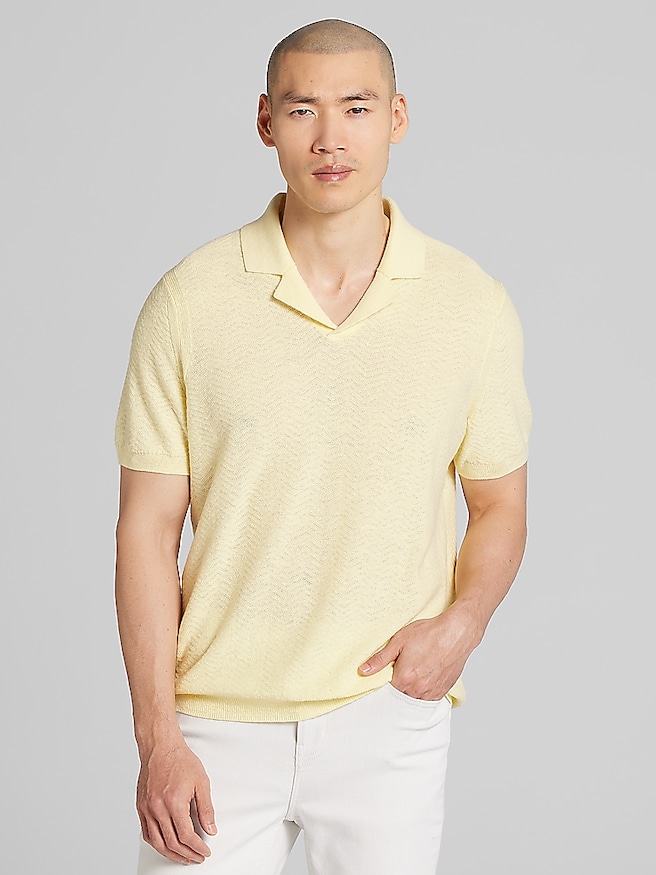
Care requirements vary by fiber, knit, and finish, making the garment’s care label the best reference for washing and drying. Many cotton and cotton-blend polos can be machine washed, while some fine-knit styles call for a gentle cycle, hand washing, or professional cleaning. When machine washing is permitted, washing with similar colors and turning the shirt inside out can help limit surface abrasion. Avoiding excessive heat is especially important for fabrics prone to shrinkage and blends containing stretch fibers. Prompt stain treatment with a method appropriate to the fabric can reduce the need for repeated washing or aggressive scrubbing. A cuff that brushes a desktop or a collar that rests against the neck may need attention even when the rest of the shirt looks clean. Reshaping the collar, placket, and cuffs after washing helps preserve their outline; heavier knits may benefit from drying flat when the label recommends it. Folding can also prevent the shoulder distortion that hanging sometimes causes in soft, weighty fabrics. Some surface fuzz or pilling may develop with friction, particularly where sleeves rub against the body, and gentle treatment is preferable to pulling at the fibers. These practical details matter for a shirt intended to move between office hours, travel days, and relaxed plans without looking tired after a few wears. Long sleeve polo shirts can also make thoughtful birthday gifts for a father, brother, partner, or friend who already favors collared casual clothing. A familiar color, comfortable fit, and manageable care routine are often more useful than a bold pattern that falls outside the recipient’s usual wardrobe. Comparing measurements with a well-fitting shirt can help clarify sizing, particularly through the chest and sleeves. For another take on the same collared silhouette, men's short sleeve polos provide an alternative sleeve length for everyday outfits. The full-length version brings its own visual balance: a defined collar, a clean line through the arms, and a cuff that finishes neatly at the wrist. Paired with clothing that matches the setting, it offers a composed look without the stiffness of a more formal shirt.