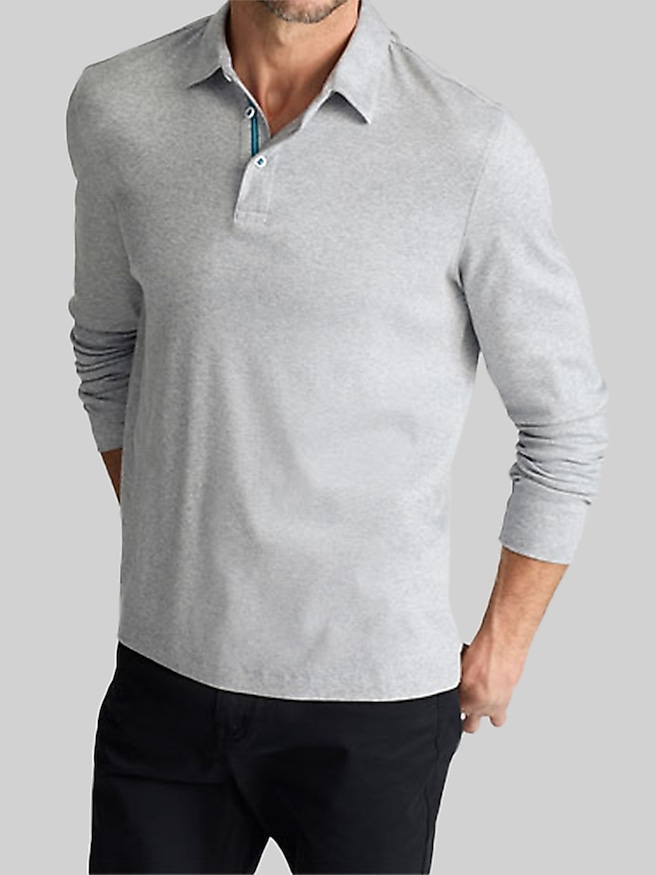
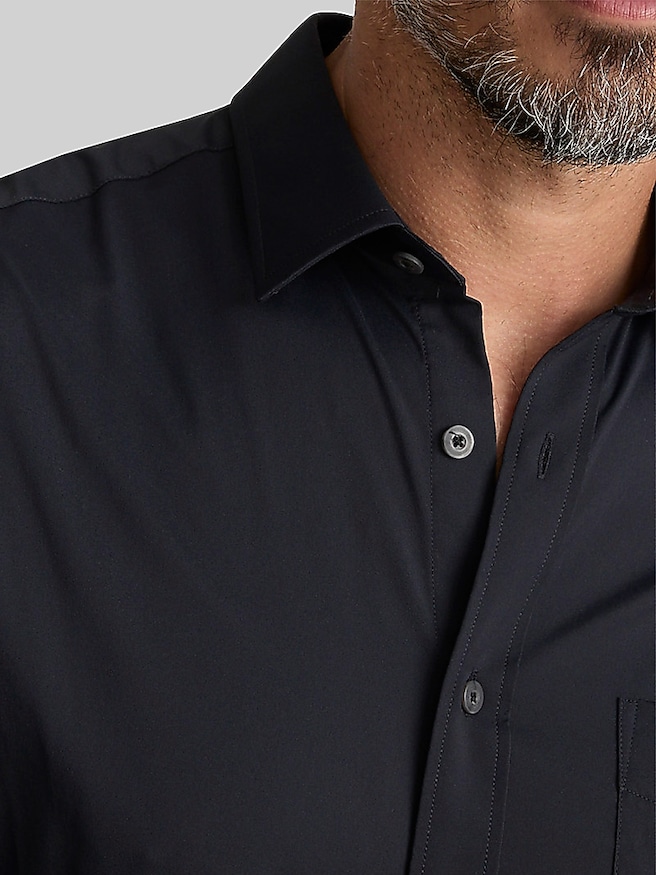
Men’s casual long-sleeve polo shirts bring a little structure to everyday dressing without the formality of a traditional dress shirt. The collar frames the face, the placket gives the neckline definition, and the knit body keeps the overall look relaxed. That combination works for a casual office, a lunch reservation, a family gathering, or an afternoon spent moving between errands and appointments. Long sleeves also give the shirt a clean line from shoulder to wrist, making it easy to wear on its own or beneath a jacket. Fabric plays a large part in how a polo looks and feels throughout the day. Cotton jersey tends to have a smooth surface and a familiar T-shirt-like feel, while cotton piqué has a subtly textured knit that adds visual depth. A finer knit can look especially neat with tailored casual trousers; a more pronounced texture pairs naturally with denim. Cotton blends may incorporate fibers that support stretch, shape retention, or easier care, depending on the fabric composition and construction. A small amount of stretch can make reaching across a desk or settling into a car more comfortable without requiring an oversized fit. Fabric weight matters, too: a substantial knit can create a more defined silhouette, while a lighter knit may drape more softly and sit comfortably beneath another layer. Neither approach is automatically better; the right choice depends on the feel and finish a wearer prefers. Solid colors keep the focus on the collar, fit, and texture, while stripes or subtle patterns give a simple outfit more character. Navy, charcoal, black, and muted earth tones are easy to coordinate with familiar wardrobe staples. A contrasting collar or placket can add interest without making the shirt feel busy. Details such as ribbed cuffs, side vents, and reinforced seams can also influence comfort and appearance, giving an otherwise straightforward shirt its own distinct feel.
A well-fitting long-sleeve polo should look relaxed without appearing loose through every part of the body. The shoulder seams generally sit near the edge of the shoulders, and the fabric across the chest should lie smoothly rather than pull into horizontal lines. Enough room through the torso allows the shirt to move naturally when sitting, walking, or reaching, while a closer shape can create a cleaner outline beneath a casual blazer. Sleeve length deserves attention because the cuffs are visible through much of the day. Sleeves that finish around the wrist usually look balanced; excess fabric bunching over the hands can make even a neat outfit appear unfinished. Ribbed cuffs may help keep the sleeve in place, although they should not feel restrictive. The hem affects styling as much as comfort. A shorter, even hem often works well untucked, especially with jeans or chinos, while a longer hem provides more coverage when tucked into trousers. Side vents can allow the shirt to settle more easily over the waistband. These proportions are particularly noticeable in simple outfits, where there are few other details competing for attention. A navy polo with straight-leg gray trousers and clean leather sneakers creates a composed everyday look, while a textured polo with dark denim and loafers feels relaxed enough for dinner without looking careless. Under an unstructured jacket, a polo offers a softer neckline than a dress shirt and a more defined one than a crewneck tee. For another collared option, Mens Button Up Polo Shirts bring attention to the button closure as part of the overall design. Across polo styles, the collar should sit comfortably and retain a pleasing shape, whether the top button is fastened or left open. Simple accessories, such as a leather belt or a watch, can finish the outfit without distracting from the shirt’s clean lines.
Everyday usefulness also depends on how a long-sleeve polo holds up to repeated wear and laundering. Smooth stitching, securely attached buttons, and neatly finished seams are practical details worth noticing, particularly on a shirt intended for regular rotation. Collar construction matters because that area is handled frequently and remains one of the most visible parts of the garment. Cuffs and hems should look even, and the fabric should recover reasonably well after ordinary movement rather than stay stretched at the elbows or waist. No fabric is maintenance-free, so the care label is the best starting point for washing, drying, and pressing. Some polos are suitable for machine washing, while others require a gentler process because of their fibers or construction. Washing with similar colors and avoiding excessive heat when the label advises it can help preserve the finish and fit. Turning a knit shirt inside out may reduce surface abrasion, and removing it promptly after drying can help limit wrinkles. A folded polo can keep its shape in a drawer; if hanging is appropriate for the garment, a supportive hanger helps prevent pronounced shoulder marks. These small habits are useful for anyone who wants a familiar favorite to remain presentable beyond its first few wears. Long-sleeve polos are especially practical for people whose days include several settings, such as desk work followed by dinner, a client visit in a casual workplace, or a trip that calls for uncomplicated outfits. They also make thoughtful gifts for a partner, father, brother, or friend who prefers clothes that feel comfortable but still look put together. A familiar color, a known size, and a fabric suited to the recipient’s usual care routine are often more useful than an unfamiliar statement style. The lasting appeal is straightforward: a good casual polo provides an easy starting point for an outfit, with enough detail to look intentional and enough flexibility to become part of an everyday routine.