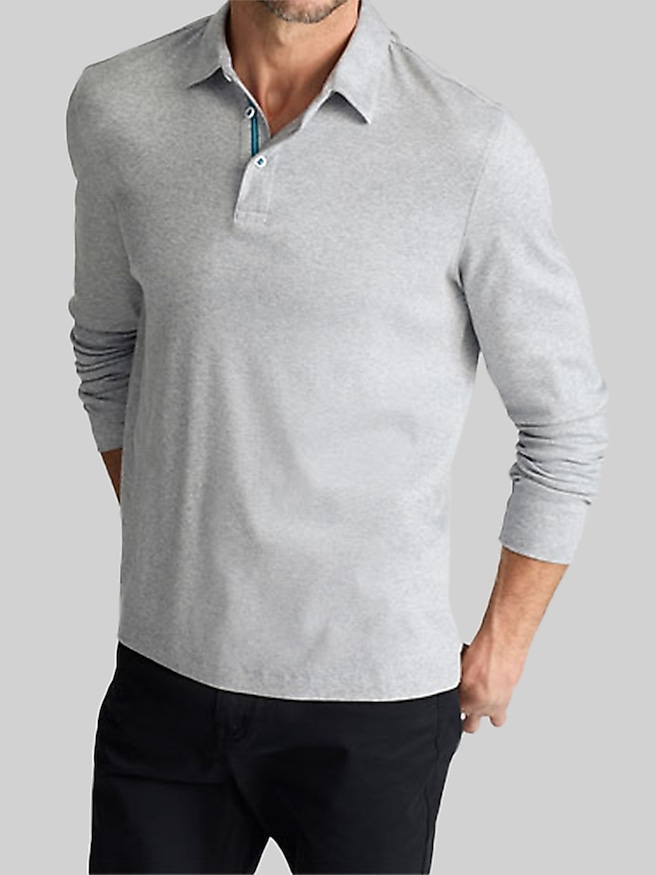
Men’s short sleeve polos bring the ease of a knit shirt together with the definition of a collar, making them a practical choice for everyday outfits that need a little polish. The familiar button placket, short sleeves, and clean silhouette sit comfortably between a T-shirt and a button-front shirt. That balance works for a casual office, a lunch reservation, a round of golf, or a family gathering where a dress shirt would feel overly formal. Fabric gives each polo much of its character. Cotton piqué has a small, raised knit texture that creates visual depth and helps the shirt maintain a structured appearance without looking stiff. Its subtly pebbled surface pairs naturally with chinos, denim, and textured trousers. Cotton jersey has a smoother face and a softer drape, giving a polo a more relaxed feel against the skin. Interlock knits often feel substantial and smooth on both sides, making them worth considering for a neat, consistent finish. Blended fabrics can combine cotton’s softness with fibers chosen for stretch, shape retention, or easier care, although the results depend on the fabric’s construction and fiber percentages. Performance polos often use polyester or other synthetic blends; moisture management, quick drying, and stretch should be confirmed in the individual garment’s details rather than assumed from the fabric name alone. For someone who spends part of the day at a desk and part walking between appointments, a soft knit with modest stretch can make reaching, sitting, and moving more comfortable. For golf or other active settings, room through the shoulders and fabric designed to manage perspiration may matter more than a substantial hand feel. Texture also affects how a color reads: a navy piqué polo can have a dimensional, slightly matte appearance, while a smooth knit in the same shade may look cleaner and more streamlined. These distinctions make fabric an important part of choosing a short sleeve polo that suits both the occasion and the wearer’s preferences.
A good polo fit looks composed without restricting movement. On a conventional set-in sleeve, the shoulder seam should sit close to the outer edge of the shoulder rather than pulling inward or dropping noticeably down the arm. The chest should have enough room for a comfortable breath, with the placket lying flat instead of spreading or creating horizontal tension lines. Sleeves often look balanced when they finish around the middle of the upper arm, though the best length depends on height, arm proportions, and the shirt’s cut. A ribbed sleeve opening can provide a defined finish, but it should not pinch the arm or leave the fabric bunching above it. Through the torso, a slim fit follows the body more closely, while a classic or relaxed fit allows additional ease; fit names vary, so garment measurements and size charts are more useful than the label alone. Sitting down, reaching forward, and lifting the arms slightly can reveal pulling that is not obvious while standing still. Length matters just as much as width. Worn untucked, a polo generally looks balanced when its hem falls around the middle of the fly and covers the waistband without extending so far that it overwhelms the trousers. For tucked-in wear, sufficient length helps the shirt stay in place when sitting or bending. Side vents can let the hem move more freely over the hips, and a slightly longer back hem may offer extra coverage. Collar construction changes the overall impression, too. A neatly shaped ribbed collar gives a familiar sporty finish, while a collar with more structure can create a sharper line beneath an unstructured jacket. Leaving the top button open produces an easy neckline; fastening more of the placket creates a more contained look. Neither approach should make the collar strain or lift away awkwardly. The goal is a shirt that remains comfortable through a normal day and keeps a clean outline, whether it is worn loose over jeans or tucked into tailored trousers.
Color, styling, and care help turn men’s polo shirts into dependable wardrobe staples. Solid shades are easy to repeat without making every outfit look the same: a dark polo with stone-colored chinos feels crisp, while a lighter neutral paired with dark denim creates clear contrast. Tonal combinations, such as a charcoal polo with gray trousers, put more emphasis on texture and fit. Narrow stripes or subtle knit patterns add interest without requiring elaborate accessories. For a workplace that permits polos, tailored chinos, a simple belt, and loafers can create a finished outfit without a tie. For dinner with friends, dark jeans and clean leather sneakers keep the look relaxed but deliberate. A polo can also sit beneath a casual jacket, provided the sleeves and body are not so bulky that they bunch underneath. Anyone comparing the polo’s knitted texture and button placket with other casual shirt silhouettes can explore men’s stylish short sleeve shirts for a broader perspective on short sleeve dressing. Long-term wear depends on both construction and maintenance. Even stitching, a smoothly attached placket, and seams that lie flat are useful signs of careful finishing, though no single detail guarantees durability. Follow the garment’s care label, since cotton, blends, and performance fabrics may require distinct washing and drying methods. Washing with similar colors, turning shirts inside out, and avoiding unnecessary heat can help preserve the surface and reduce fading or shrinkage. Fabric softener may interfere with moisture-management finishes, so check care instructions before adding it. Reshaping the collar and placket after washing helps them dry neatly; folding a dry polo can also prevent the shoulder bumps that narrow hangers sometimes leave in knit fabric. As a gift, a polo suits someone who appreciates clothing that moves easily between familiar routines, from office hours to weekend plans. Matching a favorite shirt’s measurements, preferred fabric feel, and usual colors makes the choice more personal than relying on size alone.