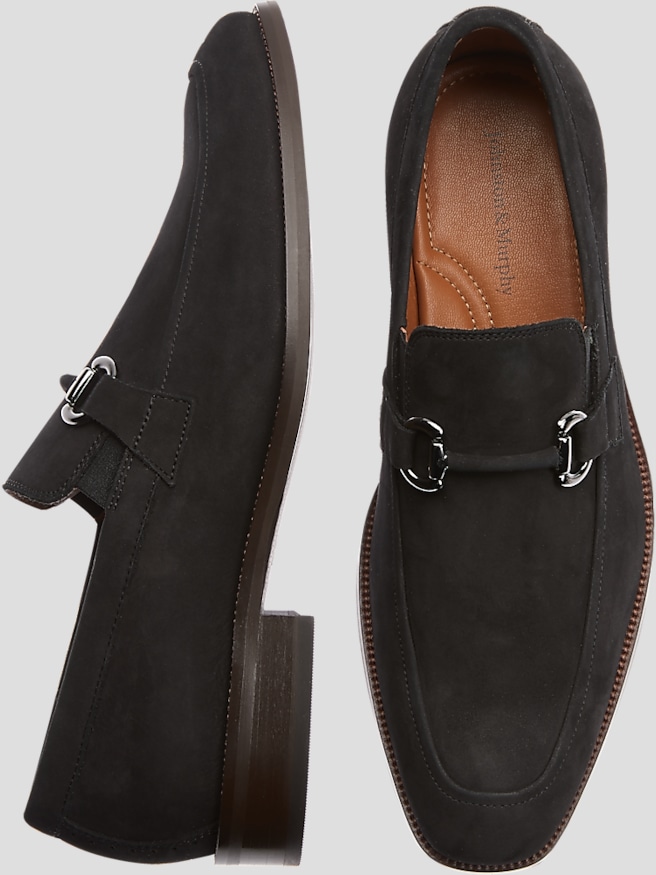
Loafer shoes are low-cut, laceless shoes designed to slip on, typically with a shaped upper that holds the foot in place and a separate sole with a low heel. Their appeal lies in that balance of ease and polish: more structured than slippers, less casual than most sneakers, and free of the lacing found on oxfords and derbies. Men's loafers work across office wardrobes, dinner outfits, and relaxed tailoring, with the material, shape, and decoration determining how dressed up a pair feels. Penny loafers have a strap across the vamp, usually with a small opening at its center, and a clean profile that complements chinos, wool trousers, and dark denim. Tassel loafers add decorative leather tassels, sometimes with additional stitched detailing, for a distinctive finish beneath tailored pants or a sport coat. Bit loafers feature metal hardware across the upper, giving an otherwise simple slip-on a more noticeable focal point. Venetian loafers generally leave the vamp unadorned, emphasizing the leather and silhouette instead of a strap or ornament. Belgian-style loafers often have a delicate outline and a small bow, though construction and detailing vary. These distinctions matter less as rigid categories than as ways to express personal style. A rounded penny loafer can feel grounded and familiar with straight-leg chinos, while a sleek bit loafer brings a sharper edge to neatly pressed trousers. For shoppers drawn to unusual textures, expressive details, or distinctive silhouettes, Unique Loafers offers a related direction to explore. Across these styles, proportion makes a noticeable difference. An elongated toe tends to look more tailored, while a broader toe and substantial sole give the shoe a more casual presence. Loafers can complement many suits, especially in settings where personal style is welcome, but they are not interchangeable with every formal shoe. Black-tie events and workplaces with strict dress standards may call for more traditional lace-up or evening footwear.
Materials give loafers much of their character, influencing texture, flexibility, maintenance, and how they look with repeated wear. Smooth leather has a clean surface that can take a subtle luster or a more pronounced shine, depending on the finish and appropriate care. It pairs naturally with tailored clothing, while pebbled leather introduces visible grain that feels at home with textured trousers and less structured jackets. Suede offers a soft, napped surface with depth rather than shine; brown suede loafers, for example, create an understated contrast against navy trousers or dark jeans. Neither leather nor suede is automatically more comfortable, since lining, construction, and shape all affect how a shoe feels. Textile and knit uppers can create a lighter, more casual appearance, but their support and cleaning requirements depend on the particular fabric and build. Inside the shoe, smooth seams, a well-finished lining, and cushioning placed where the foot bears weight can make a meaningful difference during a day that includes sitting, standing, and walking between appointments. A loafer's fit deserves particular attention because there are no laces to adjust the hold. The vamp should feel secure over the instep without creating sharp pressure, and the toes should have enough room to rest naturally rather than bunch together. The heel should stay reasonably settled during a normal stride; repeated slipping or a need to grip with the toes can signal a mismatch in size or shape. Leather may soften with wear, but a painful fit is not a dependable starting point, and shoes that are too short will not gain useful length. Trying loafers with the socks intended for everyday use gives a more realistic sense of fit. Feet with a high instep, broad forefoot, or narrow heel may need particular shapes or widths rather than a simple change in length. For anyone using an orthotic, sufficient interior depth and a compatible footbed matter as much as the stated shoe size.
The sole and construction help determine where loafers fit into daily life. Leather soles provide a traditional appearance and can feel sleek beneath dress trousers, while rubber soles often offer more grip and a slightly more casual finish, depending on the tread. Neither material guarantees slip resistance, and a thin sole will feel unlike a thicker, cushioned one on a long walk. Flexible construction can make a shoe feel easy from the start, while a more structured build may offer a firmer platform. Durability comes from the combination of sound stitching, suitable materials, a good fit, and care matched to the shoe's finish. Some stitched constructions can be resoled by a qualified repair professional, though not every loafer is built for that service. Regular maintenance helps preserve both appearance and shape. Smooth leather generally benefits from gentle cleaning followed by compatible conditioner and, when appropriate, polish; these products serve distinct purposes and should be tested discreetly before broader use. Suede needs a suitable brush to lift the nap and remove surface dust, with cleaners and protective treatments specifically labeled for suede. Textile uppers should be cleaned according to their care instructions rather than assumed to be machine washable. Allowing shoes to air out between wears, using properly sized shoe trees where appropriate, and easing the heel on with a shoehorn can reduce unnecessary strain. In an outfit, the best loafers feel connected to the proportions and level of polish around them. A clean trouser hem shows the shoe's shape, while excessive fabric pooling can hide the details. Fine-gauge socks in a color close to the trousers create continuity for office wear; discreet no-show socks support an exposed-ankle look with casual pants, provided they stay in place. For a graduation gift, career milestone, or birthday, loafers can be a useful choice for someone building a versatile wardrobe. Knowing the recipient's usual size, preferred width, and everyday dress habits makes the gesture more personal—and more likely to become part of a regular rotation.