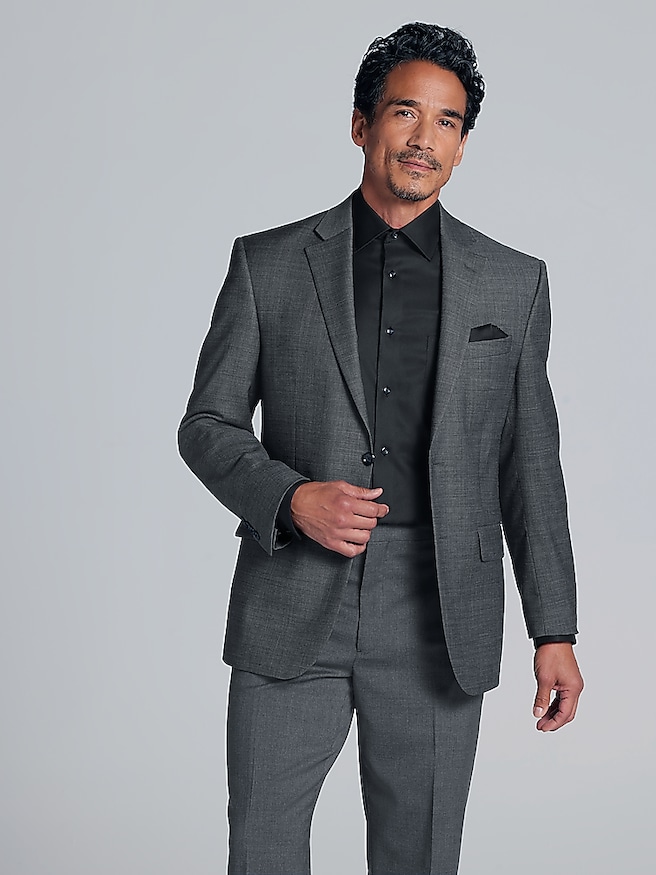
A gray checkered suit brings pattern to tailored dressing without relying on a bold color to make an impression. Its character comes from the relationship between the background shade, the scale of the check, and the contrast of the lines crossing the fabric. A fine, low-contrast check can read almost like a solid from across a conference room, revealing its detail only at closer range. A broad windowpane creates a more visible grid, while glen plaid combines small checks and intersecting lines for a layered, textured appearance. These patterns share a geometric foundation, but each gives a suit a distinct personality. Charcoal with subtle checking tends to feel restrained and businesslike; a medium gray background makes the pattern easier to see while remaining straightforward to coordinate. Light gray places greater emphasis on the outline of the jacket and trousers, particularly when the check includes darker threads. Gray brings a versatile foundation to the Checkered Suit look, allowing the pattern to stand out without overwhelming a shirt, tie, or pocket square. For professionals who regularly wear tailoring, it offers an alternative to solid navy or charcoal. For wedding guests, graduates, and anyone dressing for an important celebration, it adds visual interest while keeping the overall impression polished. The most suitable pattern depends partly on the setting: a discreet check generally fits more easily into a conservative workplace, while a more pronounced grid can suit a reception or creative business environment. Dress codes still matter, and a patterned suit does not replace a tuxedo when black tie is specified. Much of the appeal lies in that balance between familiarity and individuality. The gray base feels grounded, while the check gives the fabric enough depth to remain interesting in person and in photographs. Even a familiar two-piece silhouette can feel distinctive when its pattern is thoughtfully proportioned.
Fabric and construction influence how a gray checkered suit hangs, moves, and holds its appearance through repeated wear. Wool is a traditional suiting material because its fibers offer natural resilience, breathability, and a graceful drape. Fine worsted wool can give a small check a clean, defined appearance, while a more textured weave softens the lines and makes the surface feel less uniform. Wool blends vary considerably: added synthetic fibers may contribute durability or wrinkle resistance, and a small amount of stretch can make movement more comfortable. The fiber percentages and care label provide more useful information than a broad fabric description alone. Fabric weight also affects the result, with lighter cloth moving more freely and more substantial cloth often producing a firmer outline. Neither automatically guarantees quality; the right balance depends on the desired shape and how the suit will be worn. Someone who spends hours seated at a desk may value comfortable movement through the waist and thighs, while someone frequently standing for presentations may place greater emphasis on a clean jacket front. The shoulders should lie smoothly, with the jacket collar resting close to the shirt collar rather than pulling away. When the jacket is buttoned, pronounced pulling across the front can interrupt both the fit and the check pattern. Slim fits generally follow the body more closely, while classic fits usually provide additional room through the chest, seat, and legs; the names are not standardized, so measurements matter. Trousers should sit securely at the intended waist position and allow comfortable sitting without strain across the pockets. A slight break at the shoe gives a traditional finish, while little or no break creates a cleaner view of the trouser line. Checks make uneven hems and twisting seams more noticeable, so balanced alterations are especially valuable. Thoughtful pattern alignment around pockets and major seams can contribute to a cohesive appearance, although curved areas and shaping naturally prevent every line from matching perfectly.
Coordinating a gray checkered suit is largely a matter of giving the pattern enough room to be seen. A solid white shirt creates crisp separation between the jacket and face, while pale blue offers a softer contrast that works well with many gray tones. If the suit has a visible accent line, a tie can echo that color without repeating the entire pattern. Burgundy, navy, and deep green can all complement gray, depending on the threads in the cloth. Texture offers another way to add depth: a subtly textured solid tie can sit comfortably against a check without creating competing grids. When a patterned tie is preferred, a noticeably different scale helps distinguish it from the suit. Shoes help establish the level of formality, with black leather lending a sharper impression and dark brown bringing a softer contrast to many medium-gray shades. A simple pocket square keeps attention on the tailoring rather than turning every accessory into a separate focal point. These details matter for milestone photographs, client meetings, and celebrations where a suit needs to feel considered without looking overworked. Long-term appearance depends just as much on care. A broad, shaped hanger supports the jacket shoulders, and neatly hung trousers are less likely to develop unwanted folds across the check. Letting the suit air after wear, brushing away surface dust, and following the care label help preserve the fabric between professional cleanings. Frequent cleaning is not a substitute for routine care, and stains are best addressed promptly according to the fabric’s requirements. Excessive heat or heavy pressing can leave shine on some cloths, making careful handling particularly important on darker gray backgrounds. For gifting, a checkered suit can mark a graduation, a career milestone, or another meaningful occasion, but accurate measurements and the recipient’s preferred fit are essential. A subtle pattern may suit someone building a tailored wardrobe, while a more visible check may appeal to someone already comfortable wearing suits. The strongest choice combines a pattern that feels personal with fabric, fit, and construction suited to regular use.