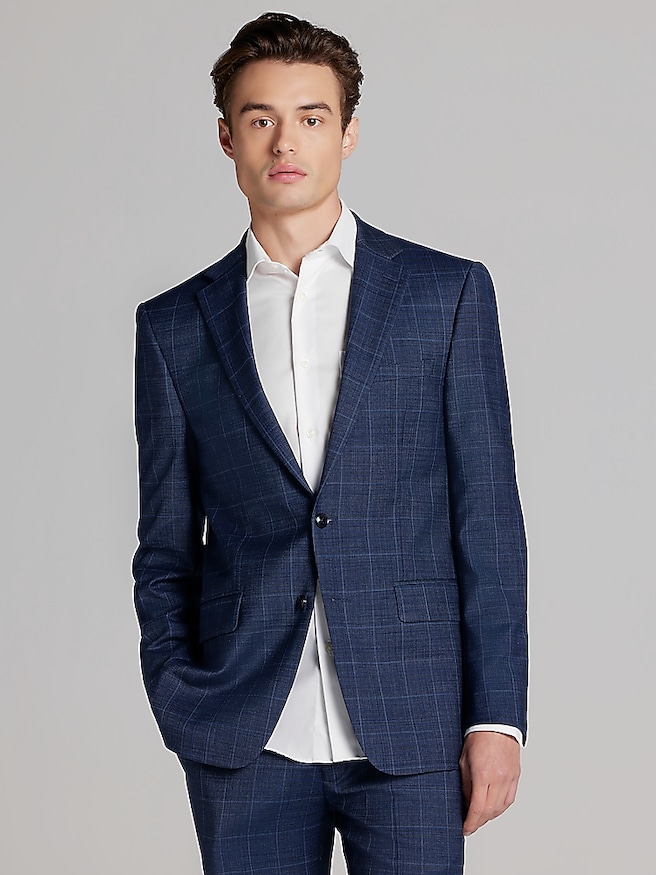
A checkered suit is a tailored jacket and matching trousers patterned with intersecting lines or repeating checks. The pattern can be quiet enough to read almost like a solid from across a room or bold enough to become the defining feature of an outfit. Windowpane checks use widely spaced lines to create an open grid, while glen plaid combines smaller checks and crossing bands for a more intricate effect. Houndstooth has a broken, angular check that often looks textured at a distance. These distinctions give checkered suits a broad range of uses, from business presentations and networking events to wedding receptions, graduation ceremonies, and dinners that call for something more polished than everyday separates. A charcoal suit with a fine gray check creates a restrained impression; a navy suit crossed with a lighter blue line has more visible contrast without necessarily feeling loud. Brown, tan, and gray combinations bring another dimension to the pattern, especially when the crossing lines are close in tone to the background. Scale matters as much as color. A small, low-contrast check tends to blend into the overall silhouette, while a broad grid draws attention to the jacket’s shape and the way the trousers hang. Neither approach is inherently more flattering; the better choice depends on the wearer’s proportions, personal style, and setting. For someone whose wardrobe already includes solid navy and charcoal tailoring, checks introduce variety without abandoning the familiar structure of a suit. They also sit within the wider range of Patterned Suits, where the relationship between line, texture, and color gives each design its character. Checked tailoring generally belongs to business and social dressing rather than strict black-tie attire, so an invitation’s dress code remains more important than how dressy a pattern appears. In a conservative office, fine checks can provide interest without dominating the room; at a celebration, a larger pattern can feel more expressive.
The fabric and construction of a checkered suit influence how clearly its pattern appears, how it moves, and how it holds its shape through repeated wear. Wool is a traditional suiting material valued for its drape, breathability, and natural resilience. A smooth wool cloth can give a fine check crisp definition, while a more textured weave softens the edges and creates visual depth. Wool blends combine those qualities with the characteristics of other fibers; depending on their composition and construction, they may offer added stretch, easier wrinkle recovery, or a different surface finish. Cotton tends to create a less formal impression and can develop visible creases, while fabrics containing elastane may provide some flexibility through seated meetings, commuting, or dancing. Fiber content alone does not establish quality or durability. The density of the weave, the quality of stitching, the lining, and the way stress points are finished all contribute to performance. Pattern alignment at visible joins, particularly around pockets, is another detail worth noticing, though shaping and construction can limit where lines meet. Fit gives the pattern its foundation. A jacket should rest cleanly across the shoulders, with lapels that lie flat and a collar that sits close to the shirt rather than pulling away. When the jacket is buttoned, pronounced tension lines can interrupt the check and suggest that more room is needed. Trousers should allow comfortable movement through the seat and thighs, with a waistband that stays in place without excessive tightening from a belt. The hem can fall with little or no break for a clean outline, or with a modest break for a more traditional finish. Slim, modern, and classic fit labels vary, making the actual measurements and overall silhouette more useful than the name alone. Alterations to sleeve length, trouser length, and waist shaping can refine the result, while substantial changes to shoulders or pattern placement are more involved. Comfortable tailoring should still look composed when the wearer sits, reaches forward, or walks across a room.
Styling a checkered suit often works best when the surrounding pieces give the pattern room to register. A white or pale blue dress shirt creates a clear backdrop, while a solid tie can pick up one of the quieter colors running through the check. For a gray suit with a subtle blue overcheck, a navy tie provides a connection without repeating every detail. Brown leather shoes can complement navy or earth-toned checks; black leather offers a sharper finish with charcoal and darker gray. The level of formality also depends on the shirt, footwear, and accessories, not just the suit itself. A fine-gauge knit and clean loafers can make a restrained check feel relaxed for a dinner, whereas a dress shirt, tie, and polished lace-up shoes create a more businesslike impression. When several patterns appear together, different scales help keep them distinct: a fine shirt stripe is usually easier to distinguish beside a broad windowpane than another check of nearly the same size. A pocket square can add a small accent without matching the tie exactly. For frequent wear, practical care is as important as the styling. Following the garment’s care label, brushing away surface dust, and allowing the suit to air after use help maintain its appearance. A supportive hanger preserves the jacket’s shoulder shape, and hanging trousers neatly reduces unnecessary creasing. Professional cleaning should follow the care instructions and the garment’s condition rather than becoming an automatic response after every outing. Stains benefit from prompt attention, while pressing requires care to avoid shine or damage to the fabric. Wearing the jacket and trousers together, and caring for them consistently, also helps limit differences in appearance over time. As a gift for a graduate, a partner marking a professional milestone, or someone building a tailored wardrobe, a checkered suit is most personal when its colors and pattern reflect the recipient’s taste. Accurate measurements and room for appropriate alterations matter more than choosing the boldest design. The strongest choice feels distinctive without making the wearer feel unlike himself.