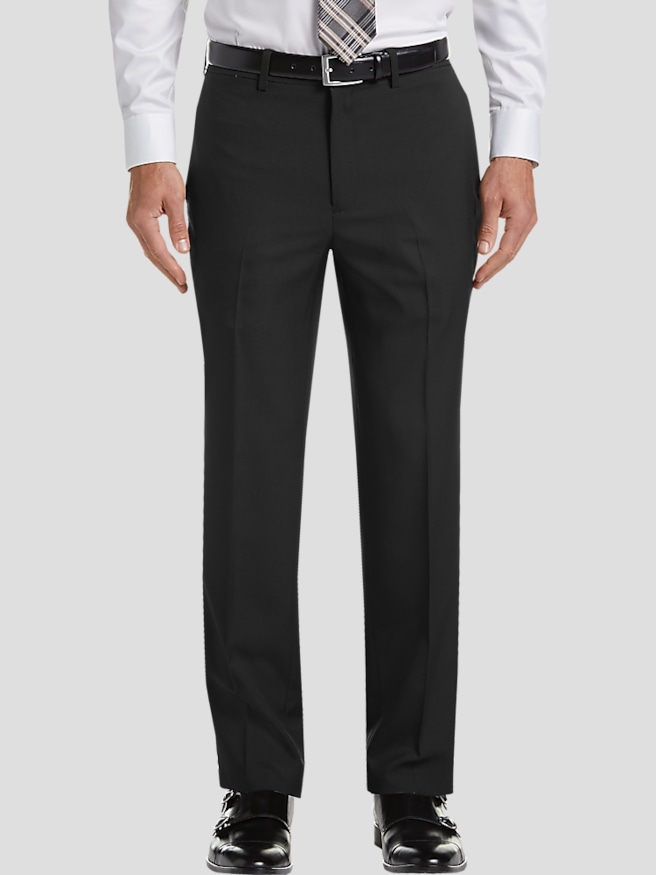
Gray check pants are patterned trousers that combine a neutral gray base with intersecting lines, giving an outfit more visual texture than solid dress pants without requiring bold color. Their character depends on both the size of the check and the contrast between its threads. A fine, low-contrast check can read almost like a solid from across a room, making it a practical choice for an office wardrobe. A larger windowpane creates a more noticeable grid, while glen plaid combines smaller checks into a layered pattern with a traditional tailored look. Light gray tends to create a softer contrast with white, blue, and cream shirts; charcoal makes a sharper backdrop for pale colors and works particularly well with black leather shoes. For a business-casual setting, gray check trousers pair naturally with a light blue button-down and a solid navy blazer. The plain jacket gives the pattern room to stand out, while the blue and gray combination feels composed without looking overly coordinated. A fine-gauge polo or a simple crewneck sweater creates a less formal combination for a dinner reservation or an office with a relaxed dress code. White leather sneakers can work with a tapered pair and a clean hem in casual settings, while loafers, derbies, and oxfords bring a more tailored finish. Black shoes emphasize a crisp, understated palette; dark brown or burgundy leather adds depth alongside mid-gray fabric. When a shirt or tie also has a pattern, a clear difference in scale helps keep the outfit readable. A small shirt stripe, for example, can sit comfortably beside a larger trouser check when the colors remain restrained. Belts, socks, and pocket squares generally work best as supporting details rather than additional focal points. The result is a versatile foundation for men who want the familiarity of gray trousers with a little more personality than a plain weave provides.
Fabric and fit determine how gray check pants feel throughout the day and how neatly the pattern hangs. Wool often provides a fluid drape and a refined surface, making it well suited to tailored trousers worn with dress shirts and jackets. Wool blends can balance that appearance with other performance characteristics, depending on the fiber mix and construction. Polyester is often valued for wrinkle resistance and durability, although its feel, breathability, and care requirements vary by weave and blend. Cotton generally has a more relaxed character, especially in a twill, while a small amount of stretch can make sitting, walking, and climbing stairs more comfortable. Shoppers comparing fabric choices may also consider Gray Polyester Pants, paying attention to the fiber content and care directions rather than assuming every pair performs the same way. Fabric weight matters as well: a lighter cloth may move more freely, while a more substantial weave can give the leg a defined line. Neither replaces a good fit. The waistband should sit comfortably at the intended rise without needing a tightly cinched belt, and the seat should lie smoothly without sagging or pulling. At the front pockets, noticeable flaring often signals that more room is needed through the hips or upper thigh. Slim fits usually follow the leg closely, tailored fits aim for a clean line with some ease, and classic fits generally allow more room, though those names vary by maker. Sitting down is an important part of judging comfort; a pair that looks sharp while standing should not strain across the lap once seated. The hem also changes the overall impression. A slight break gives dress shoes a traditional finish, while little or no break creates a cleaner view of loafers and a tapered ankle. With checked fabric, balanced pattern placement across the front and a straight fall through the leg contribute to a polished appearance. An alterations professional can assess waist and hem adjustments while preserving the intended silhouette as much as the construction allows.
Care habits help preserve both the shape of gray check trousers and the clarity of their pattern. The sewn-in care label should determine whether a pair is machine washable, suitable for professional cleaning, or subject to other handling requirements. A polyester blend is not automatically washable, and wool trousers should not be treated as though every wool fabric has the same cleaning needs. For washable pairs, follow the recommended cycle and drying method, and avoid excessive heat that could affect shape, finish, or stretch fibers. A gentle brushing can remove surface dust from suitable tailored fabrics, while prompt attention to spills helps prevent a small mark from becoming a lasting stain. Blot rather than rub, and check any treatment against the care instructions. Between wears, allowing trousers to air out and hanging them neatly can reduce unnecessary cleaning. A proper trouser hanger supports the garment without bunching the waistband, and following an existing crease helps maintain a consistent line. When pressing is permitted, the correct heat setting and a pressing cloth can help prevent shine, particularly on darker gray fabric. Durability also depends on everyday wear: overloaded pockets can distort the silhouette, and repeated friction at the seat or inner thighs can wear fabric before the rest of the garment shows much change. Rotating trousers gives each pair a break between wears. For regular office days, client lunches, presentations, and dinner plans, gray check pants offer enough distinction to make a simple shirt-and-shoes combination feel considered. They can also suit some wedding guest outfits when the invitation calls for dressy separates, but they do not replace a suit or tuxedo when the dress code specifically requires one. As a gift for a partner, father, brother, or graduate building a professional wardrobe, they are most practical when waist size, inseam, preferred rise, and fit are already known. Those details turn an appealing pattern into trousers that feel comfortable and earn repeat wear.