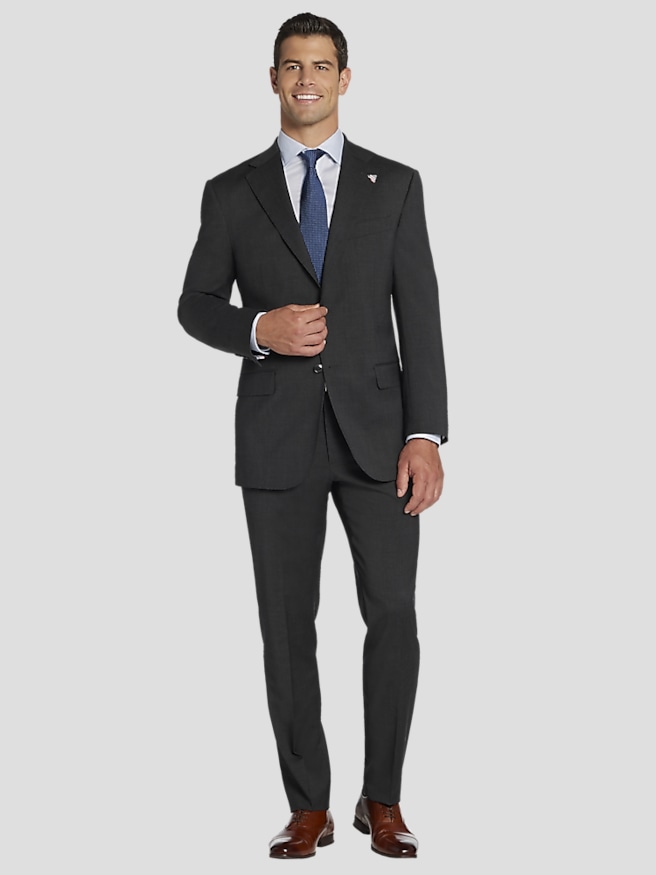
Gray suits have a place in a wardrobe because they bring structure to an outfit without locking it into a single mood or occasion. A charcoal suit with a white shirt and a restrained tie looks composed in a client meeting, at an interview, or during a wedding ceremony. A medium gray suit feels equally at home at an anniversary dinner or a professional conference, while lighter shades create a softer contrast with deep blue shirts and richly colored accessories. The shade makes a noticeable difference: charcoal reads more formal, medium gray offers a balanced everyday option, and pale gray gives the same tailored shape a more relaxed character. Fabric texture changes that impression, too. A smooth surface creates clean lines, while a subtle weave adds depth without competing with a shirt or tie. Patterns offer another way to give gray a distinct personality, and the Grey Suit Checkered collection highlights how intersecting lines can add interest to a neutral foundation. Fine checks tend to blend together from a distance, while larger patterns make a stronger impression across a room. For business settings, understated color and pattern make it easier to repeat a suit with several shirt-and-tie combinations without every outfit looking identical. For weddings and other celebrations, gray complements a wide range of coordinated colors, from navy and burgundy to muted green. Dress codes still matter; a gray suit fits many occasions calling for tailored clothing, but it does not replace a tuxedo when an invitation specifies black tie. Its appeal is less about standing out at every opportunity and more about looking appropriately dressed in settings where presentation counts. For someone building a first professional wardrobe, returning to regular office meetings, or choosing an outfit for an important family milestone, gray provides a useful starting point with room for personal style. Even a small change, such as switching from a crisp white shirt to pale blue, shifts the overall effect while preserving the suit’s clean, coordinated appearance.
The fabric and construction of a gray suit influence how it feels through a full day and how well it keeps its shape over repeated wear. Wool is a traditional choice because its natural resilience helps fabric recover from light creasing, and its drape supports the smooth lines associated with tailored clothing. Wool blends may combine those qualities with added strength or easier maintenance, depending on the fibers and construction. Fabrics containing stretch can provide more give when sitting, reaching, or moving between appointments, though comfortable fit still depends on the cut rather than stretch alone. A fine, smooth weave has a dressier appearance, while a more pronounced texture gives gray additional dimension. Fabric weight, lining, and the structure inside the jacket also affect the way the suit hangs. A firmly shaped shoulder creates a defined outline; softer construction produces a less rigid appearance. Neither approach is automatically better—the right choice depends on the wearer’s proportions, preferences, and intended use. Fit becomes especially apparent in ordinary moments: buttoning the jacket before a presentation, sitting through a ceremony, or reaching across a table. Shoulder seams should sit close to the natural shoulder without extending far beyond it, and the jacket front should lie smoothly rather than pull into pronounced lines around the button. Sleeves that allow a small amount of shirt cuff to show create a finished transition at the wrist. Trousers need enough room through the seat and thighs for comfortable movement, with a waistband that stays in place without depending on a tightly cinched belt. Slimmer cuts create a closer silhouette, while more generous cuts offer additional room; either can look polished when the proportions are right. Trouser length changes the outline as well. A slight break gives the hem a traditional finish, while little or no break creates a cleaner, more abbreviated line above the shoe. Accurate measurements and thoughtful alterations help the jacket and trousers work together, particularly when the wearer’s upper and lower body call for different proportions. The goal is a suit that looks settled on the body rather than one that needs constant adjusting.
Styling and care help a gray suit remain useful beyond a single event. Black leather shoes give charcoal a crisp, formal finish, while brown shoes introduce a warmer contrast with many medium and lighter grays. A belt in a similar leather tone keeps the outfit connected, and simple accessories leave the tailoring in focus. White and pale blue shirts are dependable companions, but the suit’s neutral color also leaves room for stripes, subtle checks, and deeper shades. When the suit itself has a visible pattern, a quieter shirt or tie keeps the combination from becoming crowded. A pocket square does not need to match the tie exactly; picking up one color from the outfit creates a more natural connection. In settings with a relaxed dress code, a fine-knit shirt or understated knitwear can change the character of a gray suit without losing its tailored outline. Wearing the jacket or trousers separately may also extend their usefulness, although very smooth, formal suit fabrics do not always look convincing as standalone pieces. Balanced wear matters if the two pieces will continue to be worn together, since frequent use of only one can lead to uneven fading or wear. After an outing, a broad, supportive hanger helps the jacket retain its shoulder shape, while trousers benefit from being hung neatly rather than folded into a crowded drawer. Empty pockets reduce strain and prevent bulges, and a gentle garment brush can remove surface dust before it settles into the fabric. Following the care label is important because fiber content, lining, and internal construction affect which cleaning methods are appropriate. Professional cleaning when needed, prompt attention to marks, and avoiding excessive heat during pressing help protect the fabric and finish. As a gift for a father, brother, partner, or recent graduate entering a professional role, a gray suit carries practical value, but reliable sizing and the recipient’s preferred fit are essential. Those details turn a broadly versatile garment into something personal: an outfit that feels comfortable, suits the wearer’s routine, and is ready for occasions worth dressing for.