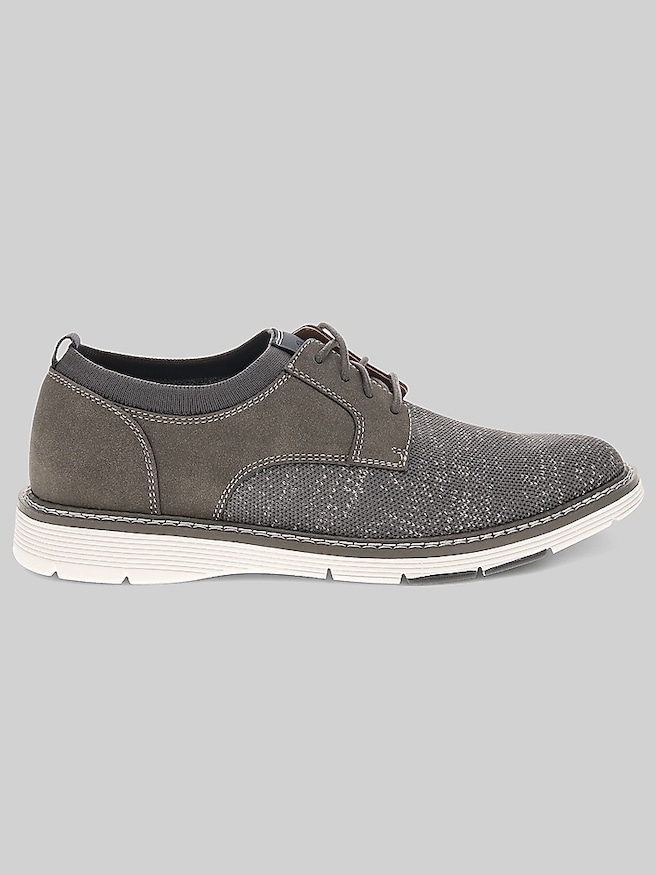
Gray shoes bring a versatile neutral to men’s footwear, with shades ranging from pale silver and soft stone to slate and deep charcoal. Common styles include dress oxfords, derbies, loafers, casual lace-ups, and sneakers, each suited to a different level of formality. The color sits comfortably between black’s sharper contrast and brown’s warmer character, making it easy to coordinate with navy, blue, black, olive, and cream. A smooth charcoal dress shoe can ground a navy suit without drawing attention away from the tailoring, while a lighter gray sneaker gives dark jeans and a simple polo a relaxed finish. Shade and texture matter as much as the shoe’s basic shape. Pale gray tends to stand out against dark trousers; charcoal creates a quieter transition from trouser hem to shoe. Suede has a soft, matte appearance that works naturally with chinos and textured jackets, while polished leather looks more defined beneath dress trousers. For business settings, restrained stitching, a streamlined toe, and a low-profile sole usually create a more formal impression than chunky soles or contrasting panels. Oxfords have closed lacing for a clean silhouette, while derbies have open lacing that can offer more adjustment across the instep. Loafers suit occasions that call for polish without a full lace-up dress shoe, and understated gray sneakers work well where the dress code allows casual footwear. For weddings and other dressed-up events, the invitation and venue should guide the choice; gray shoes are not a substitute for traditional formal footwear when a strict black-tie dress code applies. Accessories do not need to match every shade exactly, but they should feel intentional. A charcoal belt, a watch with a neutral strap, or socks that echo the trousers can tie the outfit together without making every detail identical. For a related collection centered on this adaptable color, explore Gray Spring Shoes.
Materials and construction influence how gray shoes look, feel, and hold up through repeated wear. Smooth leather offers a defined finish that complements tailored clothing and can develop character over time with appropriate care. Suede brings visible texture and a softer appearance, though its raised surface needs a different cleaning routine from smooth leather. Textile uppers often suit casual footwear, while synthetic materials vary in flexibility, finish, and maintenance requirements. An upper’s material alone does not determine comfort: lining, seams, footbed shape, sole flexibility, and overall fit all contribute. Someone moving between meetings may prefer a lighter shoe with a cushioned footbed, while someone attending a seated dinner may put more emphasis on a sleek profile. For a commute that includes several blocks on foot, pay attention to outsole grip and cushioning rather than relying on appearance alone. Rubber soles often provide a flexible, practical foundation for everyday walking, although traction depends on the compound and tread design. Leather soles create a traditional dress-shoe finish but may feel firmer underfoot. Fit should be checked while standing and walking, with the type of socks intended for regular wear. Toes need room to move without pressing against the front, the widest part of the foot should sit comfortably within the widest part of the shoe, and the heel should feel secure without rubbing. A pointed silhouette may extend beyond the toes by design, so empty space at the tip is not a reliable measure of size. Pressure across the forefoot or instep is a reason to reconsider the size, width, or shape rather than expect a painful shoe to become comfortable. Lace-ups allow some adjustment, but tightening the laces cannot correct a shoe that is fundamentally too large. Slip-on styles depend more heavily on a close match through the heel and instep. Checking both feet and taking a short walk can reveal pressure points that are easy to miss while seated.
Keeping gray shoes looking sharp starts with care that matches the material, especially because dust, scuffs, and uneven cleaning can be noticeable on lighter shades. Remove loose dirt before applying any cleaner. For smooth leather, a soft brush or cloth is a useful first step, followed by a suitable leather cleaner when needed. Use conditioner only where the material’s care instructions recommend it, and choose polish carefully: a shade that is too dark can alter the appearance rather than simply refresh it. A small test on an inconspicuous area helps reveal unexpected color changes. Suede generally benefits from a dedicated suede brush and eraser, used gently to lift surface marks and restore the nap. Avoid treating suede as though it were polished leather, and follow the care label for textiles and synthetic uppers. Any protective treatment should be appropriate for the material and tested before broader application. After wear, give shoes time to air out, keep them away from direct heat, and use suitable shoe trees or other gentle shape support when appropriate. Rotating footwear can give linings and footbeds time to dry between uses. Durability also depends on details that are easy to overlook at first: secure stitching, neatly finished seams, stable heel construction, and an outsole suited to the intended activity. Inspect heels and soles periodically, since uneven wear can affect both comfort and appearance. Some dress shoes can be repaired or resoled, depending on their construction; others are better maintained through cleaning, lace replacement, and timely attention to minor wear. For someone building a practical wardrobe, gray footwear can fill the space between dedicated dress shoes and distinctly athletic styles. It can also make a thoughtful gift for a graduate, a new professional, or someone refreshing everyday outfits, provided the recipient’s size, width, and preferred fit are known. The strongest choice is one that suits the wearer’s routine as naturally as it suits the clothes.