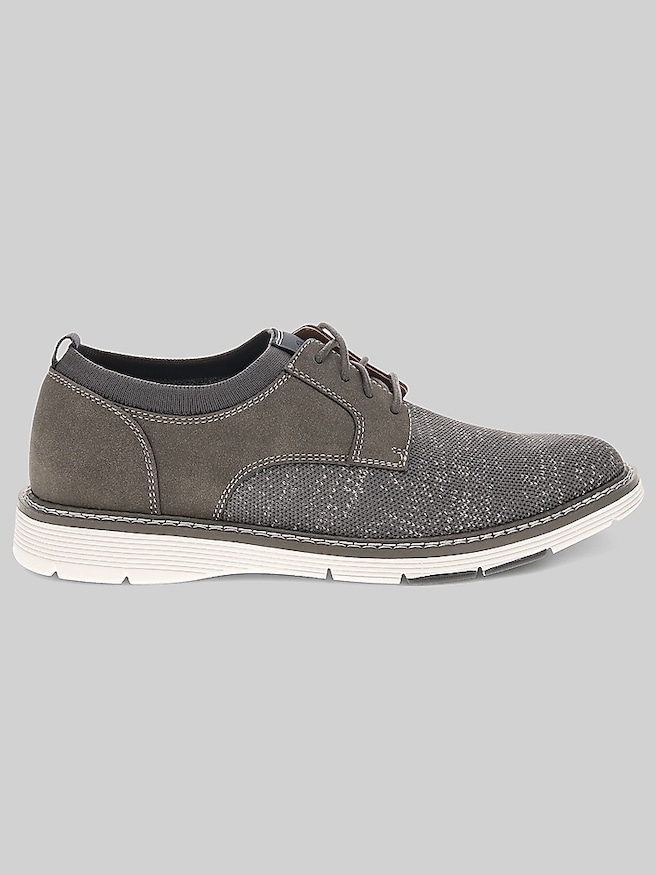
Gray evening shoes are dress shoes in shades from light silver-gray to deep charcoal, suited to occasions where tailored clothing and polished footwear belong together. For men dressing for cocktail parties, wedding receptions, anniversary dinners, or an evening at the theater, gray offers a distinctive alternative to more familiar footwear colors without overwhelming the outfit. The shade matters as much as the silhouette: pale gray creates a noticeable contrast beneath dark trousers, while charcoal reads more quietly and can blend with a dark suit. Smooth leather brings a crisp finish, suede adds depth through its soft nap, and velvet creates a richer, more expressive look. Each surface catches light differently, so two shoes in a similar shade can have very different personalities. A streamlined oxford, with its closed lacing, generally looks more formal than a derby with open lacing; a sleek loafer offers a less structured option for dressy occasions that allow some flexibility. Minimal stitching and a restrained toe shape tend to keep the attention on the complete outfit rather than on the shoes alone. Navy tailoring provides a clear contrast with gray footwear, charcoal creates a tonal combination, and black trousers can work with a darker gray shoe when the occasion permits. An exact color match between shoes and trousers is not essential; a deliberate difference in shade often looks more natural than a near match. Trouser length also influences the effect. A clean hem with a slight break leaves the shoe’s shape visible, while excess fabric can obscure an otherwise refined silhouette. Dress socks that relate to the trousers help create a continuous line, particularly when sitting reveals more of the ankle. Gray evening shoes fit most naturally into cocktail and semiformal dressing rather than strict black tie, where black patent leather or highly polished black dress shoes remain the conventional choice. A stated dress code should take priority over color coordination, especially for a ceremony, gala, or formal reception.
Material and construction shape how gray evening shoes look, feel, and hold up through repeated wear. Smooth leather can develop creases with use, but appropriate conditioning and careful polishing help maintain its surface and flexibility. Suede has a softer visual character and needs a different care routine, making it appealing for a textured outfit but less suited to someone who prefers a quick wipe-and-polish finish. Velvet emphasizes richness rather than shine, while synthetic uppers vary in texture, flexibility, and cleaning requirements. The material label is more useful than appearance alone when assessing care needs. Inside the shoe, lining, cushioning, and the shape of the footbed influence comfort during a long dinner or reception. A softly padded interior may ease pressure, but cushioning cannot compensate for a shoe that is too narrow or too short. A suitable fit leaves room for the toes without allowing the foot to slide forward, holds the heel securely without persistent rubbing, and feels supportive across the instep. Lace-up designs allow some adjustment, while loafers depend more heavily on a close match between the foot and the shoe’s shape. Trying dress shoes with the socks intended for the occasion gives a more realistic sense of fit than trying them with thick athletic socks. Feet can also change in volume over the course of a day, which matters when an event includes several hours of standing, walking, and dancing. A new pair may soften with wear, but painful pressure or compressed toes should not be treated as normal break-in. Outsole construction deserves attention as well: leather and rubber differ in flexibility, surface feel, and traction, and a slim profile does not necessarily mean the same underfoot experience across different designs. For occasions that involve plenty of standing and walking, Gray Comfort Shoes are also worth considering alongside the formality of the outfit. The best balance is a shoe that looks appropriate with tailoring and remains comfortable from the first greeting through the final departure.
Thoughtful care helps gray evening shoes retain the details that make them suitable for dressed-up occasions: an even color, a clean edge around the sole, and an upper that holds its shape. Dust can make gray finishes appear dull, particularly around seams and creases, so gentle cleaning after wear is worthwhile even when the shoes do not look heavily marked. Smooth leather generally benefits from a soft cloth and products appropriate to its finish; any polish or conditioner should be tested in an inconspicuous area because gray can darken or shift in tone. A neutral polish may be suitable for some leather finishes, while a color-matched product requires care to avoid an uneven result. Suede typically calls for a dedicated brush and suitable spot-cleaning tools rather than standard leather cream. Velvet and synthetic materials should be treated according to their care instructions, since aggressive brushing or an unsuitable cleaner can alter the surface. Shoes that become damp from a spill should dry naturally away from direct heat. Suitable shoe trees can help leather footwear maintain its shape between wears, and allowing shoes to rest gives the interior time to dry fully. Checking heel wear, loose stitching, and worn soles before an important event can prevent an avoidable distraction; whether repairs are practical depends on the shoe’s construction. For someone who regularly attends weddings, professional receptions, or special dinners, gray dress footwear can become a useful part of a tailored wardrobe rather than a choice reserved for one outfit. It can also make a thoughtful gift for a partner, father, graduate, or friend who enjoys dressing well, provided the recipient’s size, width, and style preferences are known. A person who favors understated suits may appreciate charcoal leather, while someone drawn to texture may prefer suede. Across these choices, the appeal of gray evening shoes lies in their balance of individuality and restraint: enough distinction to make an outfit feel considered, without competing with the occasion itself.