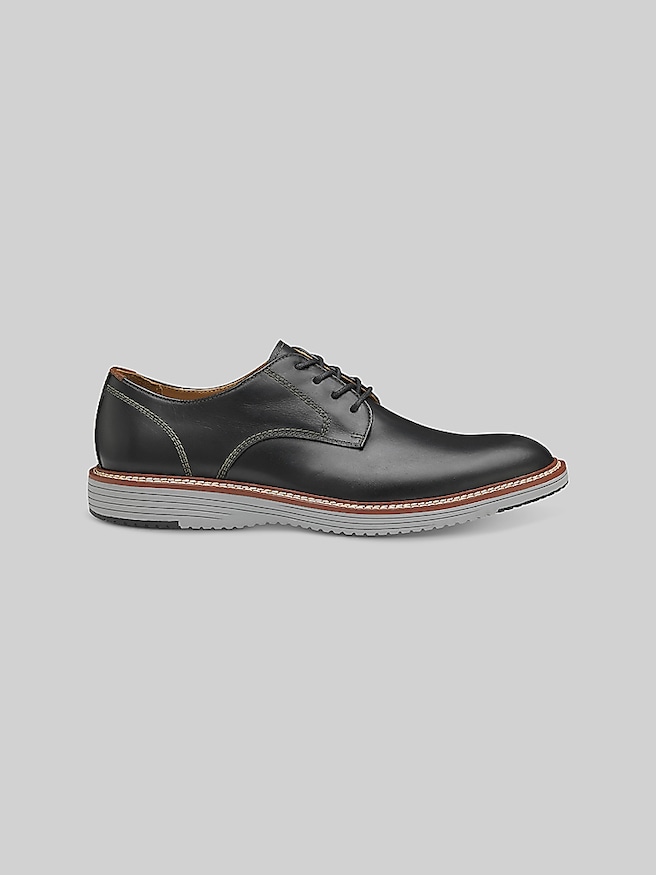
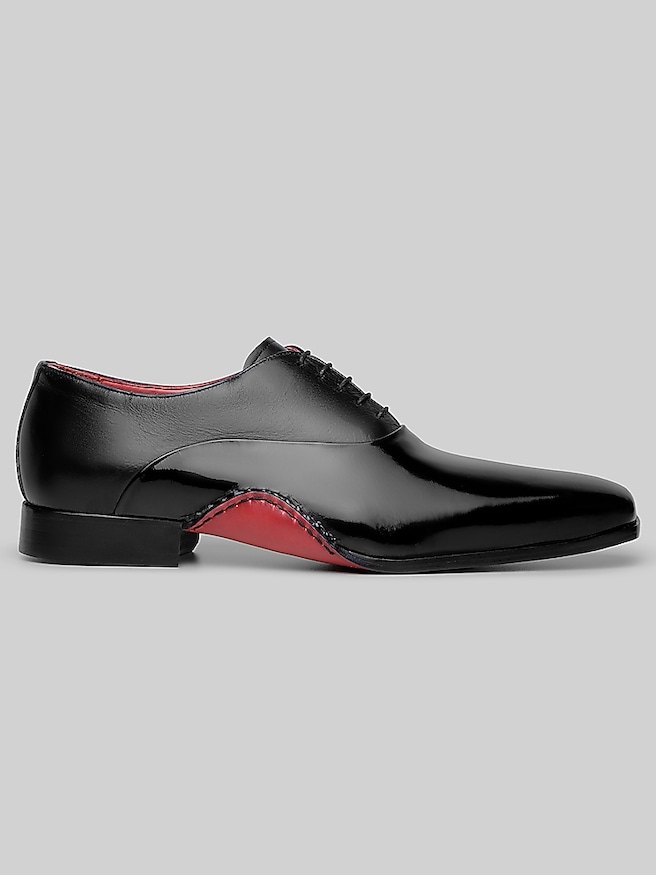
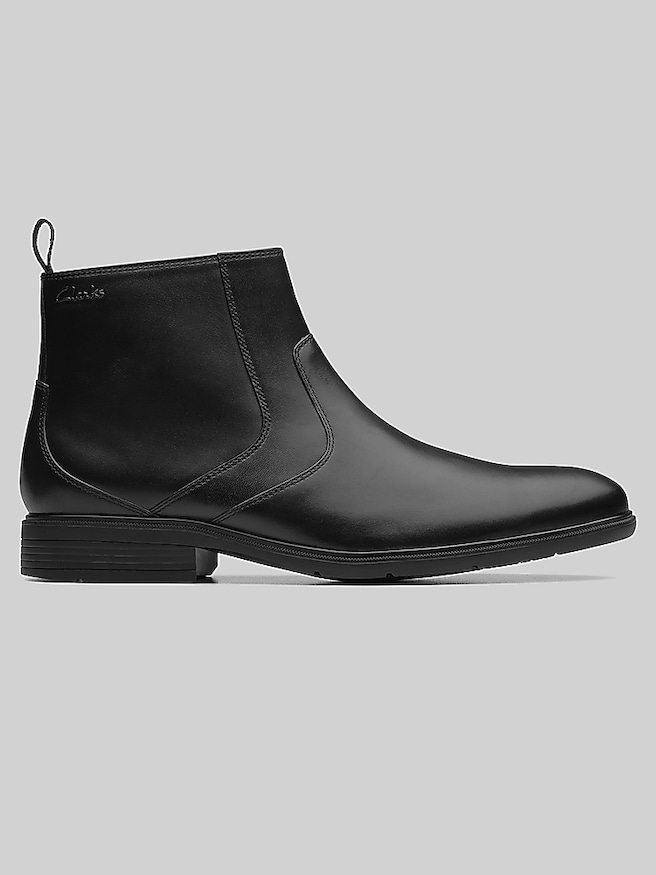
Black formal shoes for men provide a clean, polished foundation for suits, tuxedos, and tailored separates. Their dark, understated finish keeps attention on the complete outfit, whether that means a charcoal suit for an important presentation or a tuxedo for an evening wedding. The shape of the shoe and the details across its upper help determine how formal it looks. Oxfords have a closed-lacing construction, with the eyelet sections attached beneath the front of the upper, creating a streamlined profile that complements dress trousers. A black cap-toe Oxford is a versatile choice for business dress and wedding suits, while a plain-toe Oxford in patent leather or highly polished smooth leather is a traditional option for black-tie attire. Derbies have open lacing, with the eyelet sections attached on top of the upper, and bring a slightly more relaxed appearance to tailored outfits. Their adjustable opening can also suit someone who prefers more room across the instep, although the overall fit depends on the shoe’s shape. Broguing refers to decorative perforations rather than a particular lacing system; restrained detailing adds character, while extensive perforations generally make a shoe look less formal. Monk straps replace laces with one or two buckles and offer a distinctive pairing with business suits or dress trousers. Sleek leather loafers can work with less formal tailoring, though they are not interchangeable with traditional black-tie footwear. For a groom, wedding guest, graduate, or professional attending a formal reception, the dress code is the starting point for choosing among these styles. A narrow, elegant silhouette tends to blend naturally with trim trousers, while a slightly fuller shape can balance a more generously cut suit. Toe shape matters, too: rounded and softly tapered toes offer a classic appearance without looking exaggerated. Black leather creates a particularly cohesive pairing with navy, gray, and black tailoring, giving these shoes a useful role across occasions that call for a considered, well-finished outfit.
Materials and construction influence how black formal shoes look, feel, and hold up over repeated wear. Smooth leather offers a familiar dress-shoe finish that can be maintained with suitable cleaning and polishing, and its natural creasing gives the upper character over time. Full-grain leather retains the hide’s natural surface, while corrected-grain leather has been treated for a more uniform appearance; neither description alone guarantees comfort or longevity. The quality of the leather, the lining, the stitching, and the way the shoe fits all contribute to the experience of wearing it. Patent leather has a glossy coating that creates a reflective finish, making it especially associated with tuxedos and evening dress. Suede has a softer, matte appearance and generally belongs with less formal outfits rather than strict black-tie attire. Inside the shoe, a smooth lining, supportive footbed, and cushioning beneath the heel can make a noticeable difference during a ceremony followed by several hours of standing and conversation. Comfort still begins with fit rather than padding alone. Toes need room to lie naturally without pressing against the front, the widest part of the foot should sit comfortably within the shoe, and the heel should feel secure without painful rubbing. Laces or buckles should hold the foot in place without creating pressure across the instep. A shoe that pinches sharply is not a good fit simply because leather may soften with wear. Trying dress shoes with the socks intended for the occasion helps reveal how they will feel as part of the finished outfit. Underfoot, leather soles offer a traditional, refined profile, while discreet rubber soles or rubber inserts can add traction and cushioning. Grip varies with the sole design and the walking surface, so a smooth-looking sole is not necessarily the best choice for every setting. Some stitched constructions can be resoled by a qualified shoe repair professional, depending on their design and condition. For someone who regularly wears tailoring, repairability and a well-balanced sole can be valuable considerations alongside the appearance of the upper.
Keeping black formal shoes looking sharp depends on consistent care suited to their material. Dust and grit can dull the surface and collect around seams, so gentle brushing or wiping after wear helps preserve a neat finish. Smooth leather benefits from compatible conditioner when needed and an appropriate polish to refresh its color and sheen; care products should be tested on an inconspicuous area and used according to the footwear’s care directions. Patent leather needs a gentler approach, usually a soft cloth and a cleaner intended for its coated surface rather than conventional leather polish. Suede requires its own brush and suitable care products to maintain the nap. Shoes that become damp should dry naturally away from direct heat, which can damage leather and adhesives. Shoe trees sized to fit without excessive pressure can help maintain the upper’s shape and absorb some moisture between wears. Giving shoes time to air out, using a shoehorn to protect the heel structure, and addressing worn heel tips before damage spreads can help extend their useful life. These habits matter whether the shoes are worn for frequent client meetings or brought out for milestone celebrations. Before a long event, brief wear at home can help confirm comfort and reveal rubbing while there is still time to reconsider the fit. Dress socks that cover the ankle when seated maintain a continuous line between the trouser hem and the shoe, and a black leather belt, when the outfit calls for one, creates a coordinated finish. For occasions with a less formal dress code, Mens Black Smart Shoes offers a related direction for pairing dark footwear with tailored separates. Black formal shoes can also make a thoughtful gift for a graduate beginning a professional role, a partner preparing for a wedding, or someone who enjoys dressing well. Knowing the recipient’s size, preferred width, and usual occasions makes the choice more personal, with comfort and lasting usefulness carrying as much weight as the first polished impression.