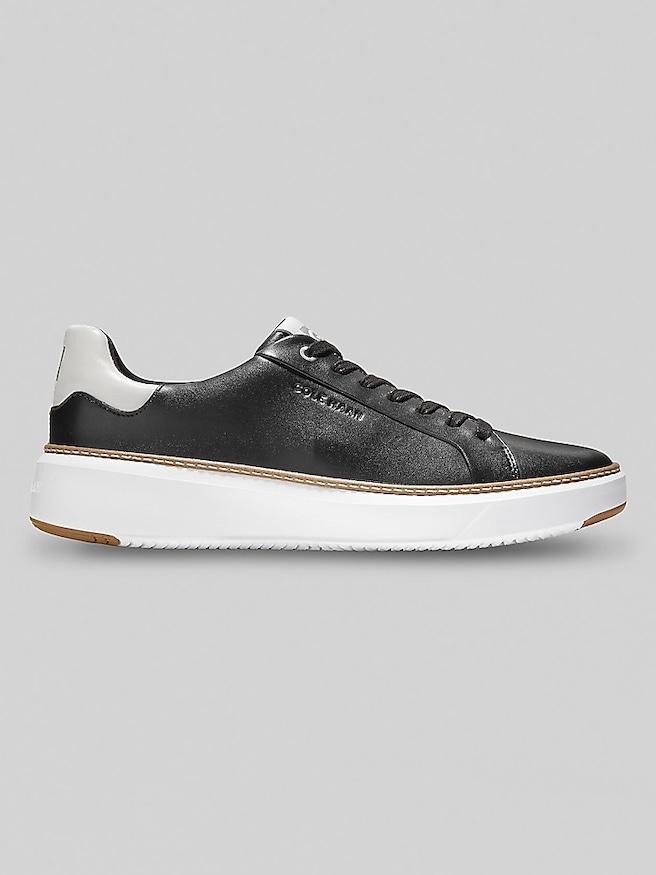
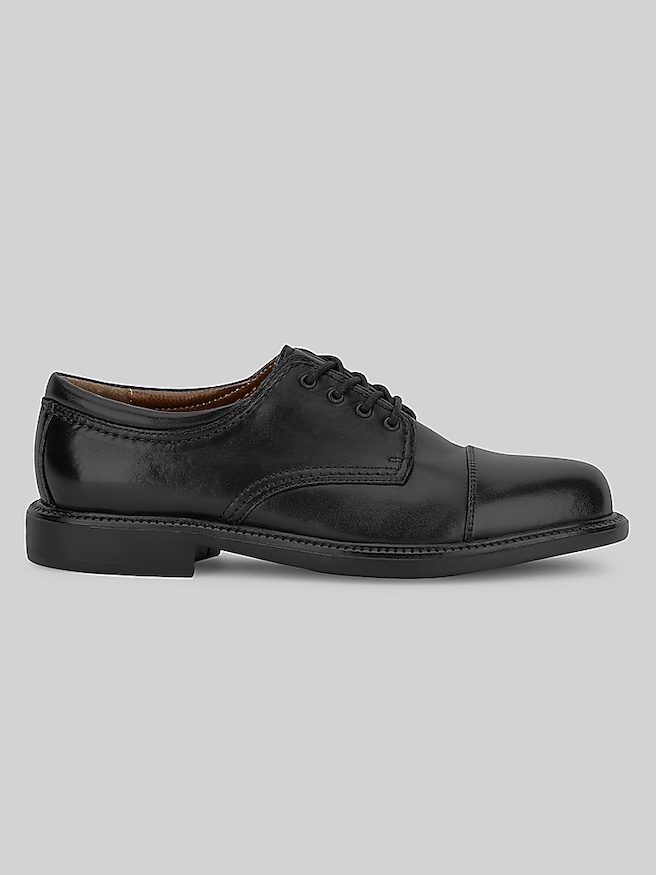
Men’s black smart shoes bring a polished finish to tailored clothing, whether the setting is an office presentation, a wedding reception, or a dinner with a dress code. The category spans traditional lace-up dress shoes, streamlined slip-ons, buckle-fastened styles, and dress-casual hybrids with more relaxed sole designs. Black keeps the overall look restrained and pairs naturally with charcoal, gray, navy, and black trousers. The shape of the shoe, its surface finish, and the thickness of the sole determine how formal it feels. An Oxford has closed lacing, with the eyelet sections attached beneath the front of the shoe, creating a neat profile that works especially well with suits. A plain toe offers an uninterrupted surface, while a cap toe adds a defined seam without much decoration. A Derby uses open lacing, with the eyelet sections sewn on top of the upper; that construction gives the instep more room for adjustment and suits both business tailoring and less formal combinations. Loafers remove the laces for a clean slip-on shape, while monk straps use buckles to add a distinct detail. Brogue perforations and wingtip patterns create more visual texture and generally read as less formal than an otherwise similar plain shoe. For occasions centered on traditional tailoring, men’s formal shoes in black provide a natural finishing touch beneath suit trousers. Tuxedo dressing calls for closer attention to the invitation: highly polished or patent leather styles are customary choices, while chunky soles and prominent contrast stitching feel more casual. With chinos or dark denim, a black loafer, Derby, or understated hybrid can look put together without suggesting a full business suit. A slim leather belt in a compatible black finish helps connect the outfit, though the textures do not need to match perfectly. Trouser hems matter, too: excessive fabric pooling over the shoe can hide its shape, while a clean break lets the toe and upper remain visible. For someone moving between client meetings and an evening event, that balance of restrained detail and practical versatility makes black footwear particularly useful.
Materials and construction affect how black smart shoes feel through a full day, not just how they look beneath a fitting-room mirror. Smooth leather can develop creasing and character with wear, and regular care helps preserve its finish. Full-grain leather retains the natural grain surface, while corrected-grain leather has been treated to create a more uniform appearance; either description alone does not establish the quality of the entire shoe. Suede has a soft, matte texture that makes a tailored outfit feel more relaxed, whereas patent leather has a glossy coated surface associated with formal dressing. Synthetic uppers can also deliver a consistent black finish, but flexibility, lining quality, and breathability vary by construction. Inside the shoe, cushioning softens contact underfoot, while a shaped footbed may provide more support than a flat interior. Neither replaces a good fit. The heel should sit securely without pinching, the ball of the foot should align with the shoe’s widest area, and the toes need space to rest without pressing against the front or sides. A pointed silhouette may extend beyond the toes by design, so empty space at the tip is not, by itself, a reason to size down. Trying shoes with the socks intended for the outfit gives a more useful sense of fit, especially when comparing a fine dress sock with a thicker everyday pair. Laces offer adjustment across the instep; loafers depend more heavily on the shape of the opening and heel. Leather may soften, but painful pressure should not be treated as a necessary break-in stage. Underneath, leather soles create a traditional, streamlined look, while rubber soles can add flexibility and traction, depending on their tread and composition. Lightweight foam-based soles often give hybrids a cushioned feel, though a thicker profile changes the visual balance with narrow trousers. For a ceremony followed by hours of standing, or a workday with substantial walking, secure fit and a stable sole deserve as much attention as shine. No dress sole should be assumed to resist slipping on every surface.
The durability of men’s black dress shoes depends on the relationship between materials, construction, wear patterns, and maintenance. Welted construction can make sole replacement practical when the rest of the shoe remains sound, while other methods may be harder to repair; repairability depends on the specific build rather than the style name alone. Even a substantial upper benefits from simple care after use. Dust and grit can dull the surface and work into creases, so a soft brush or cloth is a useful first step before applying any treatment. Smooth leather generally benefits from an appropriate conditioner used sparingly, followed by compatible black polish when color or shine needs refreshing. Excess product can leave buildup around seams and decorative perforations. A light buffing brings back a controlled luster for business wear, while a more deliberate polish can sharpen the appearance for a formal occasion. Suede needs its own brush and suitable cleaning products rather than standard leather cream, and patent finishes should be cleaned according to their care directions. Testing a treatment on a small, inconspicuous area helps avoid an unexpected change in color or texture. If shoes become damp, letting them dry naturally away from direct heat helps protect the upper and sole attachment. Shoe trees can help maintain shape between wears, and rotating pairs gives the interiors time to dry. A shoehorn reduces strain on the heel counter when putting shoes on; loosening the laces before removal also prevents unnecessary pulling. These habits are particularly useful for footwear worn repeatedly to an office, religious services, performances, or formal celebrations. Black smart shoes can also make a thoughtful gift for a graduate, a son beginning a professional role, or a partner preparing for an important occasion. Knowing the recipient’s usual size, width, preferred fastening, and likely dress code makes the choice more personal. A familiar silhouette with a comfortable fit will usually earn more wear than an elaborate design that does not suit the recipient’s routine.