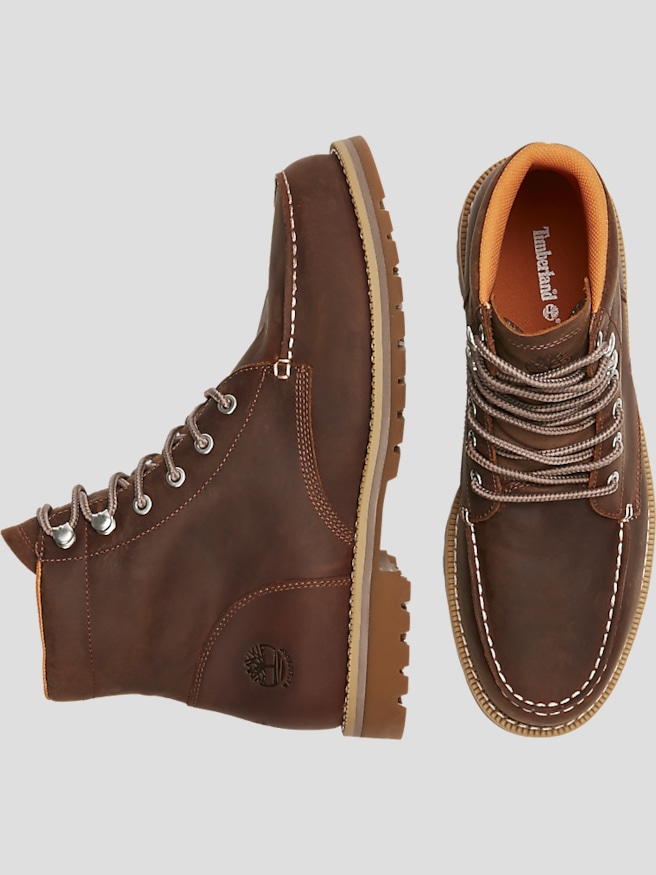
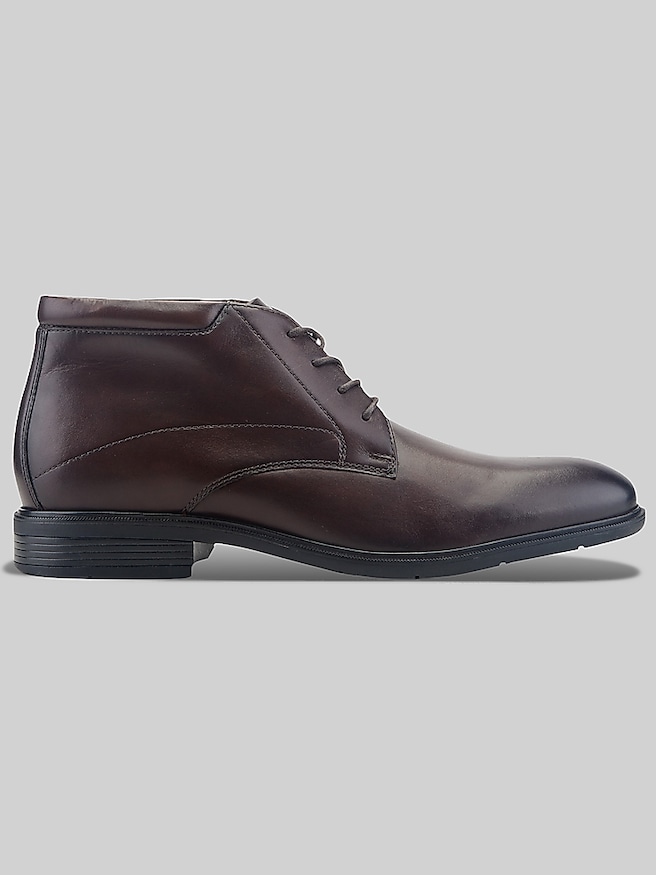
Men’s black leather formal boots combine the clean lines of dress shoes with an ankle-height profile that sits neatly beneath tailored pants. Their appeal comes from a balance of polished leather, restrained detailing, and proportions that complement a suit rather than compete with it. Smooth leather, a tapered toe, and a relatively low-profile sole generally create the dressiest appearance, while pronounced tread, heavy stitching, and bulky shapes make a boot look more casual. Chelsea boots offer a streamlined slip-on silhouette with elastic side panels; lace-up dress boots provide adjustable closure across the instep and can bring a more structured look to tailored clothing. A plain toe keeps the design understated, while a simple cap toe adds definition without excessive ornament. Brogue detailing introduces more visual texture and usually feels less formal than an otherwise comparable unadorned design. Leather selection also influences the impression. Full-grain leather retains its natural surface and can develop subtle character with wear, while top-grain leather has been sanded or otherwise refined for a more uniform finish. Neither label alone determines the quality of the finished boot; the leather’s suppleness, finishing, stitching, and construction all matter. A smooth, well-maintained surface works especially well with the crisp lines of worsted wool trousers or a dark business suit. Black leather dress boots can suit office presentations, dinner engagements, wedding celebrations, and other occasions where polished footwear is appropriate. The distinction between dressy and strictly formal remains important: an invitation specifying black tie generally calls for traditional evening shoes, not simply any footwear with a high shine. For business dress and celebrations with more flexible requirements, a sleek boot can provide a cohesive alternative to a lace-up dress shoe. Details such as discreet elastic panels, unobtrusive hardware, and a close-fitting shaft help preserve that refined effect when the hem moves while walking or sitting. The result is footwear with a clear place in a tailored wardrobe, provided its shape and finish match the occasion.
Fit is especially important in men’s black leather formal boots because the foot and ankle both interact with the upper. A comfortable fit leaves room for the toes to lie naturally without pressing against the front or being squeezed from the sides. The heel should feel supported rather than clamped, and the instep should feel secure without concentrated pressure. Leather can soften and mold somewhat through wear, but break-in should not be expected to correct a boot that is too short or substantially too narrow. Trying boots with the type of dress socks intended for regular use gives a more useful sense of fit than switching between thick athletic socks and thin hosiery. Walking, turning, and sitting can reveal pressure points that are easy to miss while standing still. With lace-up designs, the closure should allow comfortable adjustment without requiring the laces to be pulled excessively tight. With Chelsea styles, the elastic panels and heel shape do more of the work of holding the foot in place, so a secure fit through the instep matters. Interior finishing contributes to comfort as well: smooth linings, neatly finished seams, and cushioning that supports rather than crowds the foot can make a meaningful difference through a full workday or an extended reception. Outsole construction deserves equal attention. Leather soles often create a slim, traditional profile, while low-profile rubber soles can provide additional grip without the visual weight of a rugged tread. Traction still varies by sole design and walking surface. Durability depends on the whole construction, including how the sole is attached, the consistency of the stitching, and the quality of the leather and lining. Some welted constructions allow resoling, although repair options depend on the individual design and its condition. A substantial sole is not automatically more durable, just as a heavier boot is not automatically better made. Well-executed proportions, comfortable support, and sound construction are more useful considerations than weight alone.
Styling black leather formal boots starts with the relationship between the boot shaft and the trouser hem. A tailored leg opening should fall over the shaft without catching or forming a bulky ridge around the ankle. Excess fabric can obscure a sleek boot, while an extremely narrow opening may snag against it when standing after a meeting or dinner. A clean drape keeps the footwear integrated with the outfit. Black boots pair naturally with charcoal and gray tailoring, and they can also give a navy suit a crisp, deliberate finish. A black leather belt with a compatible sheen helps connect the details without requiring every surface to look identical. For wardrobes built around earth tones and softer contrasts, men’s brown formal boots offer another direction, while black remains a straightforward choice when a darker, more uniform foundation is preferred. Care helps preserve that appearance. Surface dust and grit are best removed with a soft brush or cloth before they collect along seams and creases. A leather conditioner suited to the finish can help maintain suppleness, and a compatible black cream or polish can refresh color and improve the surface appearance. Testing a care product on an inconspicuous area helps avoid an unexpected change in color or sheen. Excess polish can build up around stitching and flex points, so light applications generally produce a cleaner result than heavy layers. Boots should dry naturally away from direct heat after cleaning, and shoe trees can help support their shape between wears. Pull tabs and a shoehorn, where appropriate, reduce unnecessary strain when putting boots on; using the toe of one boot to pry off the other can damage the heel area. For a graduation, career milestone, or anniversary gift, this category can be especially useful for someone who regularly wears tailored clothing. Accurate sizing and a clear sense of the recipient’s preferred silhouette matter more than decorative extras. With thoughtful fit and consistent care, black leather dress boots can become dependable footwear for both professional settings and dressed-up personal occasions.