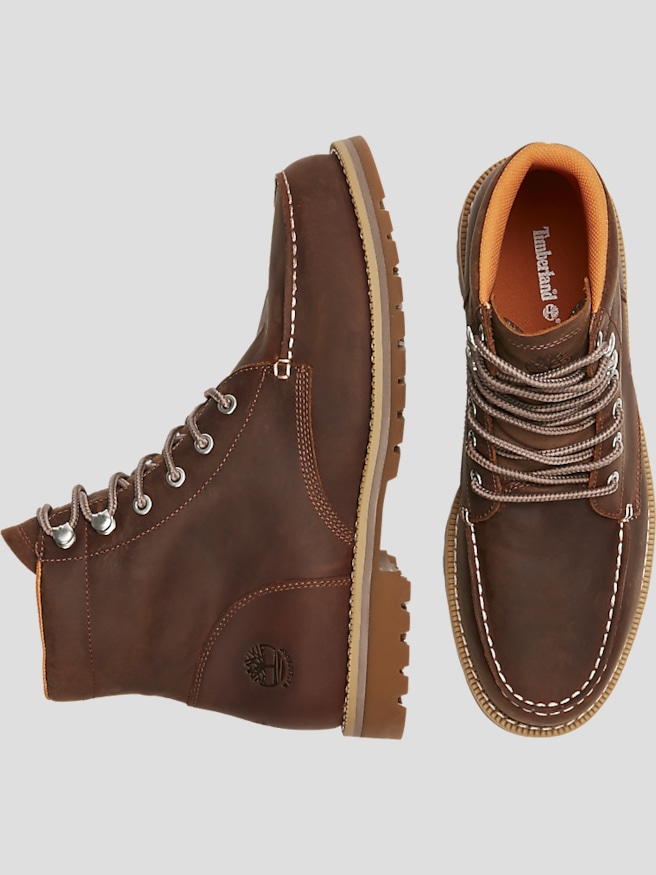
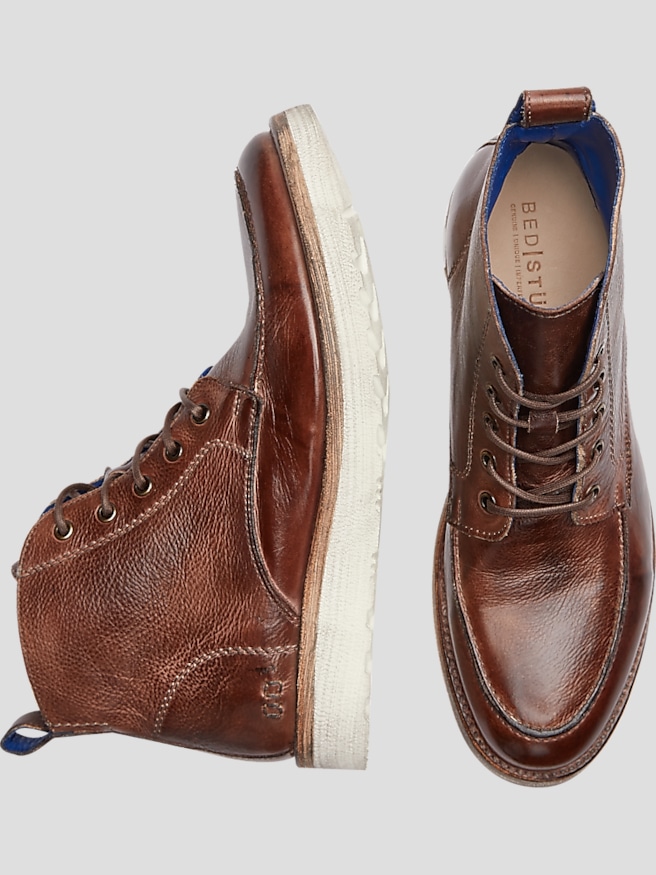
Men’s brown formal boots offer a refined alternative to traditional dress shoes, pairing the coverage of an ankle boot with the clean lines of tailored footwear. Smooth leather, a slim profile, a restrained heel, and minimal hardware give these boots their dressier character. They work particularly well with navy suits, gray trousers, and tailored chinos, while a streamlined pair can also sharpen dark denim for an evening out. The shade of brown makes a noticeable difference: deep chocolate creates a subtle contrast with darker tailoring, medium brown brings warmth to gray and blue, and cognac draws more attention to the footwear. For a client presentation or a wedding reception where the dress code permits boots, darker leather and understated detailing usually create the most composed effect. Strict black-tie occasions generally call for traditional black formal shoes instead. Within dress-boot styling, lace-up designs offer an adjustable fit and a familiar tailored appearance, while Chelsea silhouettes keep the front clean with elastic side panels rather than laces. A simple cap toe adds definition without much ornament; broguing and wingtip details introduce more visual texture and can make an outfit feel less restrained. Suede offers a softer, matte finish that often suits business-casual clothing better than the most formal settings. Trouser proportions matter as much as the boot itself. A straight or gently tapered leg should fall over the shaft without catching or bunching, allowing the footwear to look like a natural extension of the outfit. Excess fabric pooling around the ankle can hide a sleek silhouette, while an overly narrow opening may cling to the boot. A brown belt in a similar depth and finish creates continuity without requiring an exact color match. For someone moving from an office meeting to dinner, brown dress boots can keep the outfit polished without making the footwear feel separate from the rest of the look.
Materials, construction, and fit determine how brown formal boots feel beyond the first impression. Smooth leather can develop subtle creasing and character with wear, although its appearance and care needs depend on the finish. Full-grain leather retains the hide’s natural surface, while other leather finishes may create a more uniform appearance; neither a grain description nor a glossy finish alone tells the whole story about comfort or longevity. Suede has a distinct nap that adds depth to brown tones, but it requires different cleaning tools from smooth leather. Inside the boot, lining materials, seams, and the shape of the footbed influence how comfortably the foot settles in. A soft insole may feel welcoming immediately, yet cushioning cannot compensate for a toe box that squeezes or a last that does not suit the foot’s shape. The toes should have room to move without the foot sliding forward, and the widest part of the foot should align comfortably with the widest part of the boot. The instep should feel secure rather than compressed. Lace-up boots allow adjustments across that area, while Chelsea boots rely more heavily on the relationship between the foot, heel, and elastic panels. Trying boots with the socks intended for dress wear gives a more useful sense of fit than trying them with unusually thick or thin socks. Walking, turning, and sitting can reveal pressure at the ankle or rubbing around the heel that standing still may miss. A small amount of initial heel movement can occur in some designs, but persistent slipping, sharp pressure, or numbness should not be treated as normal break-in. Underfoot construction also deserves attention. Leather soles often support a traditional dress profile, while slim rubber soles can provide a discreet alternative. Traction depends on the sole design and walking surface. Some stitched constructions may allow resoling, but repair options depend on the complete design and should be confirmed rather than assumed.
Thoughtful care helps preserve the features that make dress boots look appropriate with tailoring: an even finish, a defined shape, and tidy edges around the sole and heel. Dust and grit can dull leather and collect along seams, so gentle brushing or wiping after wear is a useful habit. Smooth leather generally benefits from a cleaner and conditioner suited to its finish, followed by an appropriate cream or polish when needed. Testing any treatment on an inconspicuous area helps avoid an unexpected color change, especially on lighter brown leather or finishes designed to show tonal variation. Suede needs a suede brush and compatible products rather than ordinary leather cream, which can flatten or darken the nap. Cedar shoe trees can help support the shape and absorb residual moisture between wears, and letting boots rest allows the interior to dry naturally. Direct heat can damage leather and adhesives, so routine drying is best done away from heaters. Attention to worn heel edges, loose stitching, or separating soles can make professional repair more straightforward before damage spreads. For frequent office wear, durability comes from the combination of suitable construction, a comfortable fit, regular maintenance, and use that matches the boot’s design—not simply from a substantial-looking sole. Within the broader range of Men's Brown Boots, formal styles are distinguished by their relationship to tailored clothing rather than by brown leather alone. A bulky toe, prominent hardware, or heavy tread creates a different impression from a close-cut ankle and understated finish. That distinction is useful when considering boots as a gift for a graduate beginning a professional wardrobe, a partner who regularly wears suits, or someone who enjoys dressing well for dinners and celebrations. Knowing the recipient’s usual size, preferred width, and favored silhouette is more helpful than guessing from appearance alone. The strongest choice is one that fits comfortably, complements the clothing already in regular rotation, and feels appropriate for the occasions ahead.