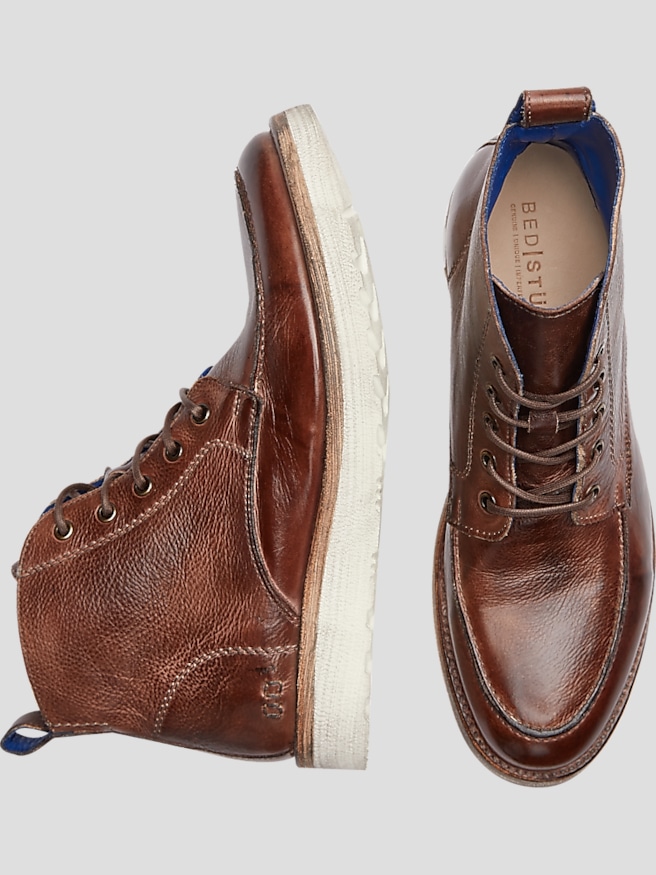
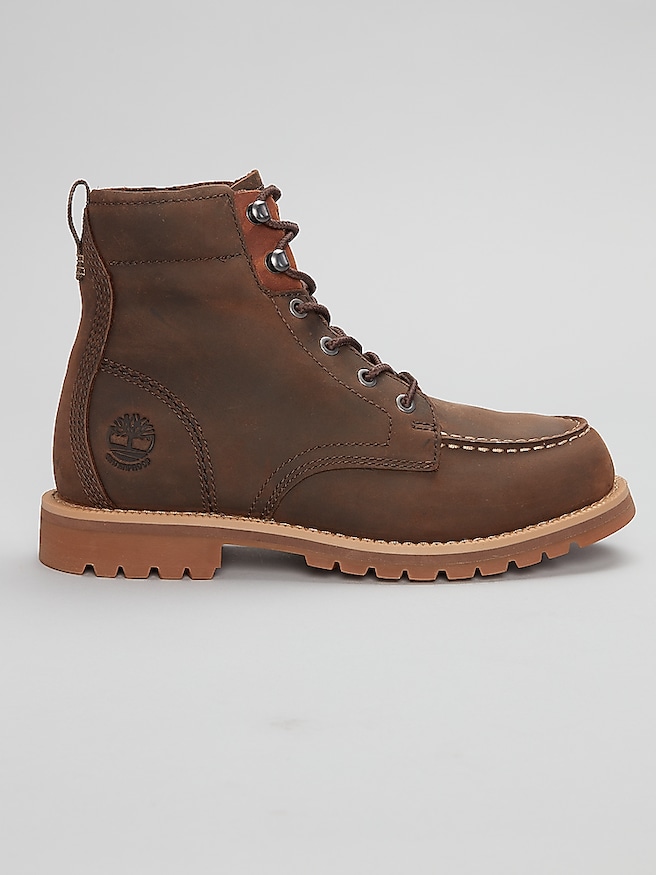
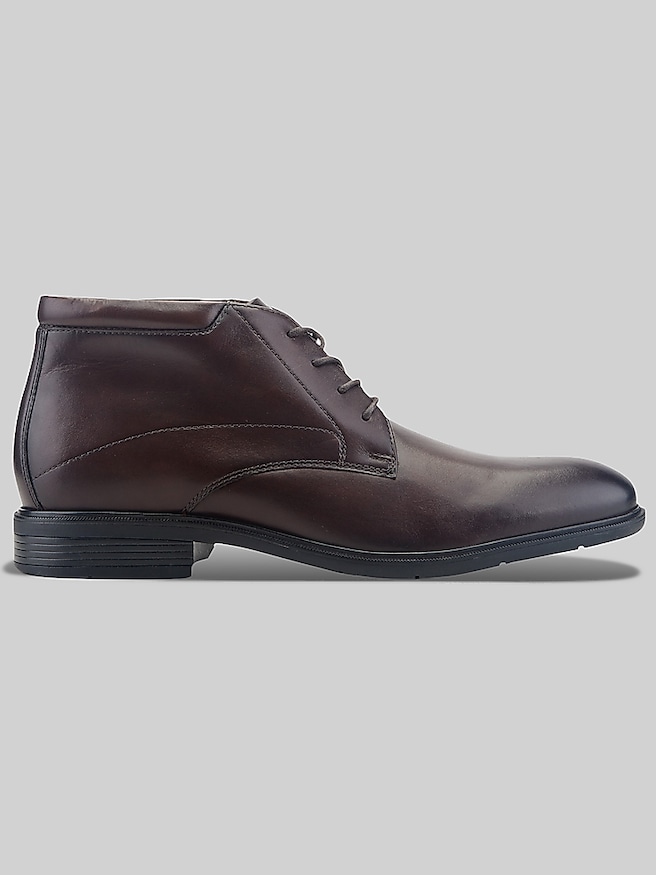
Men’s stylish brown boots bring warmth, texture, and a grounded finish to outfits ranging from dark denim and a flannel shirt to tailored trousers and a wool sport coat. Their versatility starts with the color: lighter tan and cognac shades create contrast against navy or charcoal, while chestnut and deep chocolate offer a quieter look that moves easily between casual settings and offices with a relaxed dress code. The shape of the boot matters just as much as its shade. A slim profile, restrained stitching, and a smooth leather upper lean polished; a rounded toe, substantial sole, and visible seams give the same brown palette a more rugged character. Lace-up boots have a familiar, structured appearance and allow adjustment across the instep, making them a useful option for everyday outfits. Chelsea boots keep the lines clean with elastic side panels and a pull-on design, while zip boots offer easy entry without the visual detail of laces. Cap-toe designs add definition across the front, and plain-toe boots put the emphasis on the leather and overall silhouette. For a weekday spent between a desk, a coffee shop, and dinner with friends, a moderately sleek brown boot can feel appropriate in each setting without requiring a complete change of clothes. Dark straight-leg jeans keep the combination simple, while olive chinos or textured wool trousers introduce another layer of color and fabric. Trouser openings should fall comfortably over the boot shaft rather than bunch around it; an especially narrow opening may catch on a taller or wider shaft. Brown boots also work naturally with cooler-weather layers, including knit polos, crewneck sweaters, overshirts, and wool coats. A belt in a similar brown tone can tie the outfit together without needing to match the footwear exactly. The result can be understated or expressive, depending on the finish, proportions, and clothing around it, rather than relying on decorative details alone.
Materials and construction help explain how brown boots look, feel, and age through regular wear. Smooth leather has a defined surface that can usually be brushed and polished, making it a practical choice for a neat everyday appearance. Full-grain leather retains the hide’s natural surface characteristics and can develop a rich patina with appropriate care, though the leather grade alone does not determine the quality of the entire boot. Suede has a softer, matte texture that pairs especially well with denim, corduroy, and brushed fabrics; its nap also needs care suited to that surface rather than conventional leather polish. Oiled and waxed leathers often have a more casual finish, with marks and creases becoming part of their character over time. Across these materials, thickness, lining, seam quality, and sole attachment all influence comfort and longevity. Some stitched constructions allow a worn sole to be replaced, depending on the boot’s design and condition, while other constructions place more emphasis on flexibility or lighter weight. Outsoles deserve attention beyond appearance. Leather soles create a traditional dress profile, while rubber soles can offer cushioning and traction; actual grip depends on the tread, compound, surface, and weather. A lugged sole may suit damp sidewalks better than a smooth one, but an outdoor-inspired shape does not establish that a boot is waterproof, insulated, or built for demanding jobsite use. Fit is equally important for a pair intended for repeated wear. Toes need room to move without sliding forward, the widest part of the foot should align with the widest part of the boot, and the instep should feel secure rather than compressed. Trying boots with the socks intended for everyday use gives a more useful sense of fit, especially when thicker socks are part of a cooler-weather wardrobe. Leather may soften with wear, but a painfully tight toe box or persistent heel rubbing should not be treated as a necessary break-in stage.
The most useful stylish brown boots fit the places and routines that fill an ordinary week. For commuting, standing through a reception, or walking several blocks to dinner, a balanced combination of cushioning, flexibility, and stable footing can matter more than an especially bold shape. Heavier boots may feel reassuring underfoot but become tiring over long distances, while a lighter build can be easier to wear throughout a busy day. A low-profile pair with a smooth finish suits business-casual clothing, particularly when the toe shape and sole edge look proportionate to the trousers. For occasions calling for a sharper silhouette, men’s brown formal boots offer a dressier direction alongside tailored separates and selected suits, provided the setting’s dress expectations allow boots. More textured or substantial styles feel at home with denim, a cable-knit sweater, and a casual jacket for a weekend lunch or an evening gathering. Brown boots can also make a thoughtful gift for someone who regularly wears chinos, enjoys leather footwear, or prefers a little more ankle coverage than low-cut shoes provide; knowing the recipient’s size, width, and favored closure makes that choice more personal. Once a pair becomes part of the weekly rotation, simple care helps preserve its appearance. Dust and grit should be brushed away before they build up around seams, and damp smooth leather can be wiped gently with a soft cloth. Wet boots need to dry naturally away from radiators or other direct heat, which can dry out leather and affect its finish. A conditioner appropriate to the material helps maintain suppleness, while compatible polish can refresh color and soften the appearance of minor scuffs. Suede calls for a dedicated brush and suitable cleaning products, tested first on an inconspicuous area. Giving boots time to air out between wears and using properly fitted shoe trees can help manage moisture and preserve shape. Those habits support the qualities that make brown boots appealing in the first place: comfortable wear, distinctive texture, and a finish that gains character without looking neglected.