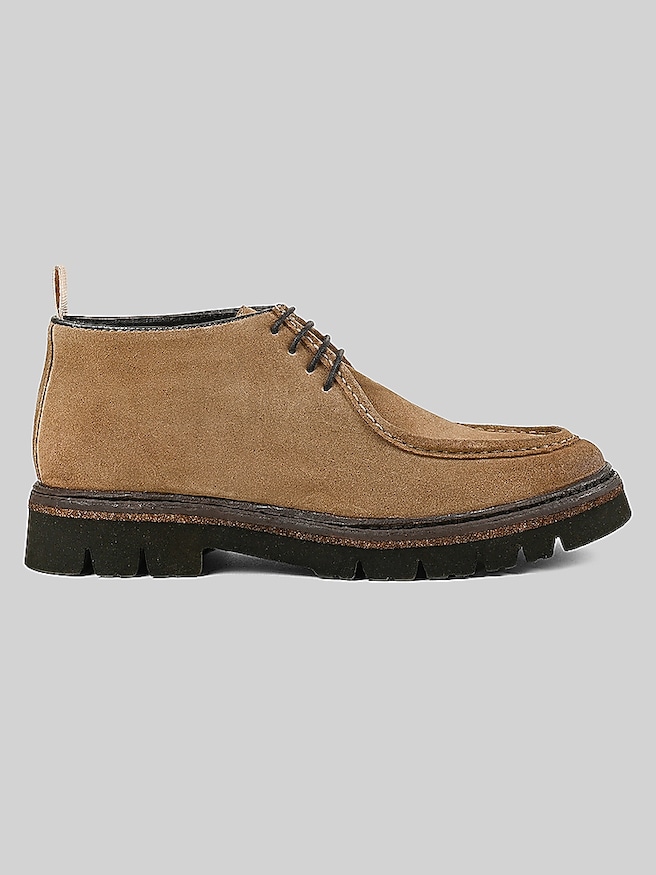
Men’s brown boots range from relaxed lace-ups and ankle-height chukkas to streamlined Chelsea boots and polished dress boots. Their character comes from a combination of shade, texture, shape, and construction: pale tan suede feels easygoing, medium brown leather develops visual depth with wear, and dark chocolate leather creates a quieter, more tailored look. That variety makes brown boots useful across a wardrobe, whether the day calls for dark jeans and an untucked button-down or wool trousers and a sport coat. Chelsea boots have elastic side panels and a clean profile that works especially well beneath straight or gently tapered pants. Lace-up boots offer more adjustment through the instep and can lean rugged or refined depending on their sole, stitching, and toe shape. Chukka boots typically have a lower ankle profile and fewer eyelets, giving them a relaxed appearance that sits comfortably between a casual shoe and a taller boot. For everyday outfits built around denim, chinos, and knitwear, Brown Casual Boots bring texture without requiring a dressed-up look. A rounded toe and substantial sole complement heavier fabrics, while a slimmer toe and restrained detailing pair more naturally with tailored clothing. Brown also works with more colors than its earthy appearance might suggest. Navy, charcoal, olive, cream, and many shades of gray provide an easy backdrop, and a brown belt in a similar depth of color can tie an outfit together without needing an exact match. With dress trousers, a hem that rests lightly over the boot usually looks cleaner than excess fabric gathering around the ankle. With jeans, enough room at the opening helps the denim fall over the shaft rather than catch on it. Brown boots can suit a business-casual office, a dinner out, or an informal celebration, though the appropriate level of polish depends on the setting. Very formal dress codes generally call for more traditional formal footwear rather than a casual boot.
Materials influence both the appearance of brown boots and the way they feel over time. Smooth leather can be polished to a subtle sheen, while suede has a soft, textured surface that makes even a simple shape feel more relaxed. Nubuck offers another textured option, with a fine nap created by buffing the leather’s outer surface. Full-grain leather retains its natural grain, including small variations that contribute to its character; other leather finishes may provide a more uniform appearance. The material name alone does not determine overall quality, since leather thickness, lining, stitching, sole attachment, and finishing all contribute to durability and comfort. A well-made upper should flex where the foot bends without forcing the wearer to fight a rigid crease. Inside, a smooth lining and neatly finished seams help reduce friction, particularly around the heel and ankle. Fit deserves the same attention as appearance. Toes need room to lie naturally, the ball of the foot should align with the boot’s flex point, and the instep should feel secure rather than compressed. A little initial firmness in leather is different from pinching, numbness, or pressure against the toes; break-in should not be expected to correct a boot that is too short or narrow. Trying boots with the socks intended for regular wear gives a more useful sense of fit. Lace-up styles allow tension to be adjusted along the foot, while pull-on styles rely more heavily on the shape of the last and the fit through the instep. Underfoot, cushioning can soften the feel of a firm surface, but support and stability also depend on the footbed and overall construction. Rubber soles often provide flexibility and grip, while leather soles offer a traditional dress profile. Tread design and the surface underfoot still matter. Welted construction may make future resoling possible, depending on the boot and the work needed; other methods can create a lighter or more flexible feel. Neither appearance nor construction terminology alone establishes that a boot is suitable for a job requiring protective footwear.
Brown boots tend to look their best when their care matches their material and their use. Smooth leather benefits from having surface dirt removed with a soft brush or cloth before an appropriate conditioner or polish is applied. Conditioner helps maintain suppleness, while cream or wax polish can refresh color and adjust the level of shine; the right combination depends on the leather’s finish and the maker’s recommendations. Testing any treatment on an inconspicuous area helps avoid an unexpected change in color. Suede and nubuck need a different approach, usually involving a dedicated brush and products intended for their textured surfaces rather than ordinary leather polish. Too much product can darken leather or flatten a textured finish, so restrained care is often more effective than heavy application. Letting boots rest between wears allows interior moisture from normal use to dissipate, and properly fitted shoe trees can help support their shape. A shoehorn reduces strain at the heel when putting them on, while loosening laces before removal protects the opening from unnecessary pulling. Regular attention to worn heels, loose stitching, and thinning soles can also prevent a small repair from becoming a larger problem. These practical details matter for someone who walks between meetings, spends much of the day on their feet, or wants one pair to move easily from an office outfit to dinner afterward. For a gift, familiar preferences are more useful than a dramatic departure: a person who wears simple leather shoes may appreciate a clean-lined brown boot, while someone whose wardrobe centers on jeans and casual shirts may favor visible stitching and a more substantial sole. Accurate size and width information are especially helpful, since boot shapes vary. The most useful brown boots balance a pleasing silhouette with a secure fit, appropriate materials, and a sole suited to their intended setting. Their appeal is not limited to one outfit; subtle changes in finish and shape let them feel equally considered with everyday basics or more tailored pieces.