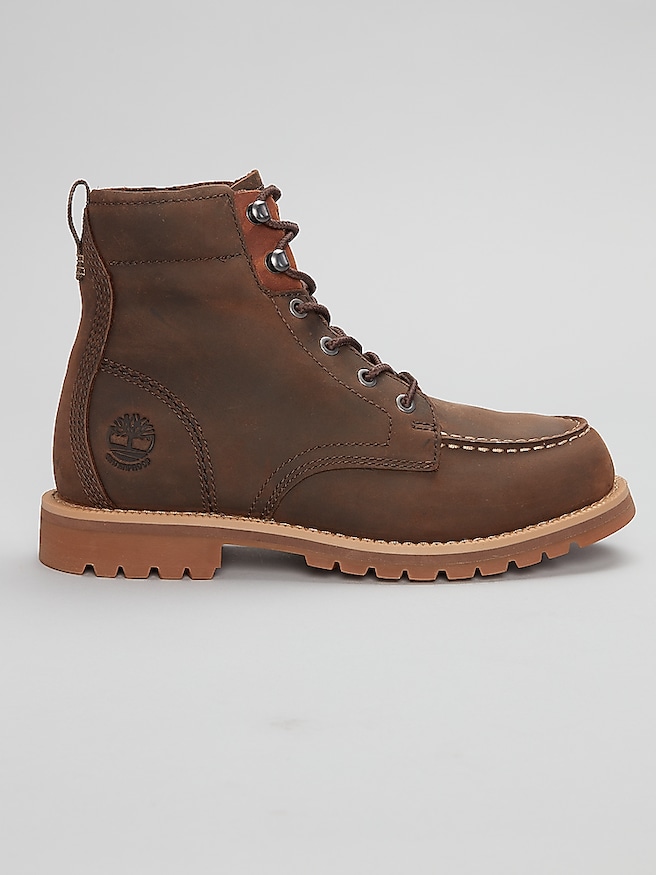
Men’s black leather lace-up boots bring a grounded, polished finish to everyday dressing, with enough structure to sharpen dark denim and enough versatility to sit comfortably beneath tailored trousers. Their appeal starts with the combination of smooth leather, a deep black finish, and laces that let the fit adjust across the top of the foot. A slim profile with a gently rounded or almond-shaped toe tends to look more refined, while a broader toe, substantial stitching, and a pronounced outsole create a more rugged impression. Neither approach needs elaborate styling: straight-leg jeans, an Oxford shirt, and a wool overshirt give a sturdy pair a natural setting, while charcoal trousers and a fine-gauge sweater complement a sleeker shape. During the cooler months, the added ankle coverage feels especially appropriate with heavier fabrics such as corduroy, flannel, and wool. The most useful choice depends on where the boots will spend their time. An office commute, a dinner reservation, and a relaxed weekend can call for slightly distinct proportions, even when the color and material stay the same. For business-casual settings, restrained hardware and a relatively low-profile sole keep the footwear from overwhelming the outfit. For casual wear, visible eyelets and a thicker tread can provide a welcome contrast to clean, simple clothing. Trouser length matters, too. A hem that meets the top of the boot without gathering heavily keeps the silhouette neat; a modest cuff on denim can reveal the lacing without making the boots the entire focus. Black leather also pairs easily with navy, gray, olive, and earth tones, so the surrounding outfit does not have to be entirely black. When an occasion calls for a more tailored direction, Men's Black Leather Formal Boots offer a related look to consider alongside dress trousers and structured jackets. The overall effect should feel balanced, with the boot’s shape and finish matching the formality of the clothing.
Leather quality, construction, and fit have as much influence on daily comfort as appearance. Full-grain leather retains its natural surface character and can develop creases and a softer feel with wear, while top-grain leather is often finished for a more uniform appearance. Neither label alone explains how a boot will feel; leather thickness, lining, seams, and the shape of the last all contribute. A smooth, polished upper can look crisp beneath a trouser hem, whereas a more textured surface gives black leather additional depth and a less formal character. Inside, a comfortable lining and well-placed cushioning can make a noticeable difference during a day that includes standing at a desk, walking to lunch, and heading out after work. Fit should be assessed with the socks intended for regular wear, particularly when cooler weather brings thicker pairs into rotation. Toes need room to move without pressing against the front or sides, and the ball of the foot should align with the boot’s natural flex point. The heel should feel secure rather than lifting substantially with each step. Laces can fine-tune pressure over the instep and around the ankle, but they cannot correct a boot that is too short or fundamentally too narrow. Leather may ease with use, yet painful pressure is not a useful starting point. Trying both boots and walking on a clean indoor surface helps reveal rubbing, heel movement, or stiffness before a full day outside. Outsole choice deserves similar attention. Rubber can provide cushioning and useful grip, depending on the tread and surface, while leather soles generally create a dressier appearance but may feel less sure-footed on slick pavement. A lugged sole can suit more casual use, though tread alone does not make footwear slip-resistant or suitable for hazardous work. For long commutes or travel days, consider the combined effect of weight, flexibility, underfoot support, and walking distance rather than judging comfort by softness alone.
Good care helps black leather lace-up boots retain their shape and finish through repeated wear. After a day outdoors, a soft brush or dry cloth can remove dust and grit before they work into creases or collect around the welt. Mud is usually easier to brush away once dry, followed by cleaning suited to the leather’s finish. For salt marks or stubborn residue, follow the footwear maker’s care instructions and test any cleaner in an inconspicuous spot. Leather conditioner, used sparingly when appropriate, can help prevent the upper from becoming overly dry; excessive product can leave buildup rather than improve the material. Black cream polish can refresh color on compatible smooth leather, while wax may add shine and some surface protection. Neither should be treated as a substitute for waterproof construction. Ordinary leather boots are not automatically prepared for prolonged rain, slush, or snow, and even a protective treatment has limits. If boots become wet, let them dry naturally away from radiators and direct heat, with absorbent paper inside as needed. Once dry, properly sized shoe trees can help support the shape between outings. Alternating footwear gives the lining time to air out, especially after a long day in heavier socks. Durability also depends on catching small problems early: frayed laces, worn heel edges, and separating sole sections deserve attention before they affect fit or footing. Some stitched constructions may permit resoling, but repair options depend on the design and a cobbler’s assessment. These practical details matter whether the boots are intended for regular office wear, weekend plans, or a gift for someone building a versatile wardrobe. For a birthday or another personal milestone, black leather lace-up boots can be a thoughtful choice when the recipient’s size, preferred fit, and usual clothing are known. A person who favors tailored layers may appreciate a streamlined shape, while someone who lives in denim may get more use from a sturdier profile. The strongest match is a pair that fits comfortably, works with familiar clothes, and can be maintained without an elaborate routine.