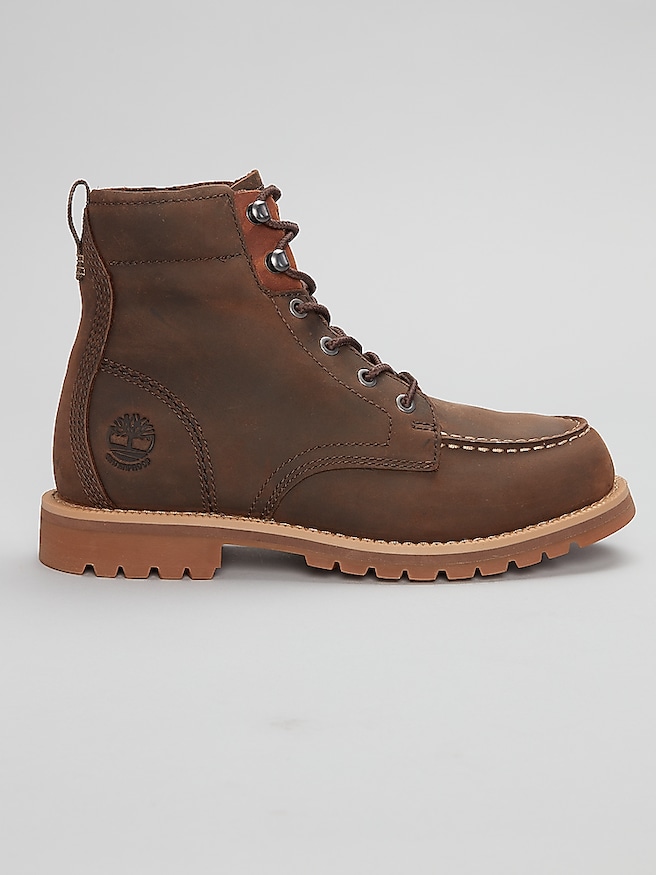
With adjustable lacing and a versatile color, black men's lace-up boots connect casual dressing with a more tailored look. Their ankle-high or taller uppers create a distinctive silhouette, while the laces allow the fit to be adjusted across the instep and around the ankle. Within this category, shape and detailing make a substantial difference: a slim leather boot with discreet stitching reads differently from a broad-toe style with a thick, textured sole. Plain-toe designs keep the front clean and understated, while cap-toe construction adds a defined seam that can complement structured clothing. Decorative perforations bring another layer of detail without requiring a bold color or pattern. For an office with a business-casual dress code, a streamlined silhouette works naturally with wool trousers, an oxford shirt, and an unstructured jacket. With dark jeans and a knit polo, the same general style feels relaxed enough for dinner or an evening out. More substantial profiles suit straight-leg denim, chinos, and overshirts, particularly when the proportions of the clothing balance the weight of the footwear. The trouser opening matters as much as the boot itself. A narrow opening can sit neatly over a slimmer shaft, while a wider leg gives a thicker boot room without bunching around the ankle. A hem that falls cleanly over the upper helps keep the outfit intentional rather than crowded with excess fabric. Black leather also coordinates easily with charcoal, navy, gray, and earth tones, making these boots useful in a wardrobe that moves between casual and polished settings. A black belt can create a cohesive finish, although the leather textures do not need to match perfectly. For especially formal occasions, the dress code remains the deciding factor; a refined boot can accompany tailoring in some settings, but it does not automatically replace a traditional dress shoe. The strongest pairing comes from matching the boot’s level of structure and detail to the rest of the outfit.
Materials and construction influence how black lace-up boots look, feel, and hold up through repeated wear. Smooth leather offers a defined surface that can be cleaned, conditioned, and polished as appropriate for its finish. Full-grain leather retains the natural surface of the hide and may develop visible character with use, while corrected or coated finishes can have a more uniform appearance and their own care requirements. Suede creates a softer, matte effect that works especially well with textured trousers and casual clothing. Synthetic uppers vary widely in flexibility, breathability, and maintenance needs, so the material description is more useful than appearance alone when judging suitability. Inside the boot, lining materials, seam placement, cushioning, and the shape of the footbed all contribute to comfort. A padded interior may feel welcoming at first, but cushioning cannot compensate for a toe box that pinches or an instep that feels compressed. The ball of the foot should sit near the boot’s widest point, with room for the toes to move without sliding forward. A secure heel can have a small amount of initial movement in some constructions, but persistent lifting or rubbing deserves attention. Trying boots with the socks intended for regular wear gives a more realistic sense of fit, especially when thicker socks or personal insoles are involved. Laces should hold the foot comfortably rather than require excessive tightening to make an oversized boot feel secure. Leather may soften with wear, but breaking in is not a reliable solution for an unsuitable size or shape. Underfoot, rubber soles often provide a flexible, practical foundation, while leather soles create a more traditional dress profile; traction depends on the particular surface and tread design, not simply the material name. Welted construction may allow resoling when the upper remains sound, depending on how the boot is made. Work-inspired styling, substantial soles, and a rugged appearance do not by themselves establish protective performance, so footwear for a job with safety requirements needs the appropriate documented features.
Thoughtful care helps black lace-up boots retain their shape and finish, whether they are worn with office trousers several days a week or kept for dinners and special outings. Surface dust and grit can work into creases and around stitching, making a quick wipe or gentle brushing after wear a useful habit. Smooth leather generally benefits from a cleaner and conditioner suited to its finish, applied sparingly and tested first in an inconspicuous area. Polish can restore depth to black leather and help maintain a more dressed-up appearance, but it should not be used on suede or finishes that require another treatment. Suede calls for a suitable brush and material-specific cleaning methods that preserve the nap rather than flatten it. Care labels and manufacturer recommendations take priority, especially for coated materials, mixed-material uppers, and decorative finishes. Boots should dry naturally away from direct heat if they become damp during cleaning or wear, since concentrated heat can damage leather and adhesives. Letting footwear rest between uses gives the interior time to air out, and appropriately sized shoe trees can help support the shape without stretching the upper. Loosening the laces before taking boots off reduces unnecessary strain on the opening and heel; a shoehorn can also help protect the heel structure when putting them on. Eyelets, hooks, seams, laces, and sole edges are worth checking periodically, since small signs of wear may be easier to address before they affect fit or function. For gifting, black lace-up boots can be a thoughtful choice for a birthday, graduation, or career milestone when the recipient’s size and style preferences are well understood. Someone who favors tailored trousers may appreciate a cleaner toe and slimmer sole, while a devoted denim wearer may prefer a more substantial profile. Familiarity with the recipient’s usual footwear is more helpful than assuming every boot in the same labeled size will fit alike. Ultimately, lasting usefulness comes from the combination of appropriate materials, balanced proportions, a comfortable fit, and care that suits the construction.