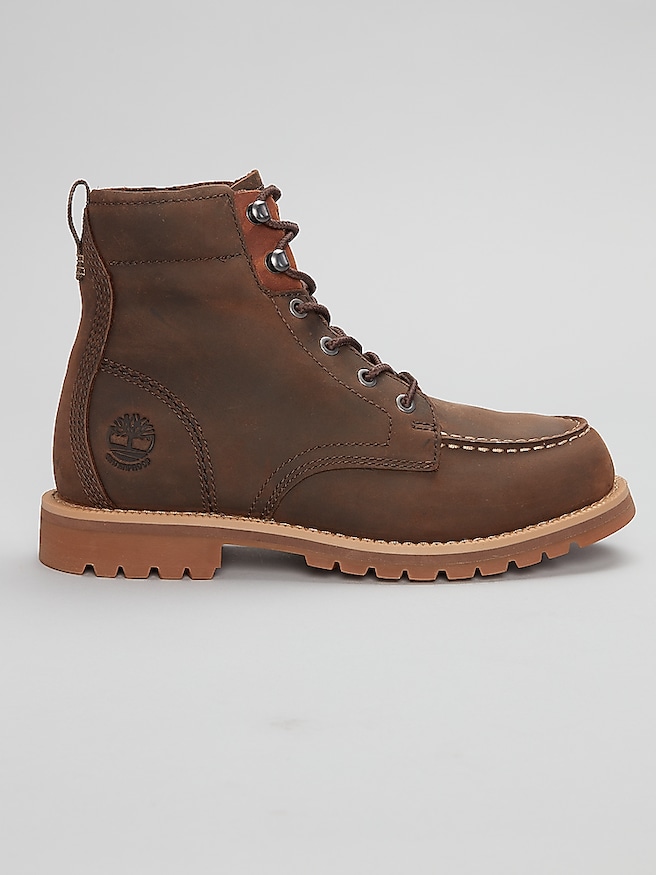
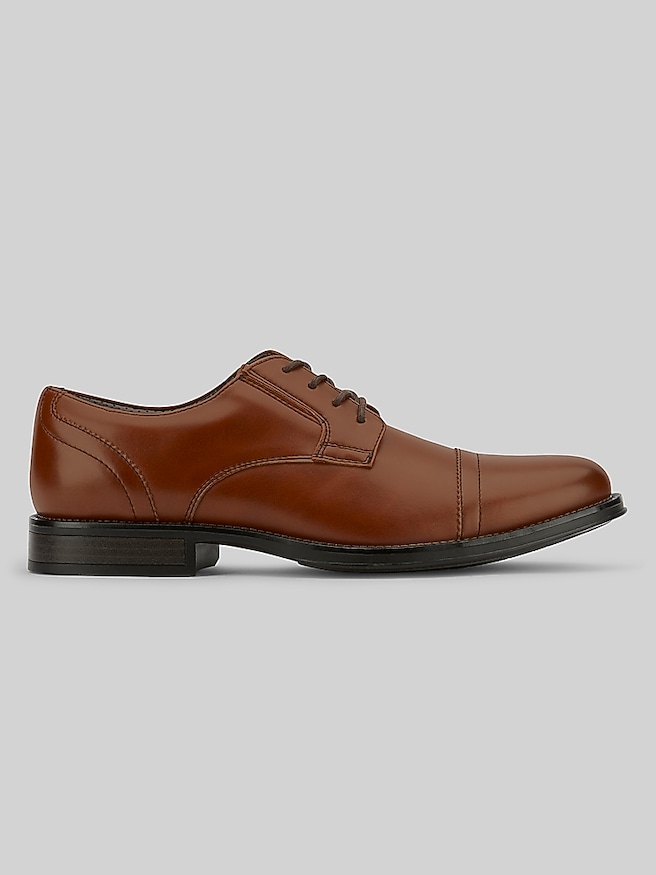
Men’s black lace-up boots bring an adjustable fit and a defined ankle profile to footwear that can work with denim, chinos, and tailored trousers. Their character depends on the details: smooth leather, a slim sole, and discreet eyelets create a dressier appearance, while a rounded toe, substantial tread, and visible stitching give the same black color a more casual feel. A plain toe keeps the silhouette clean; a cap toe adds a distinct line across the front; decorative perforations introduce texture without requiring a contrasting color. These details help determine whether a boot feels at home beneath office trousers, alongside dark jeans at dinner, or with relaxed clothing for a day around town. Black is especially easy to coordinate with charcoal, gray, navy, and olive, and it can anchor lighter trousers without making the outfit feel overly formal. The relationship between the boot and the trouser hem matters as much as the color combination. A narrower shaft generally sits neatly beneath a tapered leg, while a more substantial boot needs enough room at the hem to avoid bunching. For a polished office outfit, smooth black boots with restrained hardware can complement wool trousers and a textured jacket. For an evening out, black denim and a simple knit let the shape and finish of the footwear stand out. The range of styling possibilities reflected in Lace Up Black Boots for Men comes from these practical distinctions, rather than color alone. Even the laces affect the overall impression: slender round laces tend to look refined, while broader laces emphasize a casual profile. Boots can also provide more coverage around the ankle than low-cut shoes, although that coverage does not automatically mean greater support. For men who move between a desk, a commute, and an informal dinner, the most useful design is often one whose shape suits the clothing worn most frequently. A streamlined black boot can bridge those settings without looking like specialized outdoor footwear.
Materials and construction influence how black lace-up boots feel, age, and perform through repeated wear. Smooth leather can develop creases and a softer feel with use, while its surface generally responds well to appropriate cleaning and conditioning. Full-grain leather retains its natural surface characteristics; suede has a napped texture that gives black a softer, more matte appearance. Synthetic uppers vary in flexibility, breathability, and maintenance needs, so the material description is more useful than appearance alone when considering long-term care. Linings also affect comfort, especially around the heel and tongue, where rough seams or excess bulk may become noticeable over several hours. Underfoot, a leather sole typically creates a sleek profile, while rubber soles vary from low-profile designs to deeper patterns intended to provide more traction. Tread is only one factor in grip; the rubber compound and the walking surface matter, too. Neither a substantial sole nor a rugged appearance establishes that a boot is suitable for hazardous work. Protective toes, slip-resistance testing, electrical-hazard protection, and other occupational requirements need explicit specifications. For everyday use, fit begins with adequate toe room, a secure heel, and an instep that feels held rather than compressed. Toes should not strike the front when walking, and the foot should not slide forward with each step. Lacing allows tension to be adjusted along the upper, but it cannot correct a boot that is too short or fundamentally too narrow. Trying boots with the socks intended for regular wear gives a more accurate sense of space and comfort. A little initial firmness in leather can be normal, but sharp pressure, pinching, or numbness should not be treated as a necessary break-in stage. Construction deserves similar attention: stitched and cemented assemblies can both serve everyday needs, while some welted designs may allow resoling when the rest of the boot remains sound. Even stitching, secure hardware, and a neatly joined upper and sole are useful details to examine. The right balance of flexibility, weight, and cushioning depends on whether most of the day involves sitting, walking between appointments, or spending extended periods on foot.
Regular care helps black lace-up boots retain their appearance and makes small signs of wear easier to address. Dust often shows clearly against a dark finish, particularly along the welt, around the eyelets, and in the creases where the forefoot bends. A soft brush or cloth can remove loose debris before a cleaner appropriate to the material is used. Smooth leather may benefit from occasional conditioning, followed by compatible black cream or polish when the finish needs attention. Excess product can build up around stitching and seams, so light applications are generally more useful than heavy coatings. Suede needs its own brush and suitable care products; conventional leather polish can flatten the nap and alter its appearance. Manufacturer guidance should take precedence, particularly for coated leather, mixed-material uppers, and specialized finishes. If boots become damp during cleaning or use, allowing them to dry naturally away from direct heat helps protect the materials. Suitable shoe trees can help maintain shape between wears, and giving the interior time to dry fully supports comfort as well as upkeep. Laces are worth checking where they pass through eyelets or hooks, since fraying can develop gradually. Worn heel edges, separating sole sections, and loose hardware also deserve attention before they affect the way the boots feel underfoot. For a gift, black lace-up boots make the most sense when the recipient’s size, usual width, and style preferences are already known. Someone who wears tailored trousers may appreciate a restrained silhouette, while a devoted denim wearer may favor a broader toe and more visible sole. Existing footwear can offer clues about preferred shapes, although sizing can vary across boot designs. The most rewarding choice is not necessarily the most elaborate one: comfortable proportions, a finish that works with familiar clothing, and manageable care requirements are what make a pair useful beyond a single occasion. Those qualities give black lace-up boots a lasting place in an everyday wardrobe.