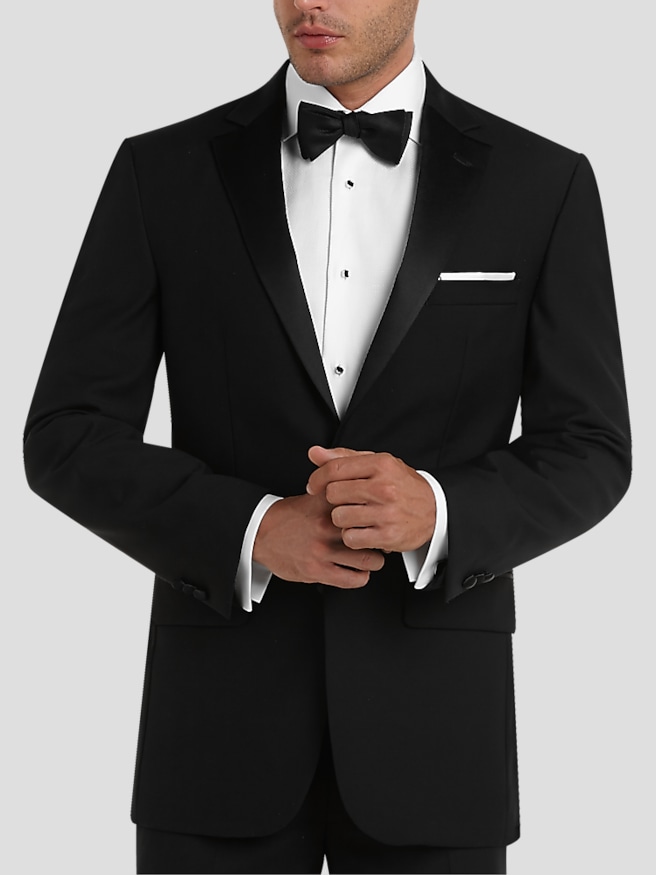
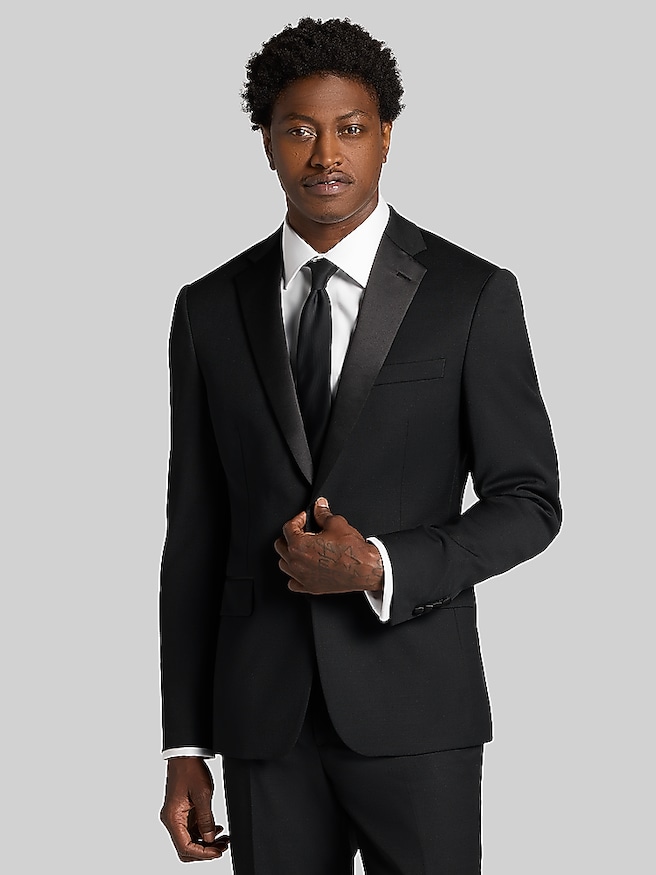
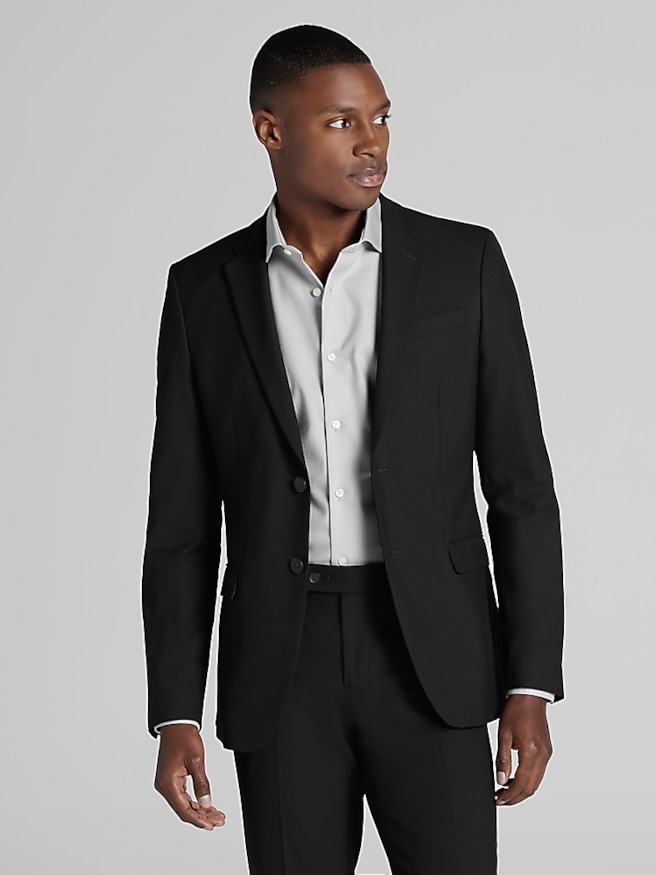
Formal event attire brings together tailored clothing, dress shirts, polished footwear, and refined accessories for occasions with an elevated dress code. For men, that generally means a tuxedo for black-tie events or a dark suit when the invitation calls for formal or black-tie-optional dress. Weddings, charity galas, awards ceremonies, milestone celebrations, and evening receptions each give these clothes a distinct setting, but the purpose stays much the same: a composed appearance that respects the occasion without distracting from it. A black or midnight-blue tuxedo, often finished with satin or grosgrain lapels, has the visual clarity associated with traditional evening wear. A white formal shirt, black bow tie, and polished black dress shoes complete that familiar silhouette. A deep navy or charcoal suit offers a more understated expression of formality for occasions where a tuxedo is not required, especially with a white shirt and a restrained silk tie. The distinction lies partly in the finish: tuxedos typically feature contrasting trim, while suits generally use the same fabric across the jacket body and lapels. Within those traditions, there is room for personal taste through lapel shape, fabric texture, and carefully chosen accessories. Peak lapels create a pronounced, angular line, while shawl collars have a smooth curve often associated with evening dressing. A neatly folded pocket square introduces a small point of contrast; cuff links add detail at the wrist without competing with the rest of the outfit. The broader range of Adult Formal Wear reflects these variations in dress codes and occasion dressing. For a guest attending an evening wedding, the emphasis may be on quiet polish. For a host greeting guests beneath ballroom lights, the same clothing needs to feel composed through introductions, dinner, and photographs. Across those settings, coordinated proportions and appropriate formality have more lasting impact than an abundance of decorative details.
Fabric and fit give formal clothing much of its character, especially over an event that lasts several hours. Wool is a traditional choice for suits and tuxedos because it drapes cleanly, allows some airflow, and has a natural resilience that helps light creases relax between wears. Fine worsted wool creates a smooth surface suited to crisp tailoring, while wool blends can offer other balances of texture, structure, and ease of care, depending on their composition. Fabric weight matters as much as fiber content. During the cooler months, a somewhat more substantial cloth can feel comfortable on the walk from the car to the venue, though a crowded reception room still calls for clothing that does not feel overly heavy. Velvet brings a richer surface to evening jackets where the dress code permits personal expression, catching the light rather than reflecting it with a hard shine. Cotton dress shirts provide a familiar, breathable foundation, with smoother weaves creating a particularly clean backdrop for a tie or bow tie. Collar shape should work with the neckwear, and the collar itself should sit comfortably when fastened. A jacket’s shoulders establish the framework for the whole outfit: the fabric should lie cleanly rather than extend conspicuously beyond the shoulder or pull across the upper back. The chest and waist need enough room for sitting at a dinner table, offering a handshake, or lifting a glass without pronounced strain around the button. Sleeve length is usually balanced to reveal a narrow edge of shirt cuff, adding definition at the wrist. Trousers should hang smoothly through the seat and thigh, with a hem that meets the shoe cleanly instead of gathering in thick folds. Slim, tailored, and more relaxed cuts can all look formal when their proportions suit the wearer. Comfort is especially noticeable during a long ceremony followed by dinner and dancing, when restrictive clothing can make even a beautifully coordinated outfit feel cumbersome. Good fit supports both the appearance of the clothing and the ease of the person wearing it.
Footwear, accessories, and regular care help formal event attire hold its shape and purpose beyond a single celebration. Smooth black leather oxfords offer a restrained finish with dark suiting, while patent leather footwear is a traditional companion to tuxedos. A clean profile and well-kept surface matter, but so does a secure fit through the heel and enough room across the forefoot for extended standing. Dress socks that coordinate with the trousers help maintain an uninterrupted line when seated, particularly when they are long enough to cover the lower leg. Accessories work best as a connected set of details rather than separate statements. A silk tie can pick up a subtle tone from a pocket square without matching it exactly, and metal finishes on cuff links and a watch can remain consistent for a quieter effect. With traditional black tie, a cummerbund or an appropriate low-cut waistcoat can cover the waistband, depending on the tuxedo’s styling; these finishing choices should complement rather than crowd the jacket. Formal accessories can also make thoughtful gifts for an adult celebrating a graduation, an engagement, or another milestone, especially when the recipient’s taste and upcoming occasions are known. Their usefulness depends less on novelty than on how naturally they fit into an existing wardrobe. Durability comes from both construction and treatment: secure seams, stable linings, sound button attachment, and fabric that recovers well from ordinary wear all support repeated use. After an event, allowing tailored clothing to air before placing it in a breathable garment bag helps keep it fresh. A broad, shaped hanger supports a jacket’s shoulders, while properly hanging trousers helps preserve their line. Care labels remain the best reference for cleaning, since shell fabric, lining, and decorative trim may have distinct requirements. Professional cleaning is appropriate when specified, and spots deserve prompt attention with a method suitable for the material. Shirts benefit from careful pressing around the collar, cuffs, and front, while leather shoes need care matched to their finish. These small habits preserve the details that make formal clothing feel ready for the next invitation, from a family wedding to an elegant evening reception.