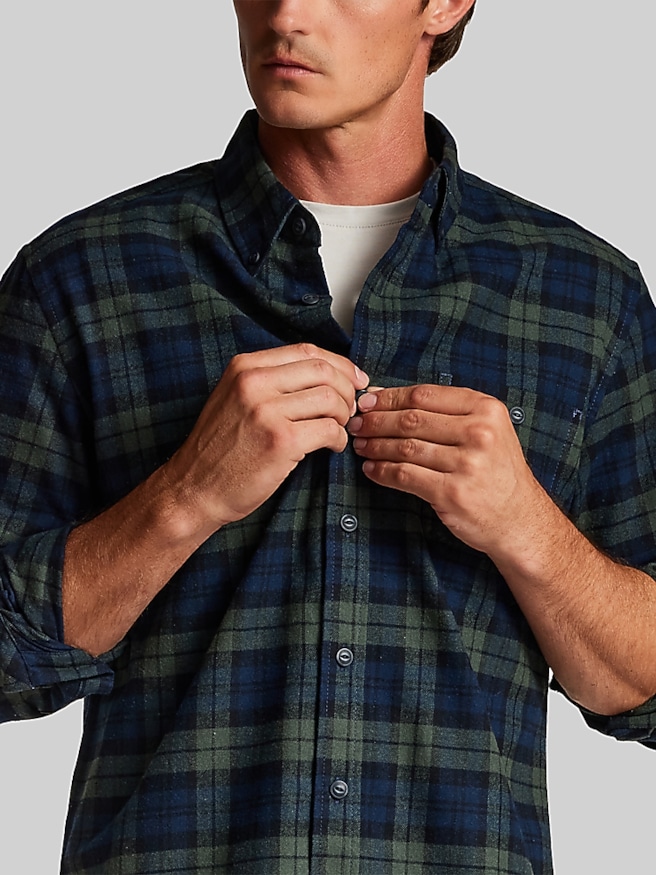
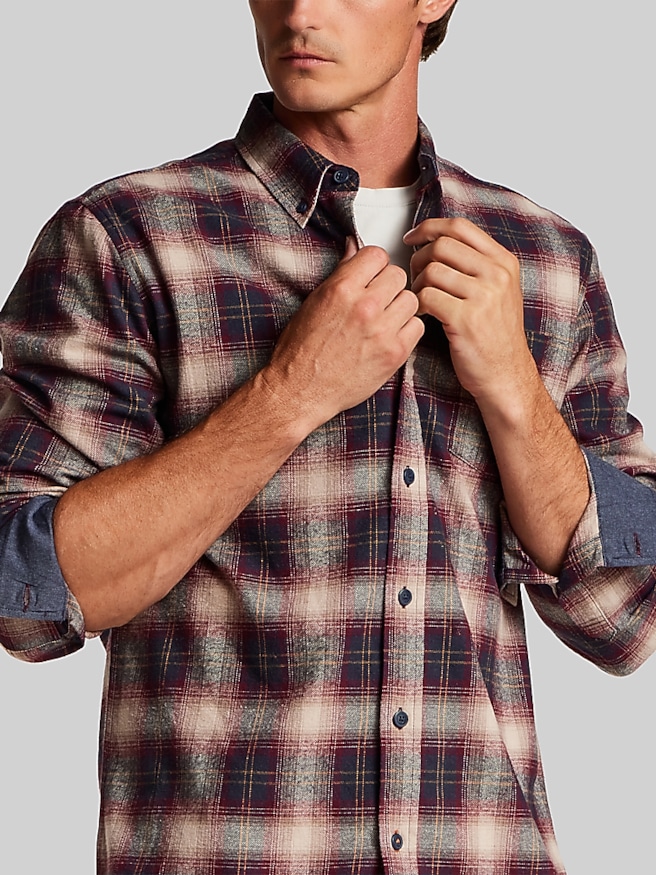
Fall shirts for men include flannel shirts, long-sleeve button-downs, oxford shirts, twill shirts, and other styles that work comfortably on their own or beneath an extra layer. Their appeal comes from a combination of texture, practical coverage, and colors that sit naturally alongside denim, chinos, and tailored trousers. Cotton flannel has a soft, brushed surface that can feel comfortable against the skin, making it a familiar choice for relaxed weekends and informal workplaces. Flannel describes the fabric rather than the pattern: a solid shirt can be flannel, while a plaid shirt may be made from a smooth, unbrushed weave. Oxford cloth has a distinctive basket-weave texture and a slightly substantial feel, giving a button-down enough structure for the office without making it look overly formal. Twill has a diagonal weave that adds visual depth, with weight and softness varying by fabric construction. Cotton is often valued for its breathability, while cotton blends may offer added stretch, easier maintenance, or improved resistance to wrinkles, depending on their composition and finish. Fabric weight matters as much as fiber content. A lightweight long-sleeve shirt can sit neatly beneath a sweater, while a heavier brushed shirt may feel more substantial worn over a T-shirt. Neither replaces outerwear when conditions call for it, but both can be useful parts of a layered outfit. Earthy shades such as olive, rust, tobacco, and brown complement autumn textures, while navy, burgundy, gray, and cream remain versatile well beyond a single season. Small checks and restrained plaids can add interest without dominating an outfit; larger patterns have a more relaxed presence. A dark plaid with clean trousers feels appropriate for a casual dinner, while a solid oxford beneath a sport coat can carry a full workday into an evening gathering. Collar shape, fabric texture, and pattern scale all influence that impression, allowing fall shirts to range from easygoing to polished without relying on elaborate styling.
The fit of a fall shirt determines how comfortably it moves and how neatly it layers. Shoulder seams generally sit near the edge of the shoulder, and the chest should have enough room for reaching forward without pulling the button placket open. A close fit can look sharp, but visible strain across the chest or upper back usually means the shirt needs more room. A classic fit offers a fuller shape through the body, while slim and tailored fits tend to reduce excess fabric; those labels are not identical across every design, so measurements remain useful. Sleeve length deserves attention, particularly for shirts worn beneath jackets. With arms relaxed, the cuff typically rests around the wrist, and it should stay comfortable when the elbow bends. A shirt intended to be worn over a T-shirt needs enough space for that base layer without becoming bulky under a coat. Hem shape and length also affect everyday use. A longer curved hem helps a tucked shirt stay in place through a seated workday, while a shorter hem can create a cleaner untucked line with jeans or chinos. Casual combinations often depend on these small proportions more than on bold accessories. A brushed shirt with dark denim and leather boots has a straightforward weekend feel; a fine-textured button-down with chinos and a crewneck sweater reads more neatly for an informal office. The range of styles associated with Fall Casual Shirts reflects that overlap between comfortable everyday dressing and outfits with a little more structure. For a crowded indoor gathering, a lighter shirt beneath a removable layer may be more comfortable than relying on one heavy garment. For a walk between a parking lot and an office, a smooth shirt under knitwear can reduce bulk while keeping the collar visible. Through fall and into winter, this flexibility gives long-sleeve shirts a useful role in wardrobes built around repeated wear rather than a single occasion.
Care and construction help determine how well a shirt holds its shape, texture, and appearance over time. The care label is the best starting point because two shirts that look similar can require distinct washing or drying methods. Many cotton and cotton-blend shirts can be machine washed, but water temperature, dryer heat, and finishing treatments affect the result. Excessive heat can contribute to shrinkage or fabric wear, and removing a washable shirt promptly after the cycle can help limit deep wrinkles. Brushed fabrics benefit from gentle handling that preserves their soft surface; laundering them with rough or heavily fastened garments can increase friction. Turning a shirt inside out may help reduce surface abrasion, provided that approach is consistent with its care instructions. A smooth woven shirt may need pressing for a crisp appearance, while a textured casual shirt often looks natural with a softer finish. Iron settings should match the fabric, especially when stretch fibers or synthetic blends are involved. Strong, even stitching, secure buttons, and neatly finished seams are useful construction details, particularly at cuffs, armholes, and other areas that receive frequent movement. Over time, checking loose buttons and addressing a small seam opening before it grows can help extend a shirt’s useful life. Hanging shirts with space around them keeps collars and plackets from becoming crowded, while neatly folding heavier casual styles can make drawers easier to manage. Fall shirts can also make thoughtful gifts for a father, brother, partner, or friend whose everyday wardrobe includes long sleeves. Familiar measurements, preferred colors, and usual dressing habits are more reliable clues than guessing from appearance alone. Someone who wears a shirt tucked in at work may appreciate a smooth fabric and a restrained pattern, while someone who spends weekends in jeans may prefer a soft brushed texture and a roomier cut. The most useful choice is a shirt that feels comfortable through ordinary routines: sitting at a desk, driving to dinner, carrying a bag, or settling into an evening at home. Those everyday details give fabric, fit, and care a practical purpose beyond the look of the shirt itself.