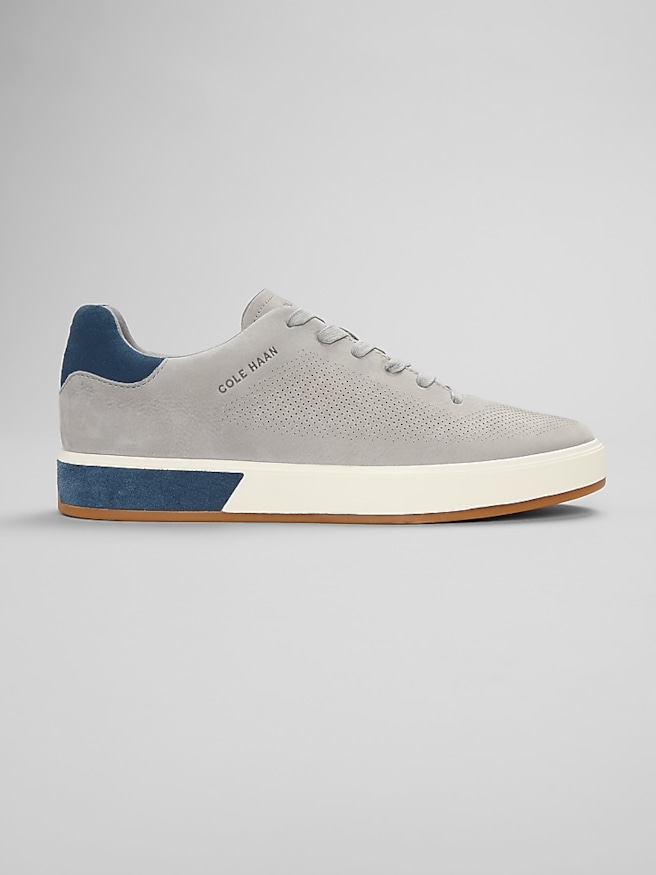
Fall sneakers bring the ease of everyday footwear to outfits built around denim, chinos, knitwear, and layered textures. Their appeal comes from a balance of familiar comfort and a finish that feels considered, whether the day includes a casual office, a neighborhood coffee stop, or dinner with friends. Leather, suede, and mixed-material uppers each give men’s sneakers a distinct character, while colors such as brown, olive, burgundy, gray, and cream complement the deeper shades often associated with fall clothing. Smooth leather has a clean appearance that works well beside tailored trousers and an unstructured jacket; suede adds a softer texture that looks natural with corduroy, brushed cotton, or dark jeans. Retro-inspired shapes and understated low-tops offer different ways to wear the category without making the shoes the loudest part of an outfit. A slim profile keeps a neat line under tapered pants, while a more substantial silhouette can balance straight-leg denim or heavier fabrics. The relationship between the shoe and the pant hem matters as much as color: a hem that rests lightly near the upper lets the sneaker’s shape show without bunching around the ankle. For a workplace that permits casual footwear, restrained detailing and a clean finish can make sneakers feel appropriate alongside a collared shirt or fine-gauge sweater. Weekend outfits leave more room for contrasting panels, textured uppers, and a sportier sole. Cream sneakers can brighten dark denim and a brown overshirt, while deep brown or charcoal can create a quieter finish beneath olive chinos. Fall sneakers are not limited to one age or one style of dressing; they suit anyone looking for a comfortable alternative to dress shoes when the setting allows it. The most useful pair fits into an existing wardrobe rather than requiring an entirely new one, with colors and proportions that work across several familiar combinations. A simple design can move between casual errands and a relaxed evening gathering, especially when the uppers and sole edges are kept clean.
Materials and construction influence how fall sneakers feel over a full day, not just how they look in a mirror. Leather uppers may feel structured initially and gradually become more flexible, although a shoe should not need a painful break-in period to be wearable. Suede has a soft, textured surface, but it can show water marks and collect dust more readily than smooth leather. Textile panels may reduce weight or improve airflow, depending on their weave and placement, while linings and padding affect how much warmth and cushioning the shoe provides. None of these materials alone guarantees comfort or weather protection; the complete design matters. A flexible forefoot can make walking feel more natural, while a secure heel and a stable base help the shoe feel planted rather than loose. Rubber outsoles vary in firmness, tread depth, and grip, so a smooth fashion sole and a more pronounced walking-oriented tread may behave differently on damp pavement. Wet leaves, polished entryways, and icy surfaces still call for care, and everyday sneakers should not be treated as a substitute for footwear designed for severe conditions. Fit deserves particular attention when thicker socks are part of the outfit. The toes should have space to move without sliding forward, the widest part of the foot should sit comfortably within the shoe, and the heel should feel secure without rubbing. Trying sneakers with the socks intended for regular wear gives a more realistic sense of the fit than relying on size alone. People who spend long stretches standing, commute on foot, or move between a desk and frequent errands may notice cushioning and underfoot support more than someone wearing sneakers mainly for short outings. Removable insoles can be useful for those who use an appropriate replacement insert, provided the shoe has enough interior space. Even stitching, well-finished seams, and a firmly attached outsole are useful construction details to consider, especially when sneakers will be worn repeatedly through busy weeks rather than reserved for occasional plans.
Keeping fall sneakers looking good is largely a matter of matching their care to their materials and giving them time between wears. Loose dirt is easier to remove before it settles into seams or becomes ground into textured surfaces. Smooth leather generally benefits from gentle cleaning with a suitable product and occasional conditioning when recommended by the maker; too much product can leave residue or alter the finish. Suede calls for its own brush and material-appropriate care, with a light touch that preserves the nap rather than flattening it. Protective treatments may help reduce staining on compatible materials, but they can affect color and should be tested in an inconspicuous area first. They also do not make a sneaker waterproof unless the footwear is specifically designed and identified that way. After an unexpectedly damp walk, allowing shoes to air-dry away from direct heat helps protect uppers, adhesives, and shape. Removing the insoles when the care instructions permit can help the interiors dry more thoroughly. A rotation between pairs gives moisture time to dissipate, while clean laces and wiped sole edges can make a noticeable difference in overall appearance. Socks deserve the same consideration as the shoes themselves: their thickness affects fit, their height changes the line at the ankle, and their fibers influence how the foot feels throughout the day. Coordinating options from Fall Socks can connect the color of a sneaker with trousers or introduce a subtle pattern beneath a plain hem. For gifting, sneakers make the most sense when the recipient’s usual size, preferred fit, and everyday routine are already familiar. Someone who favors dark jeans and simple layers may appreciate a restrained shape, while someone who enjoys texture may gravitate toward suede or mixed materials. Thoughtful proportions, comfortable construction, and manageable care give fall sneakers a lasting place in a casual wardrobe beyond any single outfit.