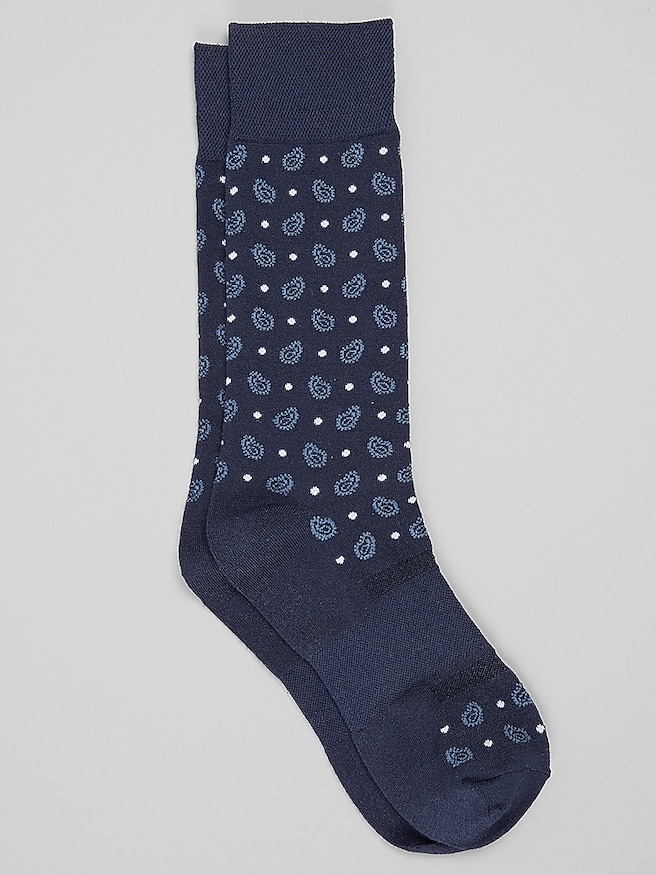
Fall socks bring together autumn color, comfortable coverage, and textures that work with everything from polished leather loafers to lace-up boots. Their appeal is practical as well as visual: the right pair creates a comfortable layer between foot and shoe while adding a considered finish to trousers, chinos, or denim. Earthy shades such as rust, olive, tobacco, and burgundy echo the depth of fall fabrics without requiring an entire outfit built around a seasonal motif. Charcoal, navy, and brown offer quieter options for business settings, while muted stripes, small geometric patterns, and traditional argyle add interest at the ankle. A burgundy sock beneath gray flannel trousers, for example, introduces color that feels intentional rather than distracting. With dark denim and brown boots, an oatmeal or forest-green knit can bring out the texture of the surrounding fabrics. Materials help determine how fall socks feel throughout the day. Cotton blends have a familiar softness and can suit everyday wear, particularly in lighter constructions that fit easily inside dress shoes. Wool blends, including those made with merino wool, can provide insulation and help manage moisture, though warmth depends on the fabric’s weight and knit as well as its fiber content. Fine merino fibers generally feel smoother against the skin than coarser wool, making them worth considering for anyone sensitive to a scratchy texture. Synthetic fibers such as nylon or polyester can contribute strength and help socks dry, while a small amount of elastane adds stretch and recovery. A thick sock is not automatically the most comfortable choice; a medium-weight knit inside a properly fitted boot may feel better than a bulky pair that crowds the toes. For an outfit that includes scarves, gloves, or other finishing touches, Fall Accessories provides a related point of reference, with sock color and texture serving as subtle connections rather than exact matches.
Fit makes a noticeable difference whether the day involves a desk, a commute, or several hours on foot. Fall socks should sit smoothly around the heel and toes, with enough stretch to follow the foot without pulling tightly across it. A heel pocket that rides underneath the arch or bunches above the heel can indicate a size or shape mismatch. Checking the stated shoe-size range is a useful starting point, but foot width, calf shape, and the amount of room inside a shoe also affect comfort. Ribbed cuffs should help hold the sock in place without folding over or leaving uncomfortable pressure around the leg. Crew lengths offer versatile coverage with casual trousers and boots, while over-the-calf styles can maintain a continuous line beneath dress trousers when sitting or crossing the legs. That extra coverage is especially useful at a business dinner or formal gathering, where a trouser hem may rise above the shoe. Shorter lengths create a different look, but the cuff still needs to sit above any footwear edge that might rub against bare skin. Cushioning deserves similar attention. A lightly padded sole can soften contact under the heel and forefoot without adding much volume across the top of the foot. More substantial terry cushioning may suit roomy casual boots, while a fine-gauge knit generally slips more cleanly into close-fitting dress shoes. Toe seams should feel unobtrusive, especially for someone who walks between appointments or spends long stretches standing. Smooth construction helps reduce concentrated rubbing, although footwear fit remains just as important. For a commute that starts on a chilly sidewalk and ends in a heated office, moderate insulation and moisture management often matter more than maximum thickness. Outdoor use calls for a closer look at fiber content and drying characteristics, since cotton tends to hold moisture longer than many wool or synthetic blends. Everyday dress socks and purpose-built hiking socks serve distinct needs, even when their colors and cuff heights look similar.
Durability depends on both construction and care, making the details of a sock as important as its first impression. Reinforcement at the heel and toe can help areas that experience repeated friction, while resilient stretch fibers support a closer fit over repeated wear. An even knit, secure seams, and a cuff that returns to shape after gentle stretching are useful qualities to consider. No fabric is immune to abrasion, and rough shoe linings, tight toe boxes, or repeated sliding at the heel can wear down socks prematurely. Rotating pairs and letting footwear dry between wears can help keep the inside of shoes more comfortable. Care instructions should take priority over general washing habits because wool-rich knits, cotton blends, and synthetic constructions may have different requirements. Turning socks inside out before washing can help limit surface abrasion and expose the areas that collect perspiration. A gentle cycle with similar colors is often appropriate when the label permits it, and a mesh laundry bag can keep pairs together while reducing snagging. High heat can shrink some fibers or weaken elastic components, so low-temperature drying or air-drying may be preferable according to the care label. Storing clean, fully dry pairs loosely together rather than stretching one cuff over both socks can also avoid unnecessary tension. These practical details matter for socks worn repeatedly with work clothes, weekend denim, or tailored outfits for fall celebrations. Seasonal patterns can add personality to relaxed gatherings, while understated solids and small repeats tend to move more easily between professional and casual settings. Fall socks can also make a thoughtful gift for a partner, parent, friend, or colleague when the choice reflects that person’s routine. Someone who wears suits most days may appreciate a smooth, longer sock in a restrained color; a frequent boot wearer may prefer a cushioned crew with a textured finish. Shoe size, fabric preferences, and sensitivity to snug cuffs are more useful clues than pattern alone. A well-chosen pair should feel comfortable beyond the first wear, fit naturally into an existing wardrobe, and offer enough versatility to remain useful from autumn outings into winter routines.