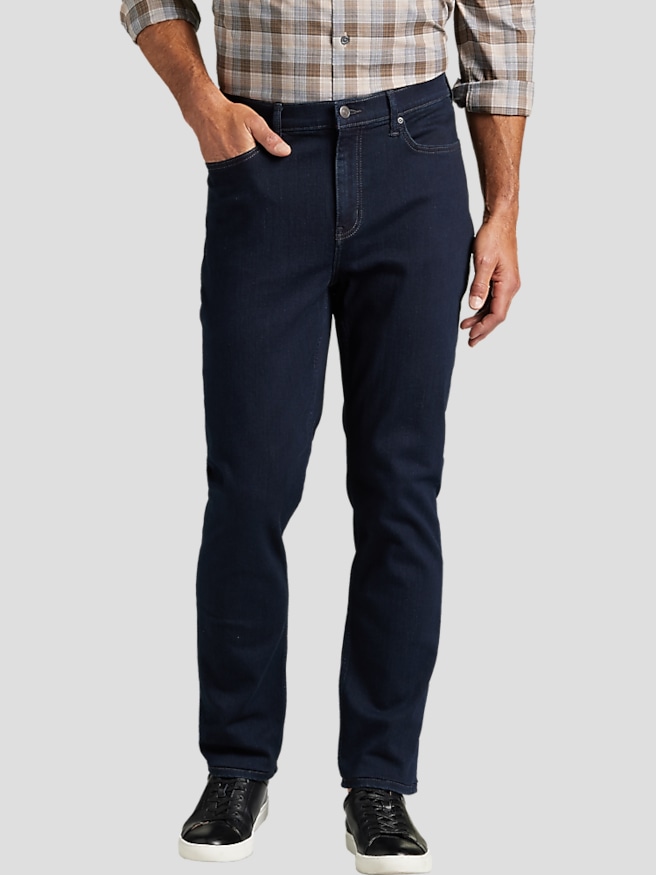
Cotton bootcut jeans for men combine the familiar texture of denim with a leg opening that widens slightly below the knee, leaving room for boots without the pronounced flare of a bell-bottom cut. That shape gives the jeans a distinct profile: closer through the upper leg, depending on the fit, and more open at the hem so the fabric can fall over footwear rather than bunch around the shaft. The result works naturally with Western boots, leather ankle boots, and other footwear with enough substance to balance the opening. Cotton provides the foundation, but fabric composition makes a noticeable difference in how the jeans feel and move. Jeans made from 100% cotton have no added stretch fiber and generally offer a more structured feel, though softness and flexibility also depend on fabric weight, weave, and finishing. With wear, rigid denim can soften and develop creases that reflect everyday movement, particularly behind the knees and around the pockets. Cotton blends containing a small amount of elastane or spandex add stretch, which can make sitting, bending, and stepping into a truck more comfortable. A blend with roughly 1% to 2% stretch fiber may still have a traditional denim appearance, although stretch performance varies by construction. Neither composition automatically guarantees greater durability; yarn quality, fabric density, stitching, and care all contribute to how well jeans hold up. Heavier denim often feels substantial and maintains a defined silhouette, while lighter denim can feel less bulky through the seat and legs. These distinctions give cotton bootcut denim a place in different daily routines, from casual office settings where jeans are permitted to dinners out, concerts, and relaxed weekends. For someone who wears boots regularly, the wider hem serves a practical purpose. For someone drawn to classic denim proportions, it offers an alternative to a tapered ankle without requiring an oversized fit through the entire leg.
The best-looking bootcut silhouette starts above the knee, where the rise, seat, and thigh determine how the jeans sit on the body. Slim bootcut jeans typically follow the thigh more closely before opening toward the hem, while regular and relaxed versions provide progressively more room, though fit labels are not standardized across manufacturers. A comfortable waistband should sit securely without digging in when seated, and the front pockets should lie reasonably flat rather than pulling open under tension. Men with fuller thighs may appreciate extra room through the upper leg, even when they prefer a clean outline below the knee. A higher rise can provide more coverage when bending, while a lower rise rests farther down the hips and changes where the waistband meets a tucked shirt. Inseam length matters especially with this cut because the opening is intended to interact with footwear. Over boots, the hem can rest across the instep with a modest break, but it should not drag beneath the heel. Excess length creates folds that obscure the shape and expose the back edge to unnecessary abrasion. Too little length can leave the opening hovering above the boot instead of falling over it. Trying the jeans with the footwear most often worn gives a clearer picture than judging them barefoot. Wash and finish influence the overall effect as much as fit. Dark indigo and minimally faded denim tend to create a more uniform appearance alongside a button-down shirt, leather belt, and casual jacket. Medium blue washes bring out the familiar character of denim and pair easily with a cotton T-shirt or textured knit. Lighter washes and visible fading feel more relaxed, with contrast at the thighs and seams drawing attention to the fabric. Simple combinations often suit bootcut proportions best: a shirt that fits comfortably through the shoulders, a hem or tuck that does not overwhelm the waist, and boots that support the line of the leg. Related everyday layers in Cotton Clothing For Men can complement denim without making an outfit feel overly coordinated.
Cotton denim is valued for its everyday utility, but its long-term character depends partly on how it is worn and maintained. The care label remains the most reliable reference because rigid cotton, stretch blends, dark dyes, and special finishes can require different treatment. Many jeans benefit from being washed inside out with similar colors in cold water, using an appropriate amount of detergent and avoiding bleach unless the label specifically permits it. Washing when needed rather than automatically after every brief wear can reduce unnecessary laundering, while spills and visible soil deserve prompt attention. Deep indigo may transfer onto pale upholstery, shoes, or clothing, particularly before the first few washes, so any dye-transfer notice is worth taking seriously. High dryer heat can contribute to shrinkage in cotton and may shorten the useful life of stretch fibers; air drying or a permitted low-heat setting is often a gentler choice. Some shrinkage can occur even in treated denim, making care instructions important when the inseam is already close to the desired length. Between wears, hanging jeans or folding them neatly keeps them ready without forcing sharp creases into the legs. Durability also involves small points of contact: a hem scraping the pavement, a wallet pressing against the same pocket corner, or friction along the inner thighs can produce localized wear before the rest of the fabric looks tired. Secure seams, neatly finished buttonholes, and reinforced stress points are useful construction details, though no single feature makes denim indestructible. Cotton bootcut jeans suit men who want familiar five-pocket styling with room for their preferred boots, whether the day includes a long drive, a casual gathering, or errands followed by dinner. They can also make a thoughtful birthday or graduation gift when the recipient’s waist, inseam, preferred rise, and comfort preferences are known. Matching a favorite pair’s measurements and fabric composition is more dependable than guessing from a size label alone. The lasting appeal lies in that combination of recognizable denim texture, a purposeful leg shape, and comfort that fits the way someone actually dresses and moves.