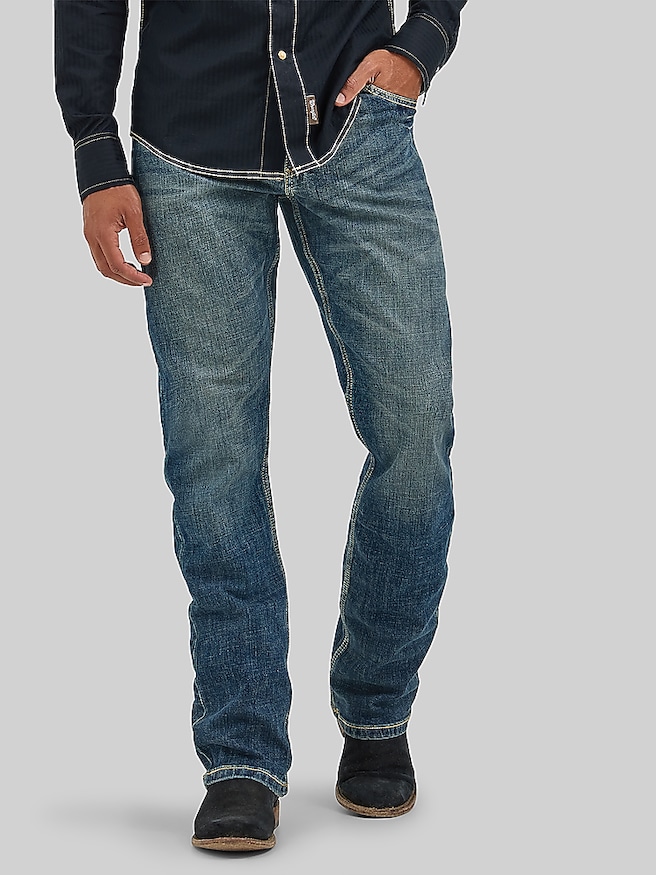
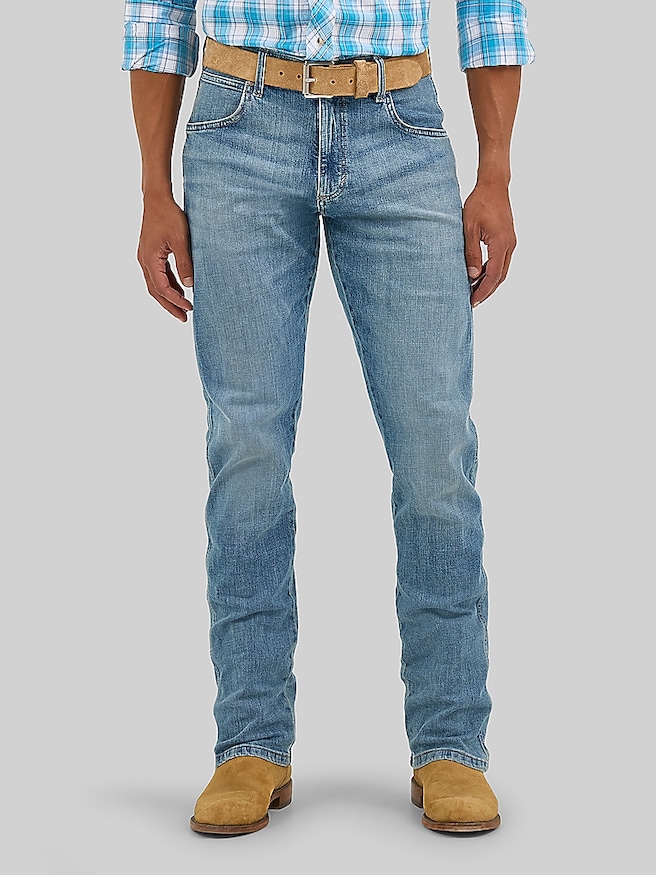
Men's bootcut jeans have a leg opening that widens slightly below the knee, creating room for boots without the pronounced sweep of a flare. The result is a balanced silhouette with a practical purpose: denim can fall over a boot shaft instead of gathering around it. Bootcut describes the shape of the lower leg, not the fit of the entire pair, so these jeans can have a slim, regular, or relaxed fit through the seat and thighs. A slim bootcut keeps the upper leg closer to the body, while a relaxed version provides more room for those who prefer an easier feel when sitting, walking, or bending. The waist should feel secure without pinching, and the seat should lie smoothly rather than pulling tightly or leaving excessive fabric. Rise matters, too. A mid-rise generally sits below the natural waist, while a higher rise provides more coverage and changes where a tucked shirt meets the waistband. For someone moving between a desk, a drive across town, and dinner with friends, those differences can matter as much as the shape at the hem. Length deserves particular attention because the wider opening changes how denim rests on footwear. With boots, a modest break at the front can create a clean line, but fabric should not collect beneath the heel or drag along the ground. A pair that looks right with a substantial boot may bunch differently over a low-profile sneaker. Boot shaft width also varies, so a bootcut label alone does not guarantee enough clearance for every style of footwear. The most useful fit is one that accommodates the shoes worn most often while allowing comfortable movement through the hips and knees. That combination makes bootcut denim a versatile choice for everyday dressing, casual social plans, and workplaces where jeans are appropriate, especially for anyone who prefers a little more room at the ankle than a tapered leg provides.
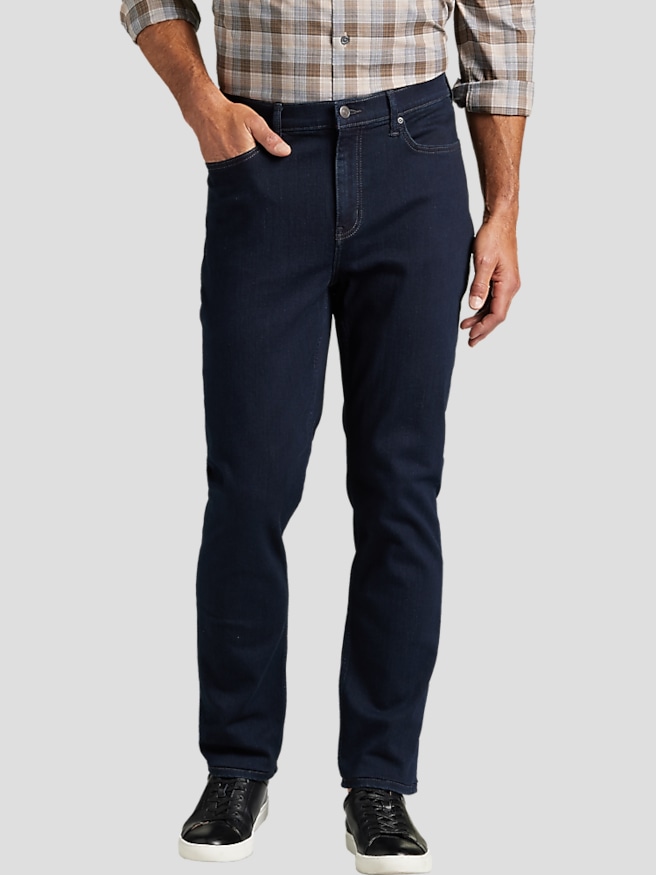
Fabric and finish give men's bootcut jeans much of their character. Traditional cotton denim has a textured surface and a structured feel that can soften with repeated wear. A heavier fabric often feels substantial, while lighter denim may feel less bulky through the seat and behind the knees. Fabric weight alone does not establish quality or durability; the weave, stitching, construction, and care all contribute to how a pair holds up. Stretch denim incorporates elastic fibers to provide give during movement, which can be useful when getting in and out of a car or spending several hours seated. The amount of stretch and the fabric's ability to recover its shape affect whether the jeans remain close-fitting or become looser over the course of a day. A small stretch percentage can feel noticeably different across fabrics, so the composition label is only part of the picture. Nonstretch denim offers a firmer feel and depends more heavily on the cut for comfort. Wash treatments create another distinction. Deep indigo and black finishes tend to look more understated, particularly with subtle stitching and minimal fading, while lighter washes, visible whiskering, and distressed details create a more casual impression. A dark, clean finish can work with a tucked button-down shirt, a leather belt, and an unstructured jacket for dinner at a neighborhood restaurant. A faded wash with a simple T-shirt or an untucked casual shirt feels more laid-back without requiring a completely different silhouette. Cowboy boots emphasize the cut's Western associations, but understated leather boots can make the same shape feel less tied to a particular style. Sneakers are another option when their profile works with the hem rather than leaving it pooled around the shoe. Pocket placement, contrast stitching, rivets, and belt-loop construction add visual character and can affect everyday usefulness. Reinforcement at stress points is worth considering, though ordinary jeans should not be treated as a substitute for protective clothing when a job requires it.
Care helps preserve both the appearance and fit of bootcut denim. The garment's care label is the best starting point because cotton content, stretch fibers, dyes, and decorative treatments can require different handling. Turning jeans inside out before washing can help reduce surface abrasion, and washing with similar colors helps limit the effects of dye transfer. Dark denim may release color, particularly early in its life, so contact with light upholstery or pale clothing deserves some caution. Washing when needed rather than automatically after every brief wear can reduce unnecessary wear on the fabric, provided the jeans are clean and appropriate to wear again. Cold water and a gentle cycle may suit many pairs, but the label should determine the washing method. High heat can contribute to shrinkage and affect elastic fibers, making drying instructions especially important for stretch denim. When air drying is appropriate, smoothing the legs and arranging the hems helps prevent creases from setting into the wider opening. Signs of wear often appear at the inner thighs, pocket edges, and back hems; keeping the hem clear of the ground helps avoid fraying caused by repeated contact with pavement. Professional alterations can improve an otherwise comfortable pair, although shortening a bootcut leg may change the width of the opening because the cut gradually widens toward the bottom. For gifting, a familiar waist size is helpful, but rise, inseam, thigh room, and preferred footwear make the choice more personal. Someone who already wears boots regularly may appreciate the extra clearance, while a recipient who favors tapered jeans may prefer a narrower bootcut with less fullness through the leg. Measurements from a well-fitting pair provide a better reference than assumptions based on height alone. These same considerations remain useful when exploring Mens Fall Jeans: fabric, finish, and proportions should work together. The appeal of bootcut jeans comes from that balance—a recognizable denim shape with room for footwear and enough versatility to suit an established everyday wardrobe.