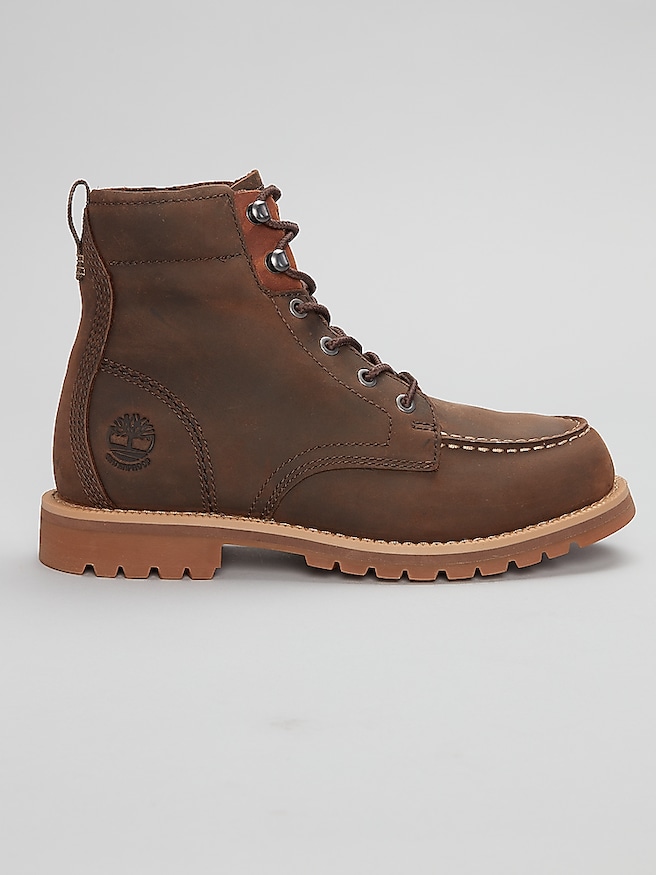
Men’s boots for jeans bring structure to denim, with shapes that range from streamlined ankle boots to substantial lace-up styles. A strong pairing starts with proportion: a narrow boot profile sits comfortably beneath slim or tapered jeans, while a fuller toe and thicker sole tend to balance straight-leg or relaxed denim. The opening at the hem matters as much as the cut through the thigh. Denim should fall over the boot shaft without catching, bunching heavily, or pulling tight around the ankle. Chelsea boots offer a clean outline with elastic side panels and minimal hardware, making them a natural companion for dark jeans and a tucked-in shirt. Chukka boots have a lower ankle height and an understated lace-up front that works with everyday denim, knit polos, and casual jackets. More substantial lace-up boots give straight-leg jeans a grounded appearance, particularly when the denim has visible texture or a faded finish. Across the broader range of Men's Boots, toe shape, shaft height, and sole thickness help determine how polished or relaxed the finished outfit feels. A gently rounded or almond-shaped toe usually creates a quieter line than a broad, pronounced toe, while a low-profile sole keeps the focus on the denim and upper. Black leather boots can sharpen black or charcoal jeans; brown leather brings depth to blue denim; and suede introduces a softer surface alongside either dark or faded washes. These combinations suit everyday plans, from a casual office that permits denim to dinner with friends or a weekend gathering. A small cuff can reveal the top of a shorter boot, while an uncuffed hem with a slight break offers a more continuous line. Neither finish needs to look overly arranged. The most convincing combinations leave enough room for movement and let the jeans settle naturally over the footwear, whether worn with a plain T-shirt, an overshirt, or a tailored sport coat.
Materials and construction influence how boots feel with jeans as much as how they look. Smooth leather offers a defined surface that can take on creases and character with wear, although its finish and thickness affect both flexibility and upkeep. Full-grain leather retains the hide’s natural surface, including variations that give each pair its own appearance. Suede has a soft nap that picks up light differently, creating a less formal contrast with denim. Neither material alone guarantees comfort or longevity; lining, stitching, outsole attachment, and everyday care all play a part. A leather-lined interior may feel smooth against socks, while textile linings vary in texture and breathability. Underfoot cushioning can soften contact with hard floors, but cushioning and support are not interchangeable. A secure heel, an appropriate width, and a sole that bends where the foot naturally flexes matter during an afternoon spent walking between errands or standing at a gathering. Rubber outsoles often provide useful grip and a more casual appearance, though traction depends on the tread and the surface. Leather outsoles give many dress-oriented boots a slimmer profile and a firmer feel. Welted construction may allow resoling when the upper remains sound, depending on the design and a repair specialist’s assessment. Fit should feel secure without pressure across the widest part of the foot, with room to move the toes and no persistent rubbing around the ankle. Trying boots with the socks intended for regular wear gives a more realistic sense of the fit. Lace-up designs allow adjustment over the instep, while pull-on styles rely more heavily on the shape of the last and the hold through the heel and instep. Leather can soften with use, but a break-in period should not be expected to correct cramped toes or a poorly matched width. For jeans worn frequently, comfort through ordinary sitting, walking, and stair climbing deserves as much attention as the view in a mirror.
The intended use helps distinguish a dependable everyday boot from one better suited to occasional dressier wear. For a denim-friendly workplace, a restrained upper, neat stitching, and a modest sole can look composed beneath dark straight-leg jeans. For concerts, casual dinners, or days with plenty of walking, a comfortable footbed and manageable boot weight may matter more than a highly polished finish. Rugged styling does not automatically mean a boot is designed for a jobsite, hiking, or other demanding activity; protective features and performance claims should be confirmed in the product specifications. Boots chosen mainly to wear with jeans can still cover a useful range of everyday occasions without being specialized equipment. Their lasting appearance depends partly on simple habits. Dust and grit can be removed from smooth leather with a soft brush or cloth, followed by a care product appropriate for the finish when needed. Suede calls for a suitable suede brush and care products labeled for that material rather than ordinary leather polish. Any cleaner or conditioner is best tested on an inconspicuous area first, and manufacturer care directions take priority over general advice. Letting boots air out between wears helps the interior dry, while keeping them away from direct heat protects materials and adhesives. Shoe trees sized for the footwear can help maintain shape, and a boot shaft should be stored without a sharp fold. Checking heel wear, loose stitching, and separating edges makes it easier to address small problems before they become larger repairs. Boots can also be a thoughtful birthday or graduation gift for someone who wears denim regularly, especially when their size, width, and preferred style are already known. A person who favors clean, dark jeans may appreciate a sleeker silhouette, while someone drawn to relaxed denim may prefer a more substantial shape. The strongest choice is one that fits the wearer’s actual routine: comfortable enough for repeated use, easy to coordinate with familiar jeans, and made with materials they are prepared to maintain.