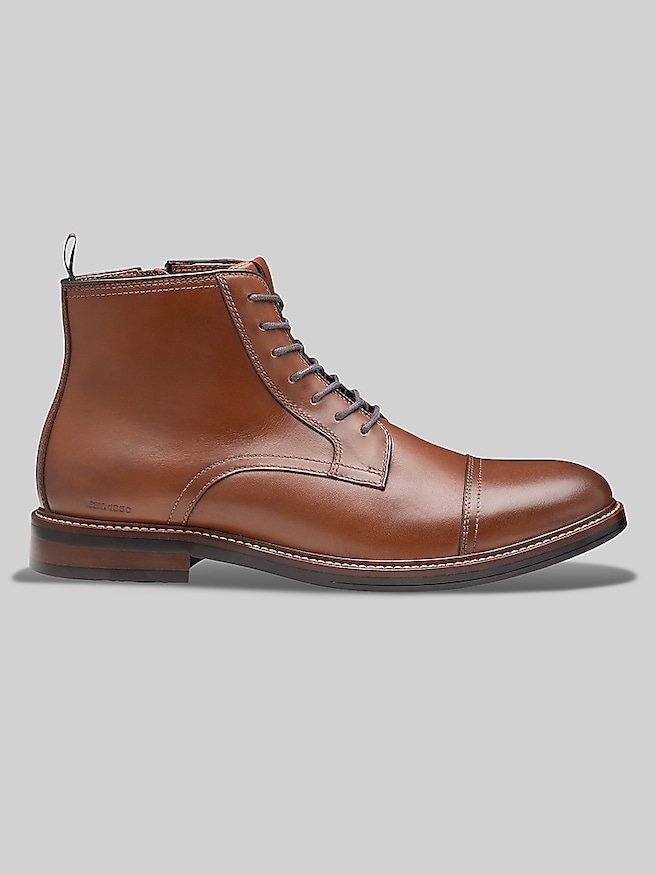
Men’s boots are ankle-height or taller footwear that range from streamlined dress styles to casual lace-ups and rugged designs made for more demanding use. Their defining feature is the shaft that rises above the foot, adding coverage and giving an outfit a more substantial foundation than a low-cut shoe. The appeal of boots for men lies in that versatility: a clean leather silhouette can complement tailored trousers, while a thicker sole and more pronounced stitching feel at home with denim. Chelsea boots have elastic side panels and a pull-on shape, creating an uncluttered profile that works with chinos, dark jeans, and many business-casual outfits. Chukka boots typically reach the ankle and have a small number of lace eyelets, giving them a relaxed look without the bulk of a taller boot. Lace-up dress boots provide more adjustment through the upper and can bridge the space between traditional dress shoes and everyday footwear. Plain toes keep the appearance simple, cap toes add a defined seam across the front, and brogue detailing introduces decorative perforations associated with classic footwear. These details influence how formal a boot looks, but the overall shape, leather finish, and sole thickness matter just as much. A slim, polished boot looks natural beneath the hem of tailored pants at an office meeting or dinner reservation; a broad toe and prominent tread create a more casual impression. Black leather generally feels sharper and more formal, while brown shades bring depth to combinations built around navy, gray, olive, and denim. Suede offers a softer, textured alternative that pairs especially well with knitwear and less structured tailoring. For occasions with strict formal dress expectations, traditional dress shoes may be more appropriate than boots. For everyday routines, travel, social gatherings, and offices with flexible dress standards, boots can provide a useful balance of coverage, comfort, and a finished appearance.
Materials and construction shape how men’s boots feel, wear, and respond to repeated use. Leather uppers can soften and develop creases as they conform to the foot, with the character of that aging influenced by the leather type, finish, and care. Full-grain leather retains the outer grain surface and can develop a distinctive patina, though that designation alone does not guarantee comfort or overall quality. Suede has a napped surface that adds visual softness but requires care suited to its texture. Linings also make a difference: smooth interiors, neatly finished seams, and cushioning around the heel can help reduce rubbing, while the shape of the footbed affects how supportive a boot feels over a full day. Fit should feel secure rather than restrictive, with room for the toes to rest naturally and without persistent pressure across the widest part of the foot. A boot that pinches is not necessarily going to become comfortable simply because the leather softens. Lace-up styles allow adjustments across the instep, while pull-on designs depend more heavily on the match between the boot’s shape and the wearer’s foot. Socks influence that fit, so the thickness normally worn with boots matters when evaluating size. Slight heel movement can occur in some new boots, but pronounced slipping or repeated rubbing suggests a poor match. Underfoot, rubber soles often provide cushioning and traction, while leather soles offer a traditional appearance and a less pronounced profile. Grip depends on the tread, material, and walking surface rather than appearance alone. Welted construction can allow resoling when the design and condition permit, while other methods attach the sole differently and may have more limited repair options. Neat stitching, secure sole attachment, and well-finished edges are useful signs of careful construction. Boots intended for long walks, trail use, or demanding jobs need features appropriate to those activities; a rugged look alone does not establish a safety rating or make a casual boot protective equipment.
The most useful pair of boots fits naturally into the wearer’s routine, whether that means moving between a desk and client appointments, spending an afternoon exploring a city, or heading out for a relaxed evening. Weight, flexibility, shaft height, and the shape of the toe all influence that everyday experience. A substantial sole may feel reassuring underfoot, but it can also make a boot heavier; a sleeker design may sit neatly beneath trousers without offering the same cushioning as a more casual construction. Pant length helps bring the proportions together. A clean hem that rests lightly over the boot keeps tailored clothing tidy, while straight-leg denim leaves room for a fuller shaft without bunching excessively. Narrow openings work best with slimmer boots, and a very bulky silhouette can overwhelm sharply tapered pants. Care helps preserve both appearance and useful life. Smooth leather benefits from surface cleaning with a soft brush or cloth and occasional conditioning with a product appropriate for its finish. Polish can refresh color and shine on compatible leather, but suede needs a suede brush and cleaning products designed for its nap rather than ordinary shoe polish. Manufacturer care instructions take priority, especially for treated surfaces or mixed materials. Any cleaner or conditioner is best tested on an inconspicuous area before broader use. Boots that become damp should dry naturally away from direct heat, which can damage leather and affect adhesives. Allowing time between wears helps the interior dry, while suitable shoe trees can help maintain shape. Regular attention to worn heels, loose stitching, and damaged soles can keep small problems from becoming larger ones, and a footwear repair professional can assess whether repairs are practical. Boots can also make a thoughtful gift for someone who appreciates clothing with both function and character. The recipient’s usual size, preferred fit, everyday wardrobe, and favorite footwear shapes are more useful starting points than appearance alone. A minimalist dresser may gravitate toward a clean pull-on style, while someone who favors denim and textured fabrics may prefer lace-ups with visible stitching. The lasting appeal comes from the combination of a comfortable fit, suitable construction, and a silhouette that feels like a natural extension of personal style.