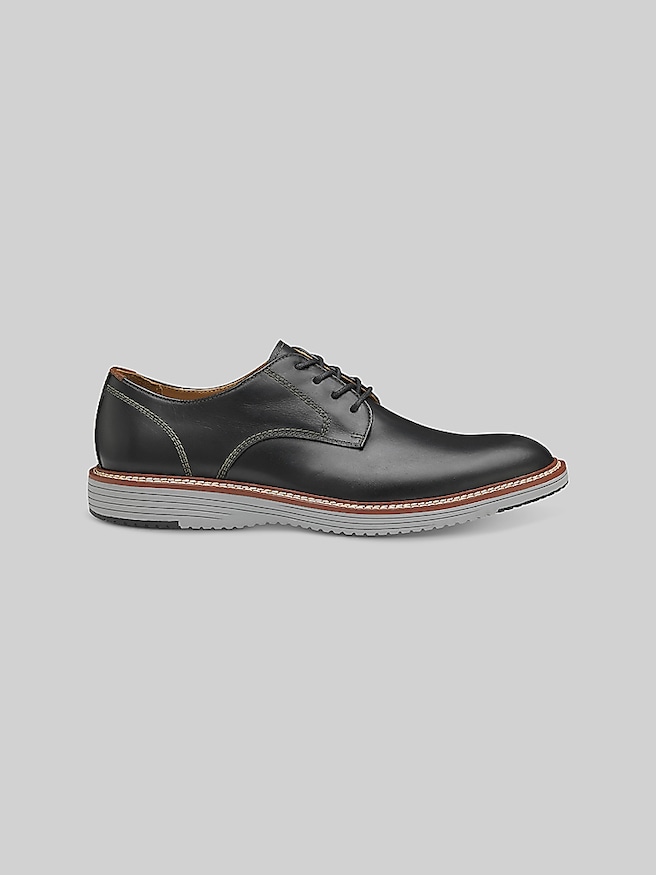
Comfortable black work shoes balance a secure fit, supportive construction, and cushioning that suits the demands of the workday. Their appeal goes beyond matching a dress code: a well-proportioned black shoe can move easily from a morning commute to a client meeting, a service counter, or an evening networking event. The most suitable style depends on how much standing and walking the job involves and how formal the workplace feels. Leather lace-ups offer a polished foundation for tailored trousers and suits, while loafers bring a streamlined look to business casual outfits. An oxford’s closed lacing creates a particularly neat profile; a derby’s open lacing generally allows more adjustment across the top of the foot. Simple black sneakers can suit relaxed offices where athletic footwear is permitted, especially when the design is understated and the sole does not distract from the outfit. For someone greeting visitors, walking between conference rooms, or spending hours at a reception desk, comfort comes from the whole shoe rather than a soft insole alone. A stable heel, an accommodating toe box, and a sole that bends near the ball of the foot all influence how a pair feels in motion. Cushioning helps soften each step, but excessive softness may feel less steady during long periods of standing. A slightly more structured shoe can provide a reassuring platform without looking bulky. Black also makes outfit coordination straightforward, pairing naturally with charcoal, gray, navy, and black trousers. Smooth leather reads more formal, while subtle texture can add depth to a less structured outfit. A clean finish, balanced toe shape, and discreet detailing help work footwear look intentional rather than purely functional. That versatility makes this category especially useful for professionals whose schedules include both desk time and time on their feet, with little opportunity to change shoes between responsibilities.
Black Comfortable Work Shoes feel most dependable when their shape matches the foot instead of relying on extra length to create room. Width, toe shape, instep height, and heel fit all matter, even when the size on the box is familiar. The toes need space to rest naturally without being squeezed together, while the heel should remain reasonably secure during a normal stride. A little movement can occur in some slip-on styles, but repeated lifting or rubbing suggests that the shape or size may not be suitable. Lace-up designs offer useful adjustment for feet that need more room over the instep or a closer hold through the middle. Loafers depend more heavily on the relationship between the upper and the foot, making a comfortable, secure fit across the top especially important. The socks worn to work also affect fit: a thin dress sock takes up less space than a cushioned everyday sock. Trying footwear with the intended socks gives a more realistic sense of comfort, particularly after the feet have been active for part of the day. Leather may soften with wear, but a break-in period should not be expected to correct pinched toes, persistent pressure, or an unstable heel. Underfoot construction deserves the same attention as sizing. Contoured footbeds can provide a more supported feel, while cushioning beneath the heel and forefoot helps make repeated steps more comfortable. Removable insoles can be useful for people who use their own inserts, provided the shoe has enough interior depth to accommodate them without crowding the foot. For an office manager moving between floors or a hospitality professional standing through a busy shift, the right balance is often cushioning with a stable base and enough flexibility for an easy stride. Personal comfort varies, so neither a dressy silhouette nor an athletic appearance alone establishes how supportive a shoe will feel over a full workday.
Materials and construction shape both everyday comfort and how well black work footwear holds its appearance. Smooth leather can develop natural creasing while retaining a polished look with appropriate care, and its surface is often easier to refresh than a heavily textured finish. Suede and nubuck create a softer visual effect but need care methods designed for their nap rather than conventional shoe polish. Synthetic uppers vary widely in flexibility and breathability, making the lining and overall construction important parts of the wearing experience. Smooth interior seams and a comfortable collar can help limit friction, while breathable linings can make extended wear more pleasant. Outsoles matter just as much as uppers. Rubber can provide cushioning and grip, but tread pattern, sole compound, and the surface underfoot all affect traction. A black dress shoe should not be assumed to meet the requirements of a kitchen, clinical setting, or industrial workspace simply because it looks sturdy. Jobs with specific slip-resistance, protective-toe, or other safety requirements call for footwear that meets the employer’s stated standards. For everyday office use, tidy stitching, secure sole attachment, and a heel that wears evenly are useful construction details to assess. Regular care supports longevity: dust and surface dirt can be removed with a suitable brush or cloth, and smooth leather benefits from compatible conditioner and polish used according to the material’s care directions. Shoes should dry naturally away from direct heat after exposure to moisture or heavy perspiration. Shoe trees can help preserve shape, and alternating pairs gives the interiors time to dry between wears. Worn heel edges, separating soles, or compressed cushioning can change how a shoe feels even when the upper still looks presentable. As a gift for someone starting a new job, earning a promotion, or refreshing a professional wardrobe, black work shoes can be a practical choice when the recipient’s size, preferred fit, and workplace requirements are known. The lasting value is a pair that looks appropriate, feels comfortable, and fits naturally into a regular work routine.