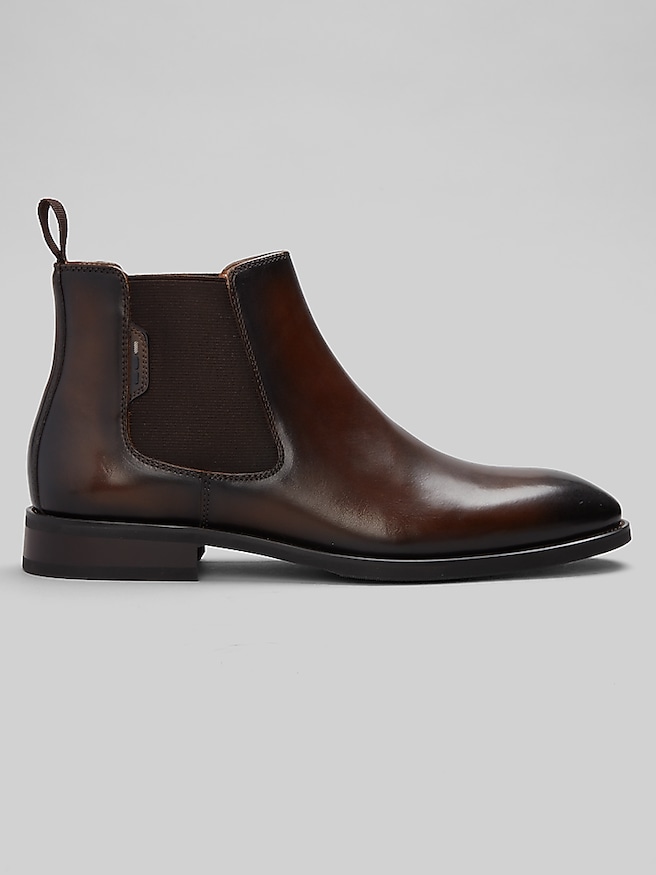
Chelsea shoes are commonly known as Chelsea boots: ankle-high, pull-on footwear defined by elastic side panels and a lace-free upper. The elastic sections stretch as the foot enters, then help hold the boot close around the ankle. Many designs also have a rear pull tab for easier dressing. For men who prefer a clean line from pants to footwear, this simple construction offers a useful middle ground between a low-cut dress shoe and a heavier lace-up boot. The style has roots in nineteenth-century footwear, but its appeal is practical rather than nostalgic: fewer visible details make it easy to pair with tailored clothing, denim, and everyday separates. Materials give Chelsea footwear much of its character. Smooth leather has a crisp surface that complements wool trousers and can often be polished to maintain its finish. Full-grain leather retains the hide’s natural grain and may develop creases and a subtle patina with wear; those changes are part of its character rather than necessarily signs of damage. Suede has a brushed nap that softens the outline and brings texture to outfits built around cotton, knitwear, or denim. Neither material is automatically the better choice; the finish, construction, fit, and intended use all matter. A slim sole and restrained heel usually create a dressier profile, while a thicker rubber sole makes the same basic shape look more casual. Leather outsoles can provide a traditional appearance, while rubber outsoles may offer cushioning and traction, depending on their compound and tread. An almond-shaped toe tends to bridge dress and casual clothing, while a broader toe creates a more substantial silhouette. Interior details deserve attention, too: smooth lining, a comfortable footbed, and well-finished seams influence how a boot feels through a full day. Durable elastic panels are especially important because they perform the adjustment that laces would otherwise provide. The result is a familiar design whose small construction choices can make a noticeable difference in both appearance and comfort.
The appeal of Chelsea shoes becomes clear in everyday outfits. A polished leather pair beneath straight or gently tapered dress pants gives an office outfit a finished look without introducing the visual detail of laces. With a button-down shirt and an unstructured jacket, the same silhouette feels appropriate for a client lunch, a presentation, or dinner after work. Black leather creates a strong, understated foundation for charcoal, black, and many navy outfits, while brown leather works naturally with tan, medium blue, olive, and textured fabrics. Matching the general color family of a leather belt helps tie the outfit together, although an exact shade match is not essential. Suede brings a softer expression to chinos and dark denim, particularly alongside an Oxford shirt, a fine-gauge sweater, or a casual jacket. For occasions that call for a sharper finish, Chelsea Dress Boots suit the same clean-lined approach, with smooth uppers and a restrained profile that sit comfortably beneath tailored pants. Chelsea footwear can work with a suit in many business and social settings, but the dress code still takes priority; traditional formalwear may call for another type of shoe. The shape of the pants matters almost as much as their color. A hem that rests lightly over the top of the boot keeps the elastic panels largely covered and creates an uninterrupted line. Excess fabric piled around the ankle can hide the silhouette, while an opening that is too narrow may catch on the shaft. With jeans, a modest cuff can reveal the boot’s shape without letting the outfit become overly fussy. These details make Chelsea shoes useful for men building a compact wardrobe, commuting between office and social plans, or looking for an alternative to sneakers that does not feel excessively formal. Their simplicity also leaves room for texture elsewhere: a patterned shirt, a woven belt, or a softly structured jacket can stand out without competing with the footwear.
Because Chelsea boots have no laces to tighten or loosen, fit deserves particular attention. The foot should feel secure across the instep, with room for the toes to move and no pinching at the widest point. The elastic panels should sit close to the ankle without digging in, and the heel should remain reasonably stable while walking. A small amount of movement may occur in a new pull-on boot, but repeated rubbing, pronounced slipping, or toes striking the front are reasons to reconsider the fit. Leather may soften and conform with wear, yet a painful fit should not be treated as a normal break-in requirement. Trying boots with the socks intended for regular use gives a more accurate sense of their volume. Walking, sitting, and bending the foot also reveal pressure points that are easy to miss while standing still. Care should match the upper material. Smooth leather benefits from removing surface dust, using an appropriate conditioner when needed, and applying polish compatible with the finish. Suede needs a suede brush to lift the nap and remove loose dirt; ordinary leather cream can flatten or discolor its surface. Cleaning and protective products should be tested in an inconspicuous area, with the manufacturer’s care directions taking precedence. Shoe trees can help preserve the shape between wears, and allowing the interior to dry fully helps keep the footwear comfortable. Direct heat can damage leather and elastic, so drying should take place away from heaters. For long-term durability, stitching, sole attachment, heel wear, and the condition of the elastic all matter. Some welted constructions can be resoled, while repair options for other constructions depend on how the boot is made. Chelsea shoes can also be a thoughtful gift for someone who regularly wears tailored pants or denim, especially when the recipient’s size and preferred fit are known. A familiar color and an understated shape make the gift easier to incorporate into an established wardrobe.