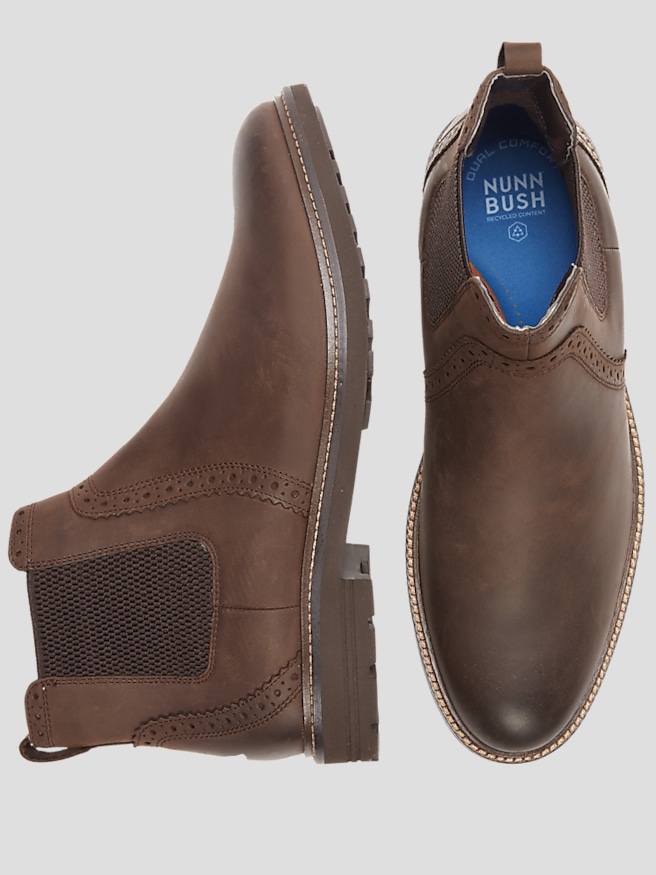
Leather Chelsea shoes are laceless, ankle-high footwear defined by elastic side panels and a clean upper, often finished with a pull tab at the heel. Commonly called Chelsea boots, they bridge the gap between traditional dress shoes and more substantial casual boots. The absence of laces gives the leather an uninterrupted surface, allowing the shape, finish, and quality of the upper to stand out. A slim profile with a gently tapered toe looks natural beneath tailored trousers, while a rounder toe and a thicker sole create a more relaxed appearance with jeans or chinos. Neither shape is inherently better; the right choice depends on the clothing and occasions the footwear needs to complement. Smooth black leather creates a crisp line with charcoal trousers, dark denim, or a tailored jacket. For a softer contrast with navy, olive, and earth tones, Brown Leather Chelsea Boots bring depth without making an outfit feel overly formal. Dark brown has a restrained appearance suited to many business-casual settings, while lighter brown shades make grain and tonal variation more noticeable. Leather quality involves more than color or shine. Full-grain leather retains the hide’s natural surface and may develop a distinctive patina with wear and proper care. Top-grain leather may be buffed or finished for a more uniform appearance, while suede presents a soft, textured alternative to a polished surface. The thickness of the upper, the lining, the stitching, and the finish all influence how a boot feels and holds its shape. Natural creasing across the forefoot is normal as leather flexes, though its appearance varies with the hide and construction. For an office day followed by dinner, a smooth leather upper and an understated sole can feel appropriately dressed without demanding a complete change of clothes. That versatility helps explain the silhouette’s enduring place in a practical footwear collection.
Fit matters especially with Chelsea footwear because there are no laces to tighten or loosen across the instep. The elastic panels provide enough give to help the foot enter, but the boot’s shape must still suit the wearer. A comfortable fit feels secure through the heel and midfoot, with space for the toes to move without pressing against the front or sides. Leather may soften and relax, but a boot that pinches sharply or crowds the toes should not be expected to become the correct size through wear alone. A small amount of heel movement can occur in a new pair; persistent slipping, rubbing, or the need to grip with the toes suggests a fit worth reconsidering. An elongated toe can leave space beyond the foot without making the boot too large, so overall support matters more than the empty space at the tip. The socks intended for regular wear also affect fit, especially when comparing thin dress socks with more cushioned everyday pairs. Underfoot construction deserves equal attention. Leather soles often have a refined profile, while rubber soles can add cushioning and traction, depending on their design and tread. A substantial lug sole changes both the look and feel, adding visual weight that generally works best with more relaxed clothing. Cushioning, arch support, lining, and flexibility vary by construction rather than by the Chelsea name alone. Someone walking between meetings may value a flexible forefoot and a cushioned footbed, while someone wearing boots mainly for seated events may prioritize a sleek shape beneath dress trousers. These distinctions make leather Chelsea shoes useful for commuters, professionals in business-casual workplaces, and anyone who wants footwear that transitions from daytime plans to an evening gathering. They can also make a thoughtful gift for a partner, father, brother, or friend, particularly when the recipient’s size, preferred fit, and usual wardrobe are known. A familiar color and a shape close to footwear already worn regularly make a more personal choice than selecting on appearance alone.
Long-term durability depends on the entire boot, including the upper, elastic panels, lining, sole attachment, and the care it receives. Even a substantial leather upper benefits from time between wears so interior moisture can dissipate naturally. Shoe trees can help support the shape and manage moisture, provided they fit without stretching the leather or putting pressure on the elastic. Surface dust is easiest to remove before it settles into creases and seams; a soft brush or clean cloth is generally suitable for smooth leather. Conditioning helps replenish oils in compatible leather, but the correct product and frequency depend on the finish and the maker’s care directions. Too much conditioner can darken or oversaturate some leathers, so a small test on an inconspicuous area is worthwhile. Polish can restore color and adjust shine on appropriate smooth finishes, whereas suede needs tools and treatments intended for its textured surface. Elastic gussets should remain free of polish and heavy conditioner, and pull tabs are best treated as aids rather than handles for forcing a tight boot onto the foot. If leather becomes damp, gentle blotting and air-drying away from direct heat help protect its shape and finish. Construction also affects repair options: some welted designs can be resoled, while other sole attachments may limit what a cobbler can replace. A professional assessment is more reliable than assuming every stitched-looking sole is repairable. Attention to worn heel edges, loose stitching, or tired elastic can address small problems before they interfere with comfort. With thoughtful care, the character of leather Chelsea shoes can become part of their appeal rather than a reason to reserve them for occasional use. A trouser hem that falls neatly over the shaft keeps the outline clean, while straight or gently tapered jeans allow a more casual finish. Across those settings, the strongest choice balances a pleasing silhouette with comfortable support, suitable construction, and a leather finish that fits naturally into everyday life.