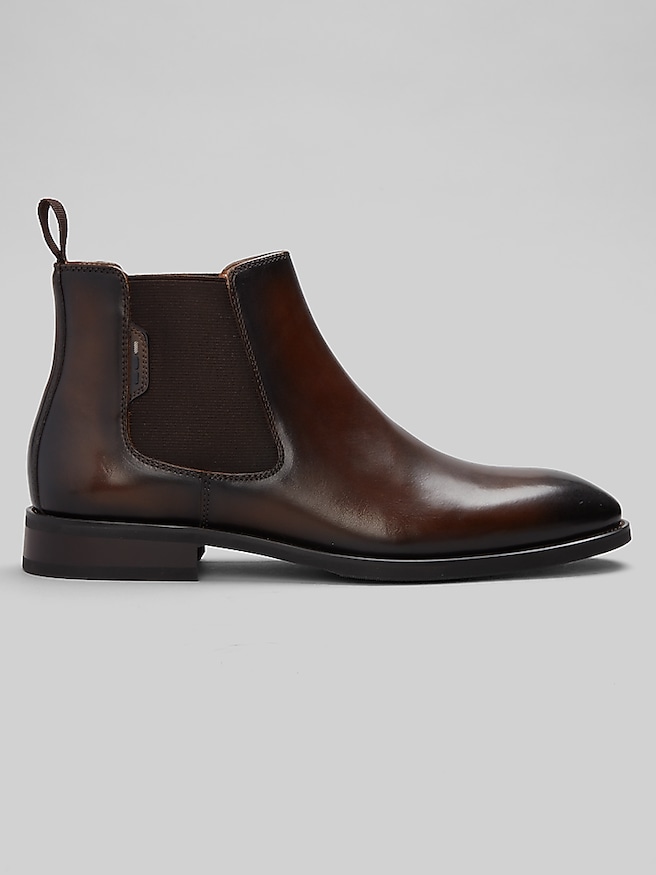
Chelsea dress boots combine the clean lines of a dress shoe with an ankle-height shape that works naturally beneath tailored pants. Elastic side panels replace laces, giving the upper an uninterrupted profile, while a pull tab often makes the boots easier to put on. That simplicity is part of their appeal: there is little to distract from the shape of the toe, the finish of the leather, or the way the boot meets the trouser hem. A gently tapered or almond-shaped toe generally complements dressier clothing, while a broader, rounded toe brings a more relaxed character. Neither needs an exaggerated point to look polished. With a charcoal suit, a smooth leather pair can create a continuous line from the pant leg to the floor; with chinos and a sport coat, the same silhouette feels less formal without looking out of place. The proportions matter as much as the color. A slim outsole and modest heel tend to sit comfortably alongside refined tailoring, whereas a pronounced tread or substantial sole makes a stronger visual statement. For an office presentation, a wedding reception, or dinner at a restaurant with a dressier atmosphere, understated boots can offer a useful alternative to lace-up shoes when the dress code allows them. Chelsea black boots are particularly easy to coordinate with charcoal, black, and deep navy trousers, creating a restrained foundation for a crisp shirt or textured jacket. Brown tones introduce more visible contrast and can work well with blue tailoring, tan chinos, and softer neutral colors. Trouser length helps complete the effect: a hem that just meets the top of the boot keeps the silhouette clear, while excess fabric pooling around the ankle can hide its shape. For someone moving from a desk to a client meeting and then an evening reservation, Chelsea dress boots offer a straightforward way to keep the outfit consistent without requiring every piece to be equally formal.
Materials and construction influence both the appearance of Chelsea dress boots and how they feel after several hours of wear. Smooth leather is often associated with the dressier end of the category because its surface can take a polish and sit neatly against tailored fabrics. Natural grain and subtle creasing give leather character, though its performance also depends on thickness, finishing, construction, and regular care. Suede provides a softer, matte texture that pairs especially well with flannel trousers, chinos, and less structured jackets; it usually reads as more relaxed than highly polished leather. A leather lining can help manage moisture inside the boot, while other lining materials have their own comfort and care requirements. Underfoot, leather soles offer a traditional appearance, and rubber soles can provide flexibility and traction, depending on their design. A low-profile rubber outsole may preserve a dressy look without the visual weight of a thick tread. Stitched construction can make some boots suitable for resoling, but repair options depend on the individual construction and the assessment of a qualified cobbler. Fit deserves equal attention because a Chelsea boot has no laces to tighten across the instep. The upper should hold the foot securely without pinching, and the toes need room to rest naturally rather than press against the front. Slight heel movement can occur in a new boot, but pronounced slipping or a foot sliding forward suggests that the shape or size is not a good match. The elastic panels should stretch enough for entry and then settle close to the ankle, rather than remain pulled tight. Trying boots with the socks intended for regular wear gives a more useful sense of fit than switching sock thickness later. Someone who spends much of the day standing may place greater value on cushioning, arch support, and sole flexibility than someone choosing boots mainly for seated events. Even soft leather should not be expected to resolve a cramped toe box or an uncomfortable pressure point; a comfortable fit starts with the right dimensions.
The lasting appeal of Chelsea dress boots comes partly from their versatility, but keeping that refined appearance requires care suited to the material. For smooth leather, removing surface dust with a soft brush or cloth prevents grit from lingering in creases and around the sole edge. A leather conditioner appropriate to the finish can help maintain suppleness, while a compatible cream or polish refreshes the surface without needing to create a mirror shine. More product is not necessarily better; light, even applications are easier to control and less likely to leave buildup near the elastic panels. Suede calls for its own brush and suitable cleaning products, rather than the creams used on smooth leather. Any treatment is best tested on an inconspicuous area, especially when preserving a lighter shade or a distinctive finish. Allowing boots to dry naturally after wear, away from direct heat, helps protect the upper, and properly fitted shoe trees can support their shape between uses. Alternating footwear also gives the lining time to air out. The side panels and pull tabs deserve a little care during everyday use: opening the boot gently and supporting the heel is better than repeatedly crushing the back with the opposite foot. These small habits matter for someone wearing boots several times a week, whether the routine includes commuting, walking between appointments, or standing through a reception. Chelsea dress boots can also make a thoughtful gift for a graduate building a professional wardrobe, a partner who favors tailored clothing, or someone who appreciates footwear that works with both suits and polished casual outfits. Familiarity with the recipient’s size, preferred toe shape, and usual dress code makes the choice more personal than color alone. A streamlined profile suits someone who likes understated clothing, while visible texture or a more substantial sole may appeal to someone whose wardrobe is less formal. The most useful pair is one that feels comfortable, complements the clothes already in rotation, and stays presentable through ordinary wear—not simply one that looks impressive before its first outing.