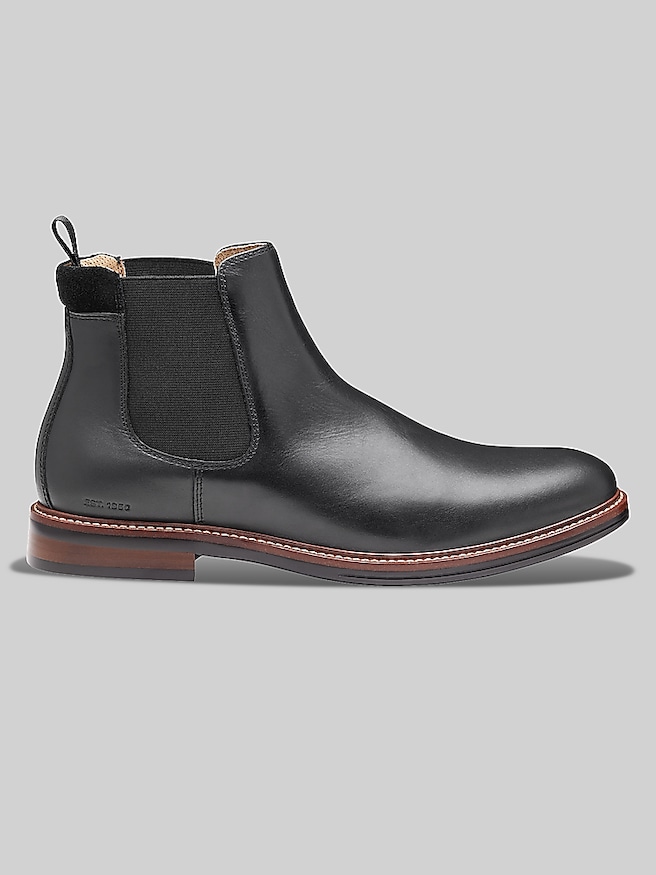
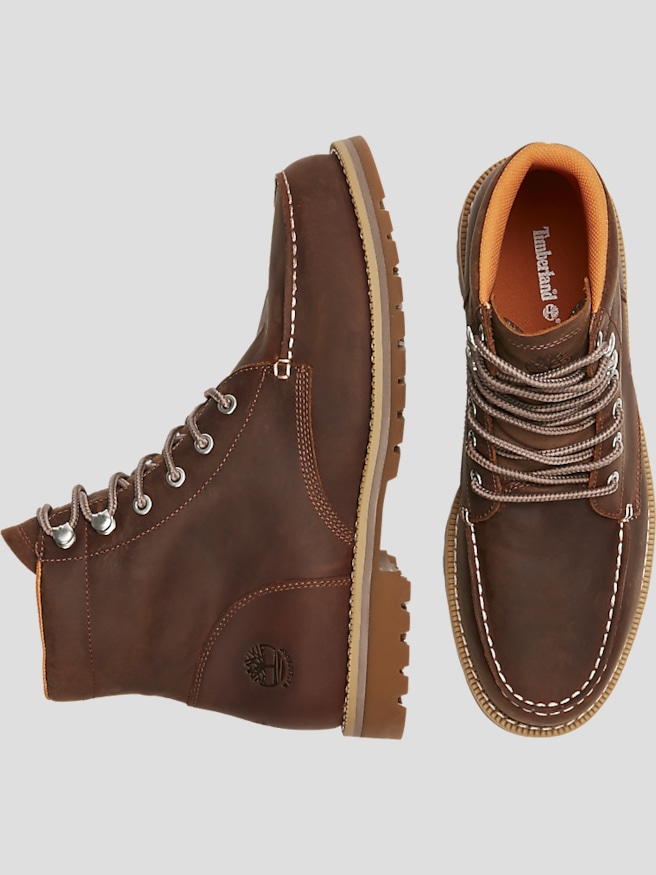
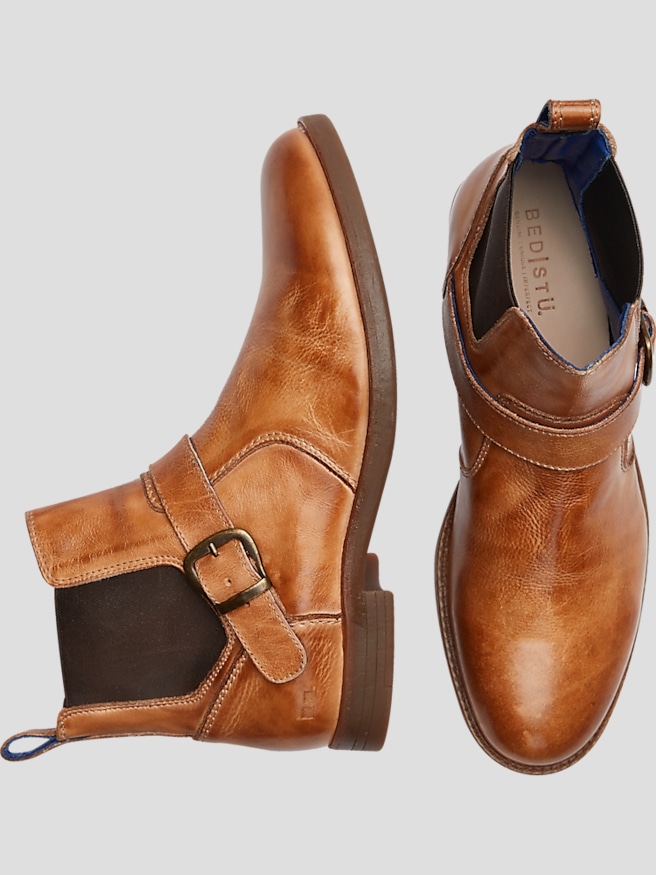
Black Chelsea boots bring a clean, grounded finish to an outfit without the visual weight of laces or a tall boot shaft. Their defining details are straightforward: an ankle-height shape, elastic side panels, and a pull-on construction that keeps the upper uncluttered. That simplicity gives the silhouette its range. A polished leather pair can look at home beneath tailored trousers, while a softer finish and a more substantial sole create an easy match for denim or chinos. Black also provides a consistent anchor when an outfit combines several textures, such as a knit polo, a woven jacket, and flat-front pants. For an office setting, a relatively slim toe and restrained sole keep the proportions close to those of a dress shoe. For dinner, a concert, or a casual celebration, the same general shape works with dark jeans and an open-collar shirt. The important distinction is in the details: a sleek upper reads differently from a broad toe, pronounced tread, or contrasting stitching. Chelsea boots are useful for people who prefer footwear that moves between dressed-up and relaxed settings without requiring a complete change of outfit. Trouser length makes a noticeable difference, too. A hem that rests lightly over the top of the boot preserves a continuous line, while excessive fabric can bunch around the ankle and hide the shape. Narrower pant openings generally sit more neatly over a streamlined shaft; fuller cuts tend to balance a heavier sole. Black boots pair naturally with charcoal, navy, gray, and deep indigo, and a black belt can help pull a tailored outfit together without making every accessory identical. For a lighter contrast with denim or earth-toned clothing, Chelsea Tan Boots offer another interpretation of the same recognizable silhouette. In black, the appeal remains especially direct: understated footwear with enough presence to finish an outfit, but not so much detail that it competes with everything else.
Materials and construction determine much of how black Chelsea boots look, feel, and hold up through repeated wear. Smooth leather can develop creases and a subtle patina while retaining a refined surface with appropriate care. Suede has a softer, matte appearance that reduces shine and adds texture, making the boot feel less formal even when its outline is slim. Synthetic uppers vary in flexibility and finish, so material descriptions matter more than appearance alone when considering how a boot might feel over a full day. Leather thickness, lining, and reinforcement around the heel all influence structure. A firmer upper may need a gradual adjustment period, while a supple one can feel more flexible from the beginning; neither characteristic guarantees comfort without a suitable fit. Elastic panels should stretch enough for entry and then recover their shape, helping the shaft sit close to the ankle. Neat stitching, secure attachment points, and a heel that remains stable underfoot are useful construction details to consider. The outsole changes the experience as much as the upper does. Leather soles often support a traditional dress-oriented profile, while rubber soles can add cushioning and traction on everyday walking surfaces. Low-profile rubber keeps the visual effect restrained; deeper tread and a thicker platform make the boot more substantial. For someone walking between transit stops and an office, sole flexibility and underfoot support may carry more weight than a highly polished finish. For someone wearing boots mainly to dinners or professional events, a slimmer shape may better complement tailored clothing. Weight matters as well, particularly when footwear stays on through a long workday. A heavier boot can feel reassuringly solid, but a lighter construction may be less tiring for extended wear. Resolable construction, where present, can make professional repairs an option as the sole wears down, though that capability depends on how the boot is made. Durability is best understood as a combination of materials, construction, fit, and upkeep rather than a single feature. A boot that suits its intended use is easier to wear consistently and maintain thoughtfully.
Fit deserves particular attention with Chelsea boots because there are no laces to fine-tune the hold across the foot. The instep, heel, and elastic panels work together to keep the boot secure, so the right size should feel comfortably supportive rather than tight enough to cause pressure. Toes need room to rest naturally, and the widest part of the foot should align with the widest part of the boot. A small amount of heel movement can occur in some new pull-on boots, especially before the sole becomes more flexible, but pronounced slipping or a foot sliding forward suggests that the shape or size needs reconsideration. Trying boots with the socks intended for regular wear gives a more useful impression than judging the fit with unusually thick or thin socks. Walking a few steps also reveals pressure across the instep, rubbing near the ankle, or stiffness that is easy to miss while standing still. Black Chelsea boots can make a thoughtful birthday, graduation, or milestone gift for someone who enjoys versatile footwear, provided the recipient’s sizing and preferred toe shape are understood. Someone accustomed to roomy casual shoes may appreciate a broader profile, while someone who favors tailored clothing may prefer a closer, more streamlined shape. Once boots become part of a regular rotation, simple care helps preserve their appearance. Smooth leather generally benefits from gentle cleaning, an appropriate conditioner, and polish when a more finished surface is desired; care products should match the material and manufacturer’s recommendations. Suede needs a suitable brush and products intended for its textured surface rather than standard leather cream. Pull tabs make entry easier, but a shoehorn can reduce strain on the heel structure, and removing boots by hand avoids using the opposite sole to push against the back. Allowing footwear to rest between wears and using properly sized shoe trees can help maintain its shape. Scuffs, creases, and sole wear are normal signs of use, but attentive care keeps the black finish looking purposeful, whether the boots accompany a client meeting, an evening out, or an ordinary day built around comfortable, considered clothing.