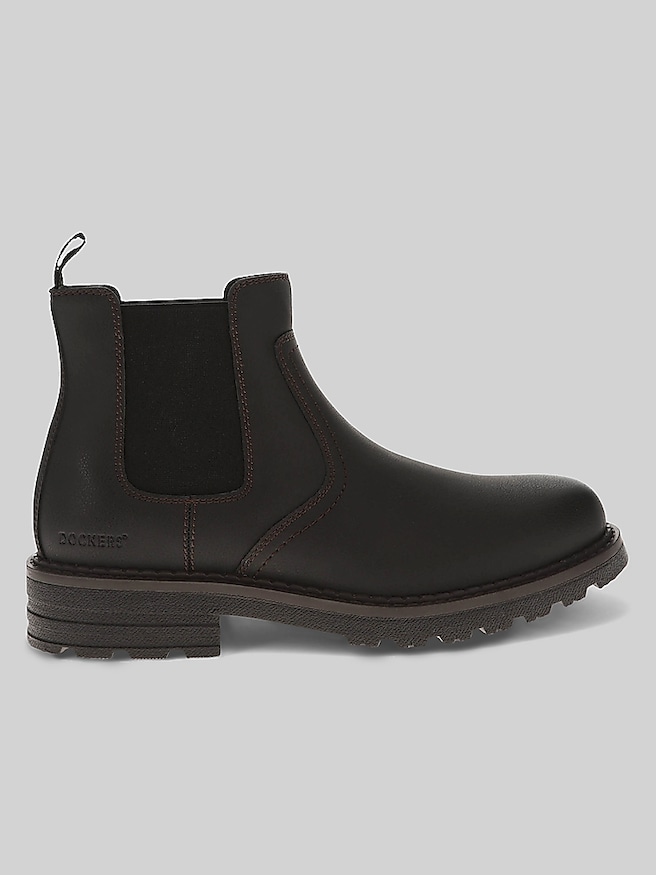
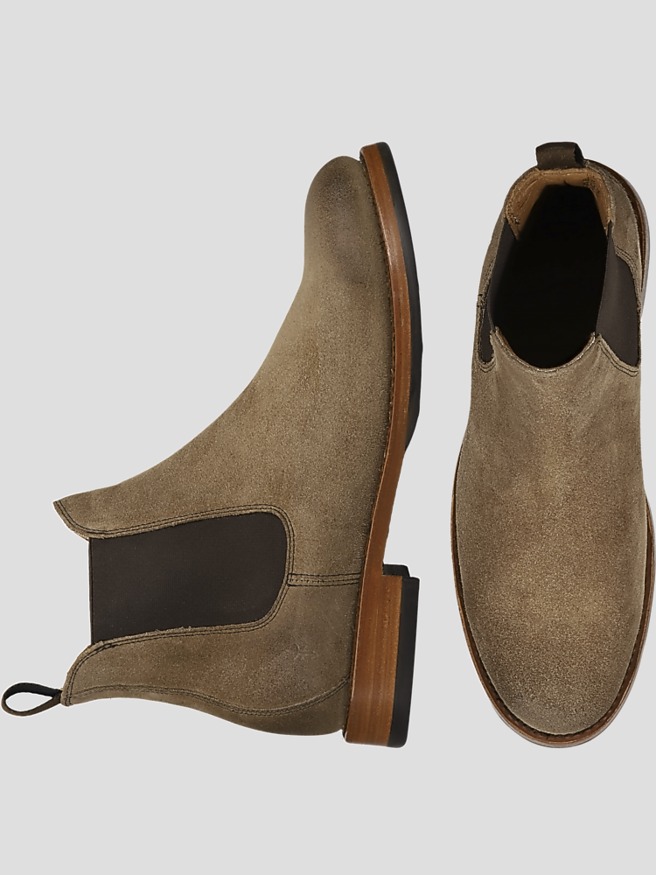
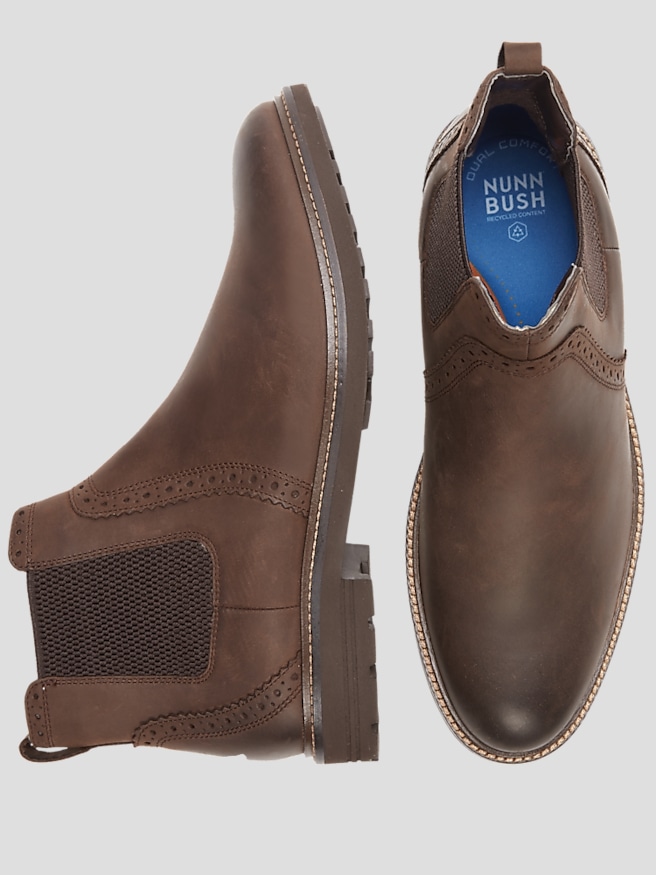
Tan Chelsea boots bring a distinctive balance to a wardrobe: the clean outline of a dress boot, the ease of a pull-on design, and a color that gives familiar outfits more depth. Their defining features are an ankle-high shaft, elastic side panels, and a shape that sits close to the foot without the visual interruption of laces. Many designs also include a back pull tab to help with putting them on. Within that simple framework, small details make a noticeable difference. A tapered toe and a slim sole create a refined profile beneath tailored trousers, while a rounder toe and a more substantial sole look at home with straight-leg denim or sturdy chinos. Tan can range from pale sand to golden honey and richer caramel shades, so the overall effect depends as much on the shade as on the silhouette. Lighter tones create a clear contrast with dark indigo jeans; deeper tones can sit more quietly alongside navy, olive, charcoal, or brown. For a business-casual office, tan Chelsea boots can finish an outfit built around navy trousers, a tucked-in shirt, and an unstructured jacket. For dinner or a casual celebration, the same general shape works with dark denim and a textured knit, keeping the outfit relaxed without looking unfinished. Trouser length matters here: a hem that rests lightly near the top of the foot allows the boot’s shape to show, while excess fabric can gather around the ankle and obscure its clean lines. A narrow leg opening should skim the shaft rather than catch on it. Tan footwear naturally draws the eye, making it useful when an outfit needs a focal point without a bold pattern. A belt in a related brown tone can connect the look without requiring an exact color match. The result is footwear that feels considered but not overly formal, especially for someone whose day moves between a desk, a lunch meeting, and plans after work.
Materials influence both the appearance of tan Chelsea boots and the way they feel over repeated wear. Smooth leather gives the color a defined surface and can develop creases and subtle tonal variation with use. Suede has a soft, napped texture that diffuses light, giving tan shades a quieter, more relaxed character. Neither finish determines comfort or quality by itself; the thickness and flexibility of the upper, the lining, the footbed, and the sole all contribute to the experience. For a closer look at the smooth-leather side of this style, Mens Tan Leather Chelsea Boots connects the familiar pull-on silhouette with a material that complements both tailored and casual clothing. Construction details deserve attention because Chelsea boots rely on their shape and elastic panels rather than adjustable laces to hold the foot securely. A good fit feels comfortably snug through the instep, with enough space for the toes to lie naturally and move without pressing against the front. Some slight heel movement may occur in a new pull-on boot, but pronounced lifting or forward sliding can suggest that the size or shape is not a good match. Length alone does not settle the question: two boots marked with the same size can feel noticeably unlike each other through the forefoot, arch, and ankle. The socks intended for regular wear should be part of any fit assessment, since a thick sock can change the feel of a close-fitting shaft or instep. Leather may soften and conform with use, but a painful fit should not be treated as a normal stage of breaking in. Underfoot, a flexible sole can make walking feel more natural, while cushioning and lining choices affect comfort during extended standing. Rubber soles often provide a more casual appearance and may offer useful grip, depending on their tread and compound. Leather soles create a traditional dress profile, though traction and cushioning vary by construction. The most useful choice reflects the actual routine, whether that involves mostly seated work, frequent walking, or hours spent on the feet.
Care plays a large part in how tan Chelsea boots look over time, particularly because lighter shades can make marks and uneven conditioning more noticeable. Smooth leather generally benefits from having surface dust removed with a soft brush or cloth before any care product is applied. A conditioner suited to the leather can help maintain suppleness, but testing it on a discreet area matters: some formulas deepen tan shades or alter the finish. Polish should also match the material and desired result, with attention to whether it adds pigment or shine. Suede calls for a separate approach, usually involving a suede brush and suitable spot-cleaning tools rather than conventional leather cream. Manufacturer care directions remain the best starting point for either material. Letting boots rest between wears gives the interior time to air out, and properly fitted shoe trees can help support the shape without stretching the upper. Pull tabs are helpful, but forcing a foot into a tight opening or tugging sharply at the elastic can place unnecessary strain on the boot. A shoehorn can ease entry and protect the heel structure. Over the longer term, wear often appears first at the heel, sole edges, and flex points, so attention to those areas can help identify when professional maintenance is worthwhile. Some constructions allow resoling or other repairs; others offer fewer repair options, making the original build relevant to expected longevity. These practical qualities also matter when tan Chelsea boots are considered as a gift for a partner, parent, graduate, or someone establishing a more polished everyday wardrobe. A recipient who regularly wears chinos and button-front shirts may appreciate a streamlined shape, while someone devoted to denim may prefer a broader toe and a more substantial sole. Accurate sizing and a sense of the recipient’s preferred fit are more valuable than guessing from appearance alone. For everyday wear or a thoughtful wardrobe addition, the appeal lies in a straightforward combination: an expressive neutral color, a recognizable shape, and enough versatility to complement clothing that already gets worn often.