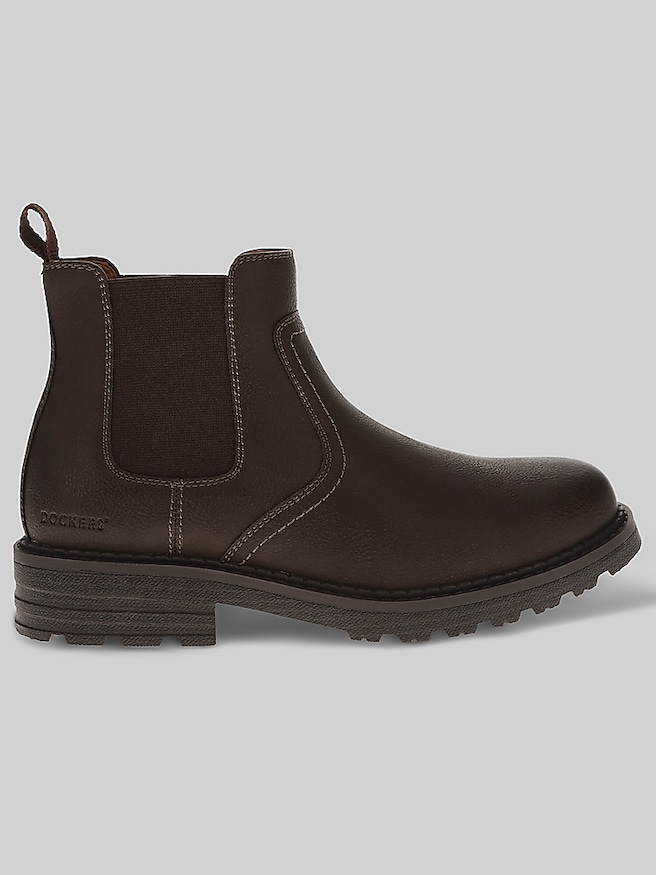
The appeal of Chelsea Shoes starts with a simple silhouette: a smooth upper, elastic side panels, and an ankle-height shape that slips on without laces. Men's Chelsea shoes sit comfortably between tailored footwear and everyday boots, giving them a useful place in a wardrobe that moves from office hours to dinner plans. Their clean profile creates an uninterrupted line beneath trousers, while the close-fitting shaft keeps the shape from looking bulky. Small details make a noticeable difference. An almond-shaped toe feels refined without appearing sharply pointed, a rounded toe brings a more relaxed character, and a thicker sole adds visual weight. Smooth black leather works naturally with charcoal trousers, dark denim, and understated tailoring. Brown leather brings depth to navy, olive, and lighter neutral fabrics, while suede softens the look of structured pants and jackets. The style's roots in practical slip-on footwear still show in its easy entry and flexible side inserts, but its modern appeal comes from how little ornamentation it needs. For a business-casual setting, Chelsea shoes can finish an outfit of pressed chinos, a tucked-in button-down shirt, and a sport coat without making the combination feel overly formal. For an evening out, dark jeans with a clean hem and a fine-gauge knit create a sharper alternative to sneakers. With a suit, a sleek profile and polished finish generally look more cohesive than a heavy tread or broad toe, although the occasion's dress expectations still matter. Traditional formal dress codes may call for a dedicated dress shoe instead. Trouser length also affects the result: a modest break lets the fabric rest neatly over the upper, while excess fabric can bunch around the shaft and hide the shape. Straight and gently tapered legs usually offer enough room to fall cleanly over the ankle. That balance makes Chelsea footwear especially useful for someone who prefers a compact collection of shoes with distinct purposes rather than a separate pair for every outfit.
Materials and construction influence how men's Chelsea shoes look, feel, and hold their shape through repeated wear. Smooth leather can develop subtle creases and a richer surface character over time, while suede has a soft nap that gives color a more textured appearance. Neither material eliminates the need for care, and the best choice depends partly on the finish a wearer prefers to maintain. Leather quality, lining, stitching, and the structure around the heel all contribute to comfort and durability; a polished surface alone does not reveal how a shoe will perform. A lined interior can provide a smoother feel against socks, while cushioning underfoot may help make time spent standing more comfortable. Outsole materials bring another set of trade-offs. Leather soles tend to support a streamlined dress profile, while rubber soles can add flexibility and grip, depending on their compound and tread. A substantial sole may feel appropriate with denim but look heavier beneath lightweight suit trousers. Fit deserves particular attention because elastic panels replace the adjustment normally provided by laces. The shoe should feel secure through the instep and heel without squeezing the toes or pressing hard across the top of the foot. A little heel movement can occur in new pull-on footwear, but obvious slipping or a foot that slides forward suggests the shape or size is not right. The toes need room to rest naturally, and the widest part of the foot should align comfortably with the widest part of the shoe. Trying Chelsea footwear with the socks intended for regular wear gives a more useful sense of fit than testing it with an unusually thin or thick pair. Walking several steps also reveals pressure points that may not be noticeable while standing still. Leather can soften with use, but break-in should not be expected to correct a shoe that is too short or painfully narrow. Elastic should stretch enough for entry, then recover to hold the ankle comfortably rather than remaining loose.
Regular care helps Chelsea shoes retain the understated finish that makes them so versatile. For smooth leather, removing surface dust with a soft brush or cloth before applying suitable care products keeps grit from being worked into the finish. Conditioner can help maintain leather's suppleness, while an appropriate polish restores color and shine; the material's care instructions should determine which products belong on the surface. Suede needs a different approach, typically involving a dedicated suede brush and compatible cleaner rather than conventional leather polish. Brushing gently can lift the nap and reduce the flattened appearance that develops in areas of repeated contact. Any protective treatment should be suitable for the material and tested discreetly first. If footwear becomes damp, letting it dry naturally away from direct heat helps protect the upper and adhesives. Shoe trees can help leather footwear maintain its shape between wears, and giving shoes time to air out supports a fresher interior. The elastic panels benefit from careful handling, too. Using a shoehorn and a pull tab, when present, reduces unnecessary strain on the opening; crushing the heel to step in can damage the structure that keeps the shoe secure. Over time, wear at the heel, loose stitching, or stretched elastic can signal the need for attention, and repair options depend on how the footwear is constructed. For someone buying a gift, the recipient's usual shoe size is only a starting point: foot width, instep height, preferred socks, and everyday dress habits all matter. A person who wears tailored trousers most days may appreciate a sleek leather finish, while someone whose wardrobe centers on jeans and textured shirts may favor suede or a more substantial sole. Color can be chosen with the same practical eye, taking cues from the recipient's frequently worn belts, jackets, and pants without requiring an exact match. Whether used for a presentation, a dinner reservation, or an ordinary workday, well-fitting Chelsea shoes offer a distinctive combination of easy wear and a composed appearance.