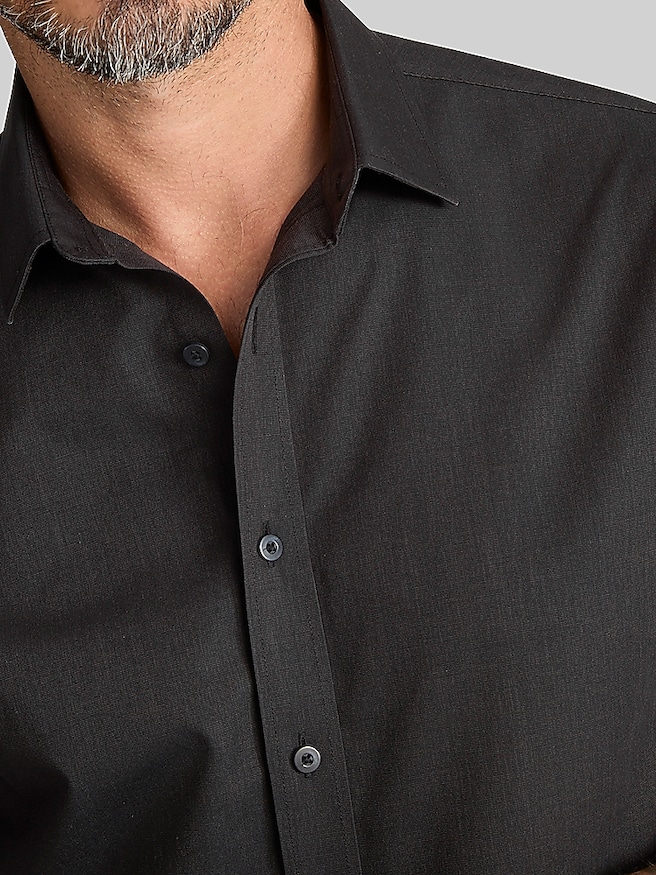
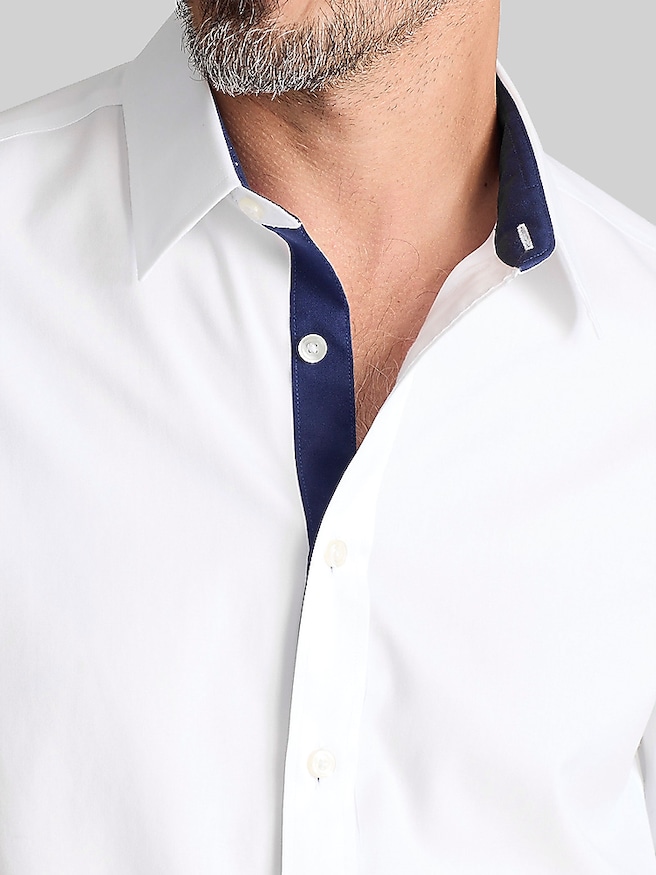
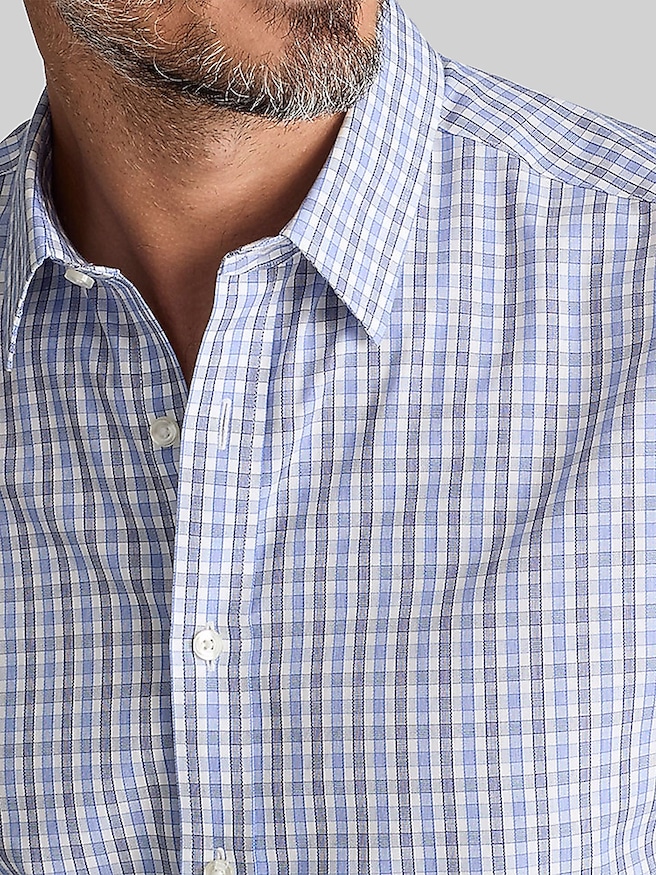
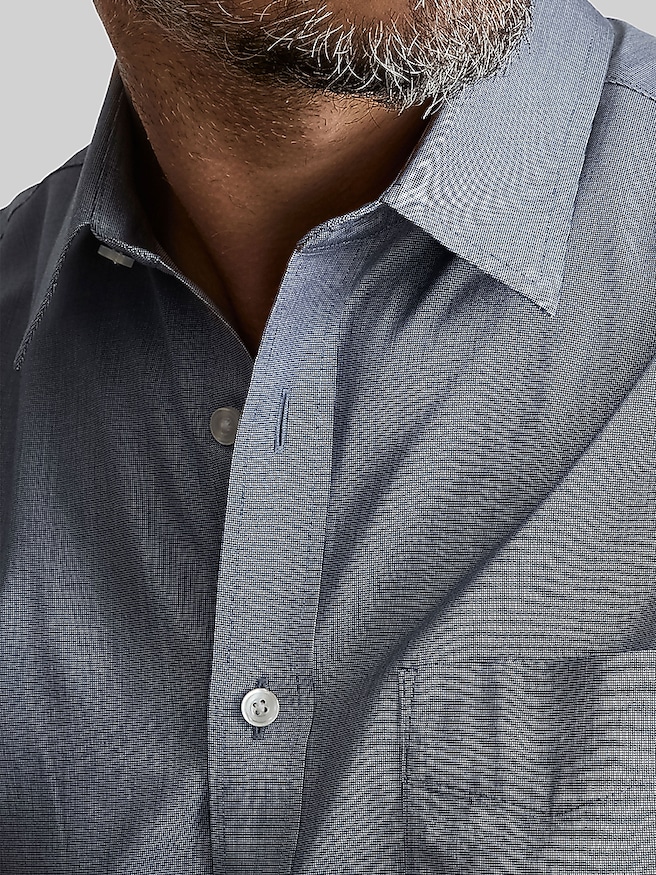
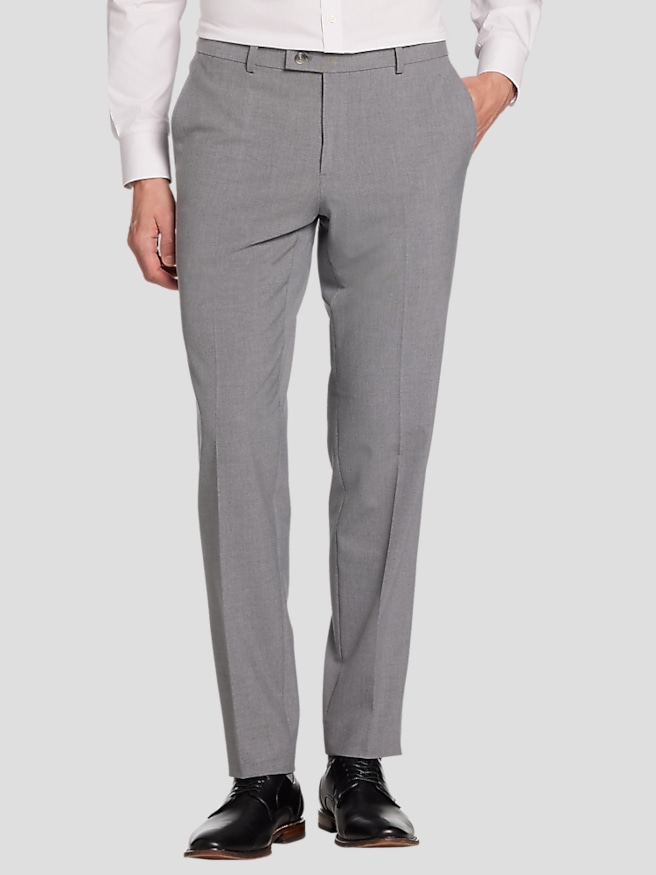
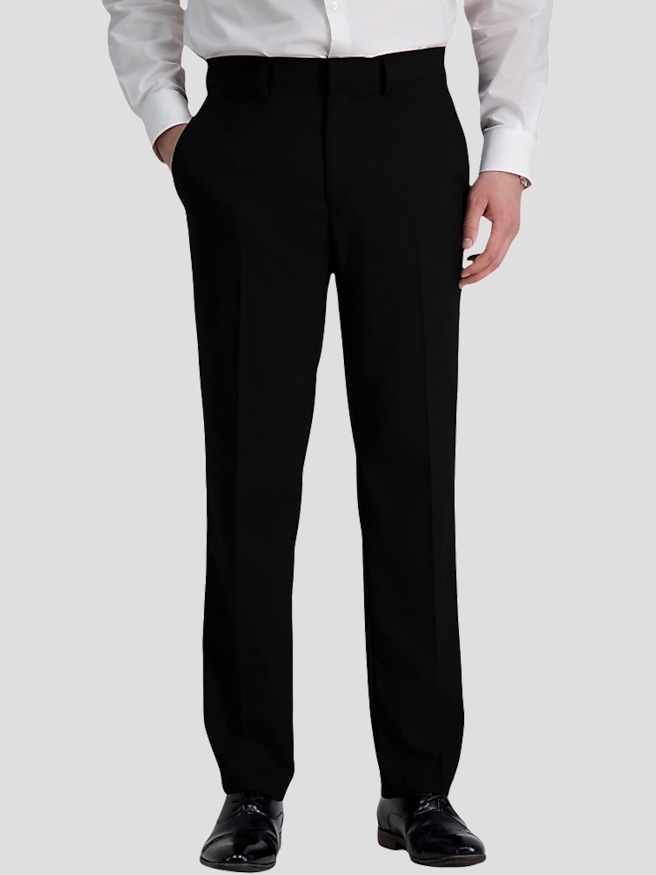
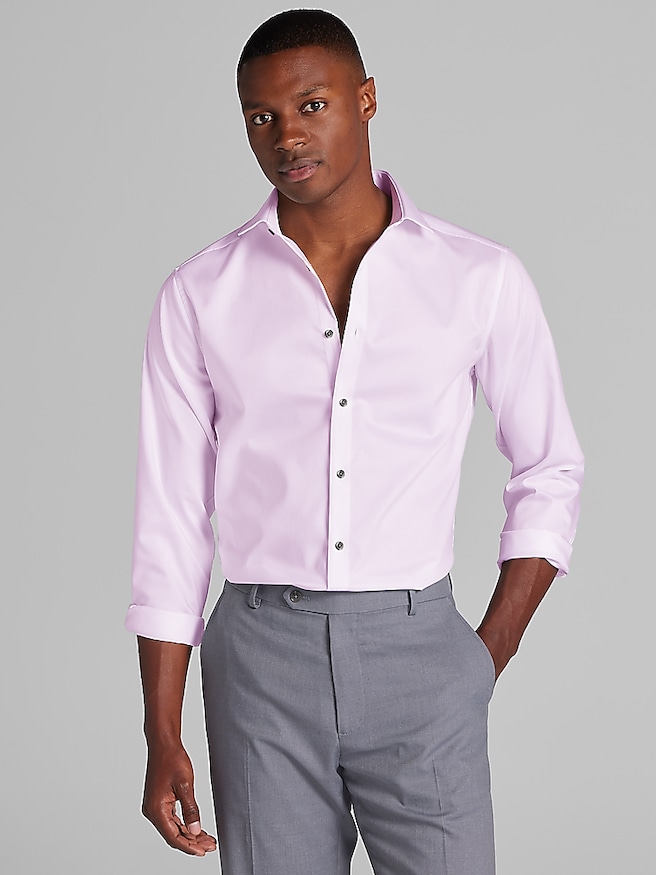
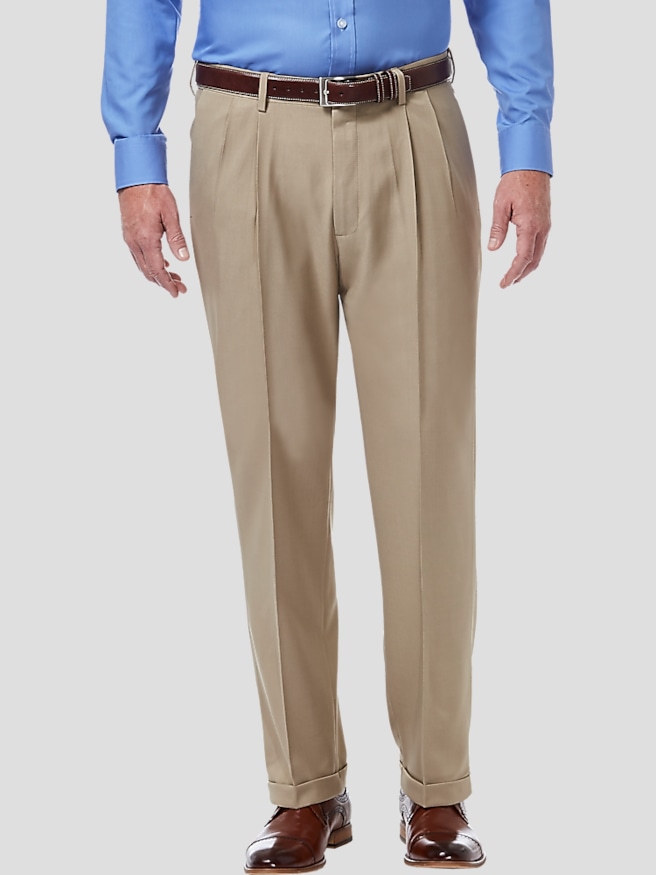
Casual work attire for men balances professional polish with the ease needed for a full day of meetings, desk work, and time on the move. It generally includes chinos, tailored casual trousers, button-down shirts, polos, knitwear, and soft-structured jackets, with footwear that looks neat rather than athletic. The right combination depends on the workplace: an open-collar shirt and pressed trousers suit an office that leans traditional, while a knit polo and clean, dark denim can feel appropriate in a more relaxed setting where jeans are permitted. What connects these outfits is intention. A collar that sits neatly, a waistband that stays comfortable when seated, and pants that fall cleanly over shoes give casual clothing a work-ready finish. Navy, charcoal, olive, tan, and light blue provide a flexible foundation, with subtle stripes, small checks, or textured solids adding interest without dominating the outfit. A light blue Oxford cloth shirt with stone chinos and brown leather shoes has a crisp, approachable look; a charcoal sweater over a collared shirt brings a little more depth during the cooler months. These combinations work well for professionals building a first office wardrobe, experienced staff adapting to a relaxed dress code, and people moving between home workspaces and in-person appointments. Casual does not have to mean the same thing every day, either. A presentation may call for tailored trousers and a lightweight blazer, while a day spent on internal projects may suit a polo and cotton twill pants. For workplaces or occasions that call for a dressier direction, Business Casual Semi-Formal For Men offers a related category to explore, though business casual and semi-formal are distinct dress expectations. The most useful casual office clothing feels comfortable through ordinary routines while looking composed when an unexpected conversation turns into a client introduction. That balance comes from fabric, proportion, and condition more than from adding extra layers or accessories. Even a simple shirt-and-pants combination can look considered when its colors work together and neither piece appears stretched, rumpled, or overly loose.
Fabric and fit make a noticeable difference in how casual work clothes feel by late afternoon. Cotton Oxford cloth has a lightly textured surface and enough body to give a button-down shirt shape, while smoother cotton weaves create a cleaner, slightly dressier appearance. Cotton twill is a familiar choice for chinos because its diagonal weave lends structure to an everyday fabric. Blends with a small amount of stretch can make sitting, reaching, and walking more comfortable, although stretch should support a good fit rather than compensate for clothing that is too tight. Wool and wool-blend trousers offer a softer drape, and fine-gauge knitwear adds warmth without the bulk of a heavy sweater beneath a jacket. During the cooler months, breathable layers are especially useful on a commute that begins outdoors and ends in a heated office. An undershirt beneath a button-down, or a light sweater beneath an unstructured blazer, allows warmth to build gradually without making the outfit feel heavy. Shoulder seams should sit close to the natural shoulder, shirt fronts should lie smoothly across the chest, and sleeves should allow easy movement without excessive fabric gathering at the wrist. Pants need enough room through the seat and thighs for a seated workday, with pockets that lie flat and a waistband that does not dig in. Slim, straight, and more relaxed cuts can all look professional when their proportions suit the wearer. A clean hem with little or moderate break keeps trousers from pooling around shoes, and shirt length matters when choosing between a tucked and untucked look. Shorter, shaped hems can look deliberate untucked in a relaxed office; longer dress-shirt tails usually look neater secured inside the waistband. Texture also helps simple outfits feel complete. The grain of an Oxford shirt, the soft surface of a merino wool sweater, or the subtle texture of twill pants can add visual depth while keeping the overall palette quiet. The result is clothing that looks at home around a conference table but still feels natural on the walk to lunch.
A dependable casual work wardrobe also needs to hold up to repetition. Shirts and trousers worn through commutes, long stretches at a desk, and frequent laundering benefit from secure stitching, well-attached buttons, and fabric suited to regular use. Reinforced stress points around pockets and seams can support durability, while a comfortable fit helps limit strain across elbows, knees, and the seat. Care requirements deserve as much attention as appearance, particularly for anyone getting dressed quickly before an early start. Machine-washable fabrics can simplify a weekly routine, but the care label remains the best reference for washing temperature, drying, pressing, and professional cleaning. Cotton may need a light press to restore a crisp finish; knitwear often benefits from reshaping and drying flat when directed, then being folded rather than left stretching on a hanger. Hanging trousers properly and giving jackets space between wears can help preserve their shape. Footwear plays a similarly practical role. Leather loafers, understated lace-ups, and clean ankle boots can complement casual office clothes, while minimal sneakers belong in workplaces that explicitly welcome them. Smooth leather tends to read dressier than rugged soles or heavily distressed finishes, and regular cleaning keeps even understated shoes looking intentional. A simple belt, unobtrusive socks, and a tidy outer layer finish the outfit without competing for attention. Versatility comes from pieces that work in several combinations: olive chinos with a blue shirt, gray trousers with a navy polo, or a neutral sweater layered over either. This flexibility is useful for hybrid schedules, business travel, and days that continue into dinner after work. Casual work clothing can also make a thoughtful gift for someone starting a new position or returning to an office, especially when the recipient’s measurements, preferred fit, and workplace expectations are known. Across these everyday situations, the strongest choices share the same qualities: comfortable movement, manageable care, balanced proportions, and enough polish to show respect for the setting without feeling unnecessarily formal.