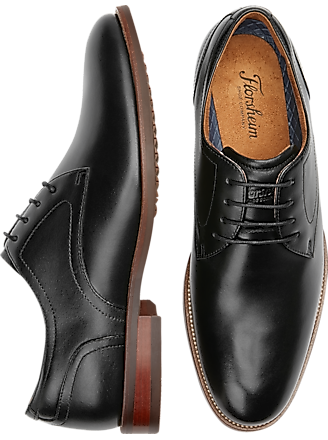
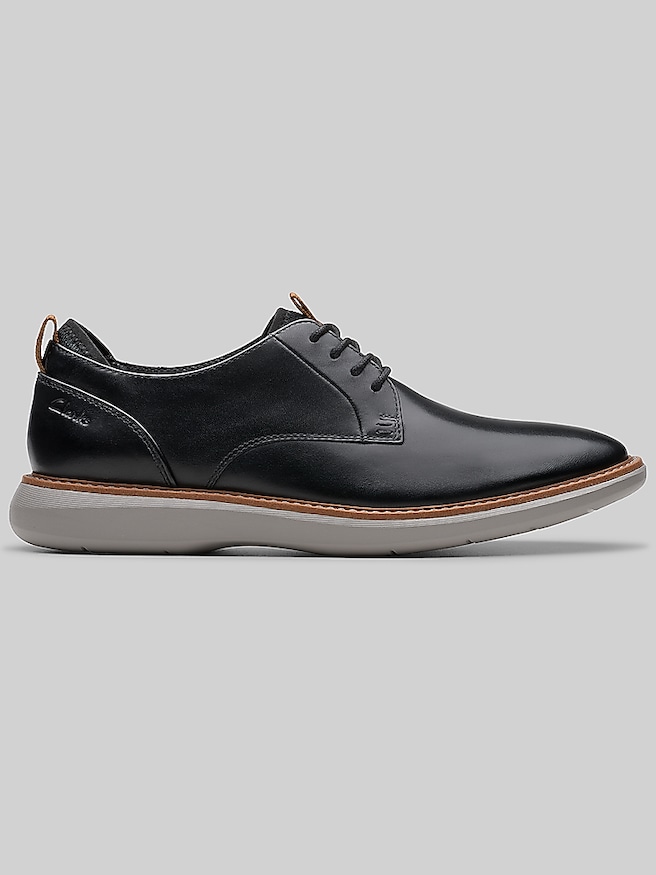
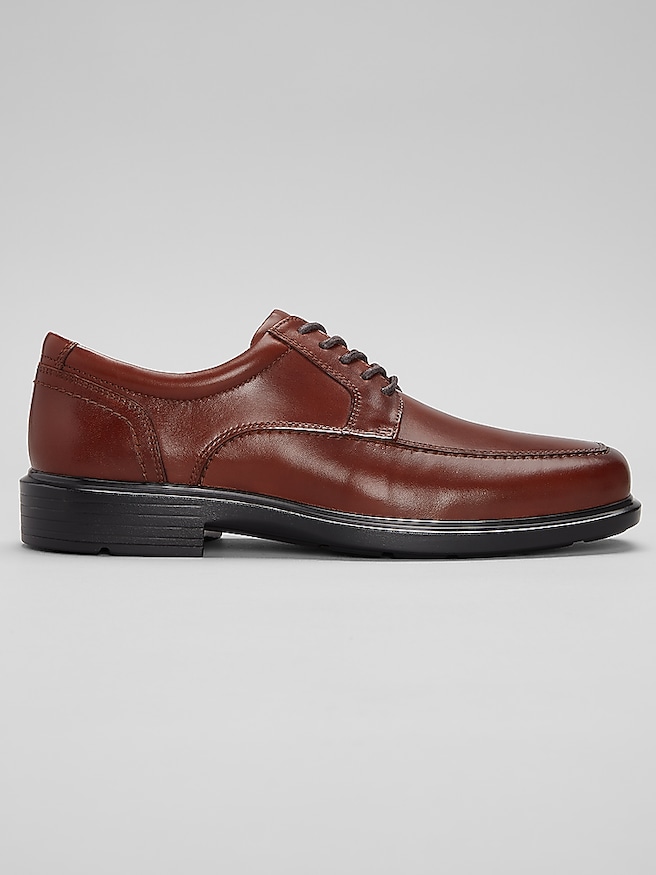
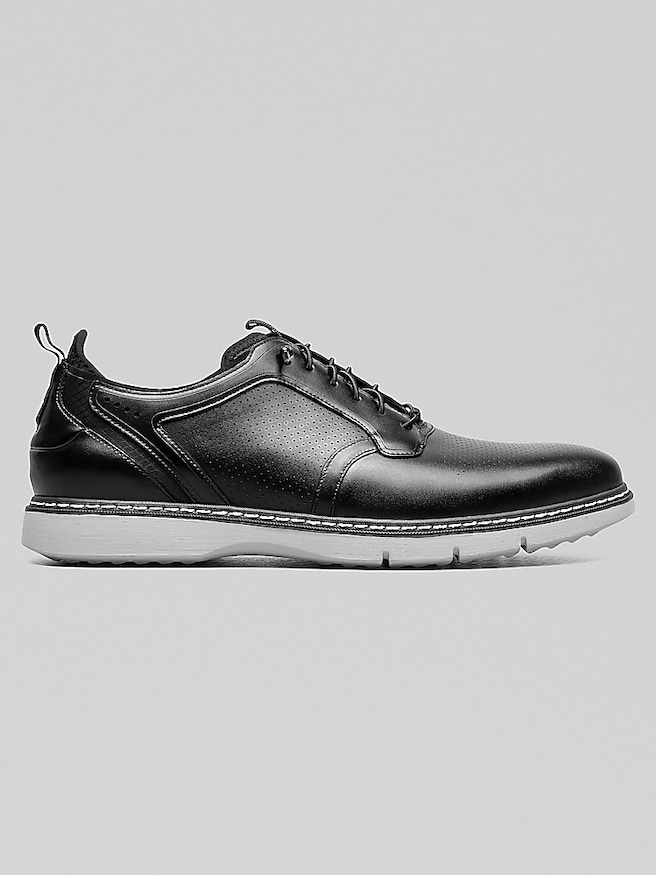
Business sneakers combine the comfort of casual footwear with the clean lines and restrained styling suited to many business-casual workplaces. Unlike performance running shoes, they typically favor a streamlined shape, minimal branding, and a less technical appearance, making them easy to pair with tailored trousers, chinos, and unstructured jackets. A smooth upper and a tidy sole edge help keep the overall look intentional, whether the day includes a desk-side conversation, a working lunch, or an afternoon presentation. Black, brown, navy, gray, and white each create a distinct effect: dark shades blend quietly with dressier pants, while white adds contrast to neutral separates. Tonal laces and subtle stitching can make a sneaker feel more refined without turning it into a dress shoe. The balance depends as much on the outfit as the footwear. Tapered trousers with a slight break let the shoe’s shape show clearly, while excess fabric gathering at the ankle can make even a sleek pair look bulky. Chinos and a tucked-in shirt create an easy office combination; a fine-gauge sweater or softly constructed blazer adds another degree of polish. With a suit, business sneakers are most at home in a workplace that welcomes relaxed tailoring, especially when the shoes have a slim profile and understated details. Traditional business-formal environments, ceremonial occasions, and meetings with a conservative dress code may still call for classic dress shoes. A wardrobe built around Modern Business Shoes can accommodate both approaches, with sneakers providing a more casual option rather than replacing every other style. For commuters, hybrid workers, and professionals who move between a workstation and collaborative spaces, the appeal is footwear that looks considered without feeling overly formal. A clean finish matters more than decorative extras when the goal is a cohesive office outfit.
Materials and construction shape how business sneakers look, feel, and hold up to repeated wear. Smooth leather offers a structured appearance and a surface that is often straightforward to wipe clean, though finishes and care requirements vary. Suede brings a softer, textured look that pairs naturally with chinos and less structured tailoring, but its nap needs more careful maintenance to stay even. Woven textiles and knit uppers may offer flexibility and airflow, while visible mesh panels and bold overlays generally create a more athletic impression. Lining materials matter, too: a smooth interior, neatly finished seams, and a comfortable heel collar can make a noticeable difference during a day of walking between offices or standing through conversations. Underfoot, cushioning softens the feel of each step, while the shoe’s overall structure influences stability. A very soft footbed is not automatically the most supportive choice, and a substantial-looking sole does not guarantee comfort. Rubber outsoles are common, but traction depends on the compound, tread, surface, and condition of the shoe; a sleek business sneaker should not be assumed to meet workplace slip-resistance requirements. Fit deserves just as much attention as appearance. Toes need room to spread without pressing against the front or sides, the midfoot should feel comfortably held, and the heel should stay secure rather than lifting with every stride. Persistent pinching or rubbing is not a useful trade-off for a sharper silhouette. The socks worn with office clothing affect the fit, particularly when switching between thin dress socks and more cushioned pairs. Low-profile socks maintain a clean ankle line, while visible socks can coordinate with trousers for a more continuous look. For anyone who uses orthotics, removable footbeds and sufficient interior depth may be important considerations. A fit that remains comfortable while walking, sitting, and standing is more useful than one that feels acceptable only for a few steps.
Regular care helps preserve the polished appearance that separates office-ready sneakers from shoes kept for errands or workouts. Dust on the upper, dark marks along a light sole, and frayed laces become more noticeable against tailored clothing, even when the rest of the outfit is simple. Care should follow the material and the maker’s directions: smooth leather may benefit from a suitable cleaner and occasional conditioning, suede generally needs a dedicated brush, and textile uppers require cleaning methods appropriate to their fibers and construction. Machine washing is not a universal solution, since water, agitation, and heat can affect adhesives, shape, and finishes. Gentle cleaning and air-drying away from direct heat help avoid unnecessary stress on the materials. Allowing shoes to dry fully between wears also helps manage interior moisture, while alternating pairs reduces the repeated wear concentrated on a single pair. Durability shows up in practical details such as secure stitching, well-finished eyelets, resilient lining at the heel, and an outsole suited to regular walking. Over time, uneven tread wear, compressed cushioning, or a heel collar that no longer holds its shape may affect comfort as well as appearance. These details matter for someone whose routine includes a walk to the train, several flights of stairs, or hours moving around a shared workspace. Business sneakers also suit days that extend beyond the office, pairing comfortably with the same chinos and jacket for dinner or an informal gathering afterward. As a gift for a new job, a career milestone, or a wardrobe refresh, they work best when the recipient’s size, fit preferences, and workplace dress expectations are well understood. Their lasting appeal comes from that practical middle ground: more relaxed than traditional dress footwear, more composed than a gym shoe, and adaptable enough to become part of a regular work wardrobe.