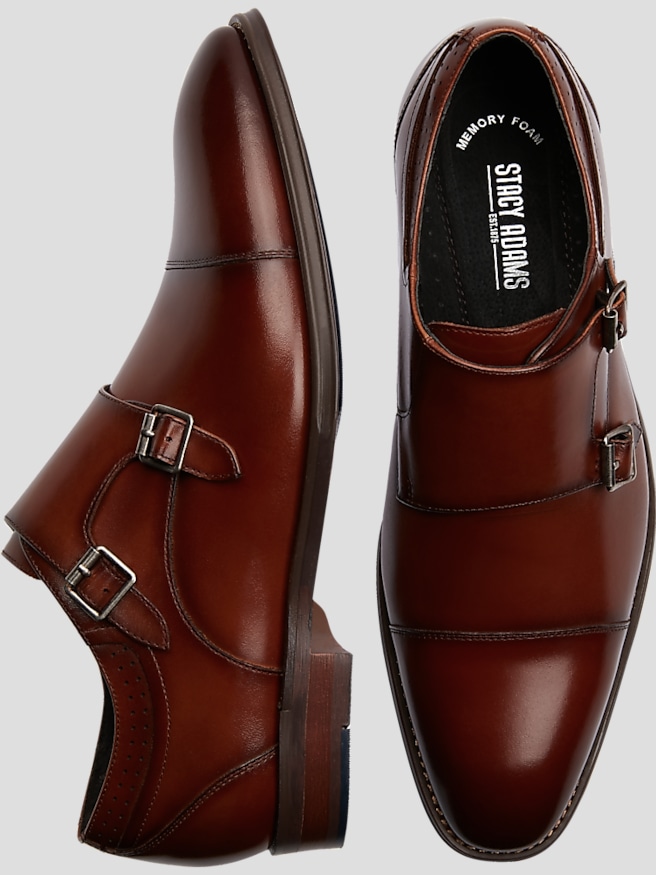
Business work shoes are footwear designed to complement professional clothing, from formal suits to business casual combinations of chinos, dress trousers, and sport coats. Oxfords, derbies, and loafers are common choices because their shapes work naturally with office attire while offering different levels of formality. An oxford has closed lacing, with the eyelet tabs stitched beneath the front of the upper, creating a neat profile that suits tailored clothing and more traditional workplaces. A derby has open lacing, with the eyelet sections stitched on top of the upper, allowing more adjustment across the instep. Loafers eliminate laces altogether and bring an easy, polished finish to many business casual outfits. Within these categories, details make a noticeable difference: a plain toe keeps the appearance restrained, a cap toe adds a defined seam, and brogue perforations introduce decorative texture. Smooth black leather often feels most formal, while dark brown and burgundy can bring depth to navy, gray, and earth-toned clothing. A lightly textured leather shoe can soften the contrast between dress trousers and a knit polo without looking out of place beneath a blazer. The best match depends on the workplace as much as the outfit. A client-facing professional in a traditional office may favor a sleek lace-up, while someone moving between a creative studio and a conference room may prefer a streamlined loafer or derby. For interviews, presentations, and everyday desk-to-meeting schedules, a restrained shape and a well-maintained finish help footwear support the overall impression rather than distract from it. Trouser proportions matter, too: a narrow leg opening usually pairs more cleanly with a lower-profile shoe, while fuller trousers can accommodate a slightly more substantial shape. Business footwear does not need elaborate detailing to look intentional; balanced proportions, an appropriate level of formality, and a fit that supports a normal stride do much of the work.
Comfort matters most when the workday includes more than sitting at a desk. A walk from the parking garage, several trips between departments, and a standing presentation can reveal pressure points that were barely noticeable at first. For schedules like these, comfortable business shoes combine an office-appropriate appearance with thoughtful choices in fit, cushioning, flexibility, and support. Leather uppers can develop creases and soften with wear, although they should not require enduring pain before they feel usable. Full-grain leather retains the natural surface of the hide and can develop character with regular care; other leather finishes may create a more uniform appearance or a particular texture. Suede has a softer, less formal look that often works well with chinos and relaxed tailoring, though it calls for its own cleaning tools. Synthetic and textile components can contribute flexibility or reduce weight, with performance depending on the material and construction rather than the label alone. Inside the shoe, smooth linings and neatly finished seams help limit rubbing, while a cushioned footbed can soften the feel underfoot. Cushioning and arch support are not the same thing, however, and a soft shoe is not automatically the most supportive choice for every foot. Fit should leave room for the toes to lie naturally without crowding, hold the midfoot securely, and keep the heel from repeatedly lifting or rubbing. The widest part of the foot should align with the widest part of the shoe. Trying both shoes with the socks intended for work gives a more useful impression than checking one shoe while seated. A few steps, a turn, and a brief pause while standing can expose pinching over the instep or contact at the toes. Anyone using an orthotic should account for its depth and the space it occupies; a removable footbed can make that adjustment easier when the shoe is designed for one. The shape of the shoe matters as much as its stated size, so moving between styles may call for a different width or a different last rather than simply a longer shoe.
Construction and care influence how business shoes hold up to repeated wear. Rubber outsoles can provide flexibility and traction, while leather soles offer a traditional appearance and a distinct feel underfoot. Actual grip depends on the outsole design and the surface, so a dress shoe should not be assumed to provide certified slip resistance or workplace protection. A modest heel, a stable base, and a flex point that follows the foot can make everyday movement feel more natural. Secure stitching, even joins, and a firmly attached sole are useful signs of careful assembly, though long-term durability also depends on use and maintenance. Some stitched constructions can be repaired or resoled by a cobbler; whether that is practical depends on the shoe’s design and condition. Routine care begins with removing dust and surface dirt before they accumulate around seams and creases. Smooth leather generally benefits from an appropriate cleaner and occasional conditioner, followed by polish when the finish calls for it. Suede needs a dedicated brush and suitable treatment rather than ordinary leather polish. Care products should match the material and finish, with a discreet test helping prevent unwanted changes in color or texture. A shoehorn protects the heel counter from being crushed during dressing, and properly sized shoe trees help maintain shape between wears. Allowing shoes to rest between uses gives interior moisture time to dissipate and reduces the strain of constant wear. Attention to worn heel edges, loose stitching, and damaged laces can also keep a polished pair looking ready for the office. For someone beginning a new job, preparing for regular presentations, or refining an everyday professional wardrobe, business shoes can be a useful gift when size, width, and workplace expectations are known. Whether worn with a suit or a more relaxed office outfit, the most useful pair balances an appropriate appearance with dependable fit and care that fits easily into a routine.