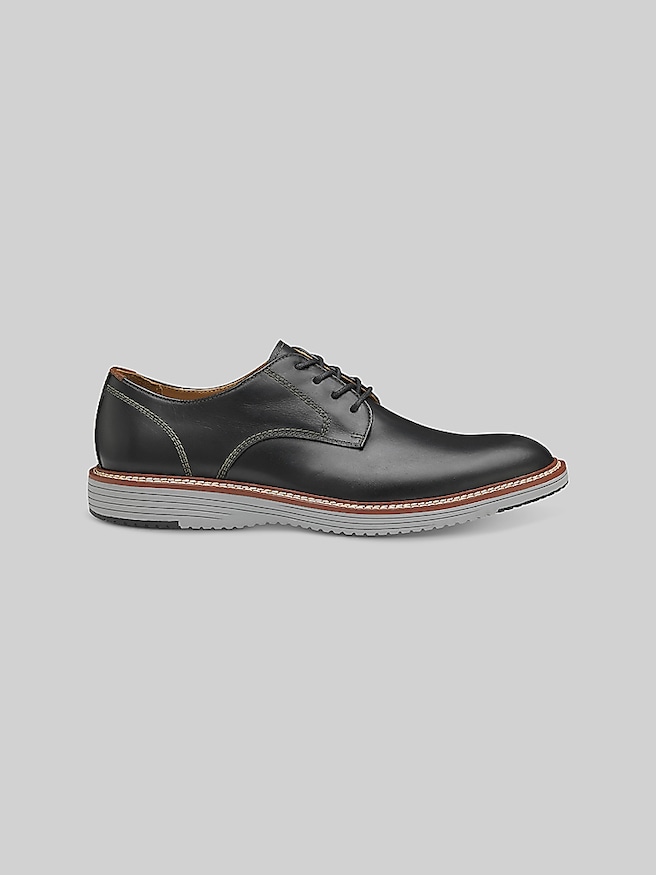
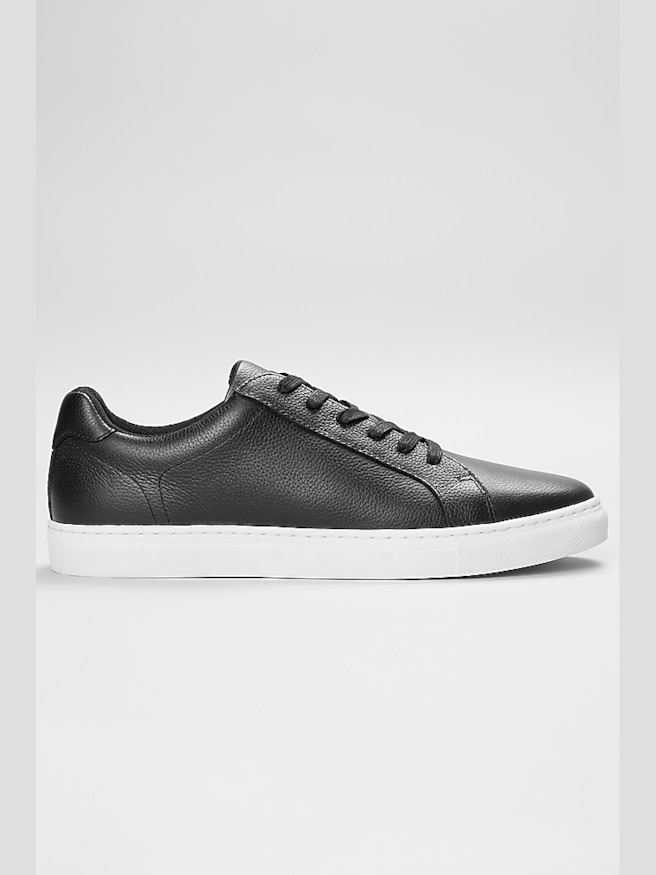
Black business casual shoes bridge the space between traditional dress shoes and relaxed everyday footwear. Loafers, open-laced derbies, and understated oxfords are common choices, each offering a distinct balance of polish and ease. A black penny loafer has a clean slip-on shape that works naturally with chinos and an open-collar shirt, while a plain-toe derby adds definition to tailored trousers without making the outfit feel overly formal. Derbies have open lacing, which allows the lace panels to spread apart; oxfords have closed lacing and typically create a more formal profile. An oxford with restrained detailing can still fit comfortably into a business casual wardrobe, particularly alongside a blazer and wool trousers. The best match depends on the office dress code, the shape of the pants, and how much structure the rest of the outfit carries. Smooth black uppers and slim soles tend to look dressier, while visible stitching, textured leather, and thicker soles lend a more relaxed appearance. Rounded or softly tapered toes are versatile choices that sit comfortably between a sharply pointed dress silhouette and a broad athletic shape. Black pairs especially well with charcoal, navy, medium gray, and olive trousers, creating a grounded finish without requiring every part of the outfit to be dark. With lighter chinos, the contrast becomes more noticeable, so a neatly finished hem helps keep the proportions intentional. Straight and tapered pant legs generally work well when the fabric falls cleanly over the shoe rather than pooling around it. A black leather belt can tie the look together, though the finishes do not need to match perfectly. For a desk-based workday, a client lunch, or an office gathering with a relaxed dress code, these shoes provide enough polish to look considered without calling for a full suit. Their appeal is versatility: one understated pair can complement a tucked-in button-down, a fine-gauge sweater, or an unstructured jacket while keeping the overall look professional.
Materials and construction influence how black business casual shoes look, feel, and hold up to repeated wear. Smooth leather offers a defined surface that can be cleaned and polished, and it may soften and develop creasing as it conforms to the foot. Pebbled leather has more visible texture and can make small surface marks less noticeable, while suede creates a softer, more relaxed impression that benefits from dedicated brushing. Synthetic uppers vary in flexibility and breathability, so the material description matters more than appearance alone. Inside the shoe, lining materials, footbed shape, and cushioning affect comfort over a full day. A padded footbed may soften each step, but adequate room and a secure fit remain essential; extra cushioning cannot correct a toe box that pinches or a heel that repeatedly slips. Toes should have space to move without pressing against the front, and the widest part of the foot should align with the widest part of the shoe. Lace-up styles allow some adjustment across the instep, while loafers depend more heavily on the shape of the upper and the fit around the heel. Trying shoes with the socks intended for work gives a more useful sense of fit than trying them with unusually thick or thin socks. For someone walking between buildings, commuting on foot, or standing through presentations, sole flexibility, underfoot support, and a stable heel deserve close attention. Rubber soles often provide cushioning and grip, although performance depends on the compound and tread pattern. Leather soles offer a traditional appearance and feel, but may provide less traction on smooth flooring. A low-profile hybrid sole can soften the look of a dress shoe without moving fully into athletic styling. Lightweight construction may suit a long day of movement, while a more substantial shoe can feel steadier underfoot. Neither weight nor softness alone determines comfort. The right balance lets the foot move naturally, keeps the heel secure, and avoids pressure across the instep, making the shoes easier to wear from the first meeting through the trip home.
Regular care helps black business casual shoes retain the finish that makes them useful across so many work outfits. Dust and surface dirt are easier to manage when removed before they build up around stitching, seams, and the edge of the sole. Smooth leather generally benefits from gentle cleaning, an appropriate conditioner used sparingly, and black polish or cream suited to the finish. Suede needs its own brush and compatible care products rather than the polish used on smooth leather. Synthetic materials should be cleaned according to their care directions, since leather treatments are not suitable for every upper. A shoehorn can help protect the heel structure when putting shoes on, and shoe trees can support the shape between wears. Allowing shoes to air out fully and rotating pairs when possible gives the interior time to dry from normal perspiration. Deep creases, worn heel edges, separating soles, and flattened cushioning are worth noticing because appearance is only one part of long-term wearability. Some construction methods allow professional repair or resoling, while others do not, so repairability depends on the shoe rather than its style name. For a broader work wardrobe, Black Business Shoes for Men provides a related category to consider alongside business casual silhouettes. The intended setting remains the deciding factor: a conservative office may favor smooth leather and minimal decoration, while a creative workplace may welcome textured uppers or a more substantial sole. Black business casual shoes can also make a practical gift for a graduate starting an office role, someone preparing for interviews, or a professional refreshing well-worn footwear. Knowing the recipient’s usual size, preferred width, and comfort preferences makes that choice more personal. Whether worn several days a week or reserved for occasions that call for a sharper appearance, a well-fitting pair earns its place through comfortable construction, manageable care, and an understated shape that works with the clothes already in rotation.