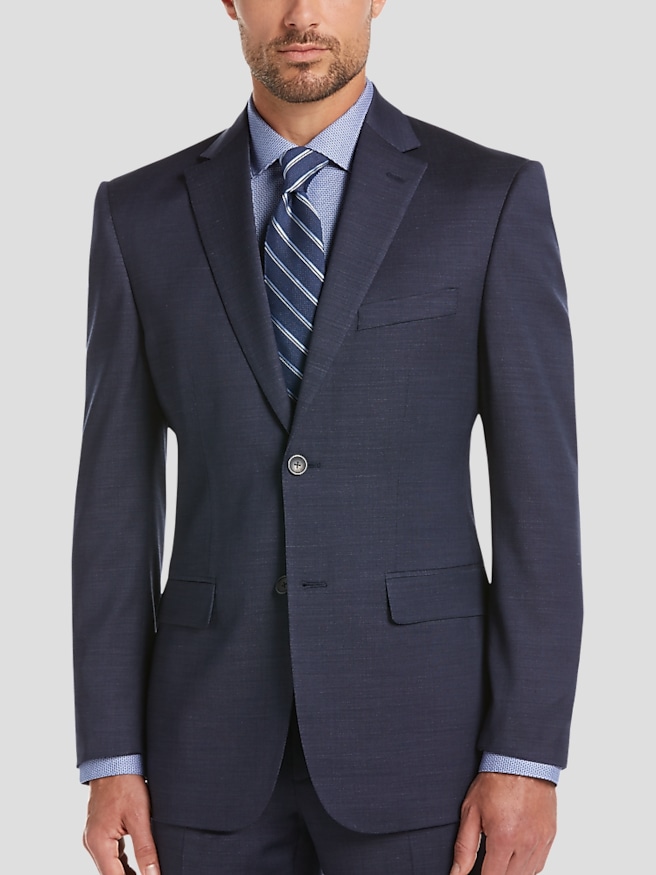
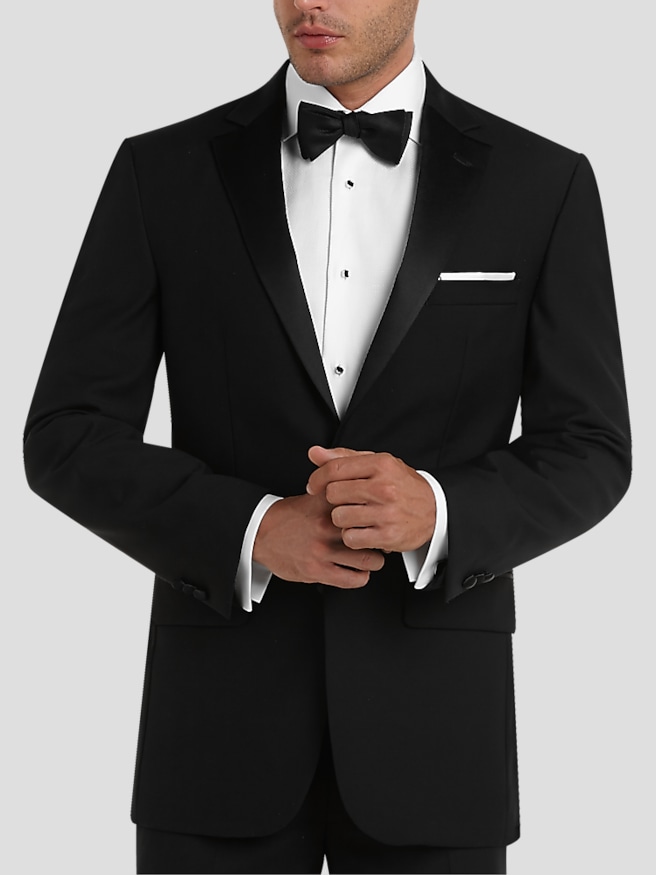
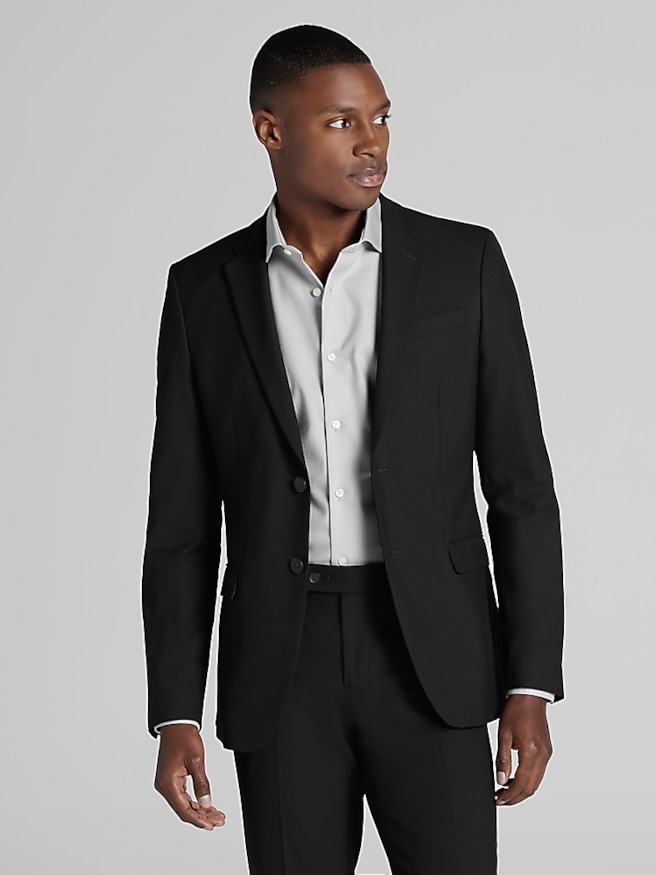
Business formal clothing is professional attire built around a matching tailored suit, a long-sleeve dress shirt, a conservative tie, and polished leather dress shoes. It is the most structured everyday office dress code, suited to workplaces and occasions where a coordinated, understated appearance carries particular importance. A two-piece suit pairs a jacket and trousers in the same fabric; a three-piece suit adds a matching vest for a more complete, traditional presentation. Navy and charcoal gray are dependable foundations because they work naturally with white or light blue shirts and restrained accessories. Black can also suit professional settings, although navy and charcoal often offer greater flexibility across interviews, client meetings, and regular office wear. Solid fabrics keep the emphasis on shape and proportion, while fine pinstripes or subtle woven patterns introduce detail without distracting from the overall look. Unlike business casual clothing, business formal attire generally relies on a complete suit rather than separate trousers and a contrasting jacket. A crisp shirt provides a clean backdrop for a silk tie in a solid color, small repeating motif, or subdued stripe. Point and spread collars each create a polished frame, with the collar opening and tie knot working together rather than competing for space. Leather Oxfords are a traditional footwear choice, and streamlined Derbys can also complement a conservative suit. Black shoes pair especially well with charcoal, while dark brown can work with navy when the workplace dress code permits. Dress socks that coordinate with the trousers maintain a continuous line when seated, and a leather belt in a similar tone to the shoes keeps the details consistent. Business formal clothing belongs within the broader category of Formal Clothing, but its purpose is distinctly professional. The finished appearance should feel composed across a conference table, at a podium, or during an introduction, without the ceremonial character of black-tie attire.
Fabric and construction influence how business formal clothing looks after hours of sitting, standing, and moving between appointments. Wool is valued for its balanced combination of drape, breathability, and natural resilience, helping a suit follow the body without appearing rigid. Worsted wool has a smooth, refined surface that works particularly well in professional settings, while subtle texture can give a solid-colored suit depth without making it look busy. Wool blends may add stretch or improve resistance to wrinkling, depending on the fibers and construction; the fiber label provides a clearer picture than appearance alone. A lining helps the jacket slide comfortably over a shirt, and its construction can affect how freely the wearer moves. Fit gives those materials their finished shape. The jacket shoulders should follow the natural shoulder line, with the collar resting close to the shirt rather than leaving a noticeable gap. Across the chest and waist, a clean fit allows the jacket to close without pulling into pronounced creases around the button. Sleeves that reveal a small amount of shirt cuff create a deliberate transition between jacket and hand. Trousers should sit securely at the intended waist position, lie smoothly through the seat, and provide enough room to sit comfortably through a meeting. A slight break at the shoe offers a traditional finish, while a minimal break creates a sharper line without excessive fabric gathering at the ankle. Cotton dress shirts contribute a smooth, breathable layer next to the skin, with poplin offering a crisp surface and twill providing subtle diagonal texture. A collar that accommodates the neck comfortably and sleeves that remain properly positioned under a jacket matter as much as the shirt’s color. Stretch fabrics can support movement, but they do not replace accurate sizing or thoughtful alterations. The practical test is ordinary office activity: reaching for a presentation remote, sitting at a desk, or shaking hands should not leave the jacket strained or the shirt visibly pulling. Good proportions make a professional wardrobe feel wearable rather than like clothing reserved only for photographs.
Business formal clothing serves people whose work calls for a consistent, credible presentation, including client-facing professionals, attorneys, financial advisors, executives, and applicants interviewing in conservative industries. It also has a place at board meetings, professional conferences, award presentations, and other occasions where a suit is part of the expected dress code. The same coordinated foundation can take on a slightly distinct character through restrained changes in shirt, tie, and accessories: a white shirt and dark tie create a particularly crisp impression, while light blue softens the contrast without losing formality. Durability depends on both construction and routine care. Smooth seams, secure buttons, a stable waistband, and fabric that retains its shape all contribute to clothing that performs beyond a single occasion. Care should follow each garment’s label, since suit fabrics, linings, and shirt finishes have different requirements. Between professional cleanings, a suit benefits from a supportive hanger, gentle brushing where appropriate, and time to air out before returning to the closet. Trousers hung neatly preserve their crease, while shirts washed and pressed according to their instructions maintain the clean collar and cuffs that remain visible beneath a jacket. Prompt attention to marks helps protect the fabric, and avoiding unnecessary cleaning can reduce wear. Leather shoes also contribute to the lasting appearance of the outfit; removing surface dirt, using suitable leather care, and allowing shoes to dry naturally helps preserve their finish. For someone marking a graduation, a new position, or another career milestone, business formal clothing can be a practical gift with lasting relevance. Fit-sensitive garments are best chosen with accurate measurements and an understanding of the recipient’s workplace, while a restrained tie or classic accessory allows for a more flexible choice. Across these uses, the appeal comes from reliable coordination: a clean silhouette, comfortable movement, and details that look considered without drawing attention away from the person wearing them.