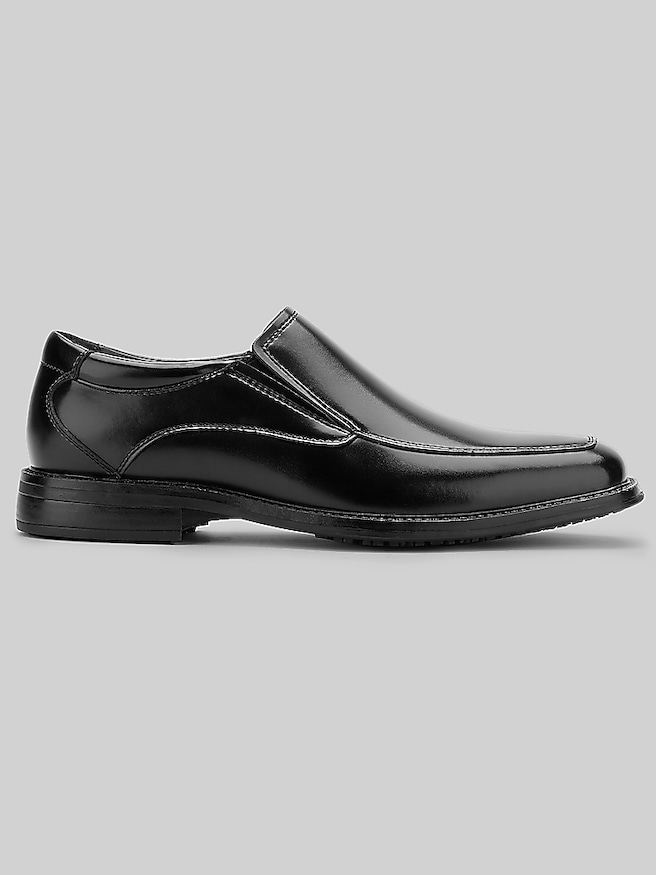
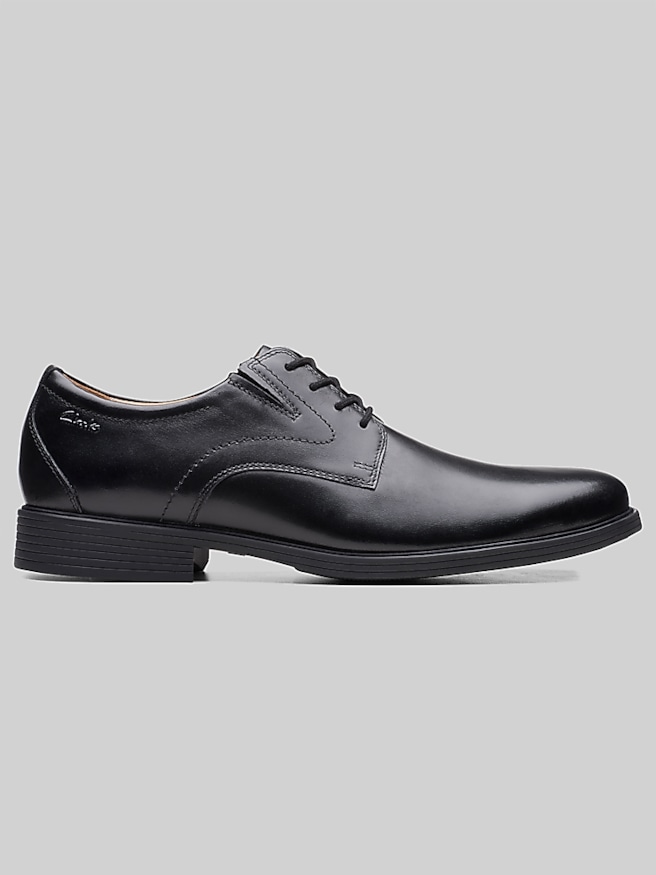
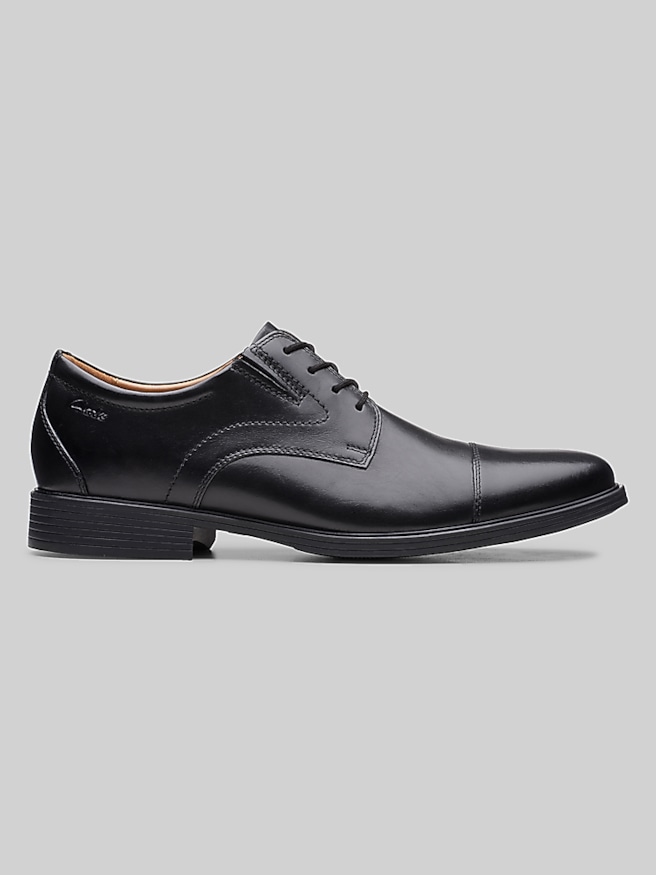
Black wide shoes provide extra room across the foot compared with standard-width shoes of the same length, making them a practical choice for men who need a broader fit without sizing up unnecessarily. The exact shape varies by maker and style, but a well-proportioned wide shoe should accommodate the forefoot while keeping the heel comfortably secure. That balance matters whether the day involves walking between meetings, standing through a reception, or heading from the office to dinner. Black is especially useful because it works naturally with charcoal trousers, navy tailoring, and many business-casual combinations. A smooth, understated upper creates a polished finish, while visible stitching, a rounded toe, or a more substantial sole can give the same color a relaxed character. Lace-up styles allow some adjustment across the top of the foot; loafers rely more heavily on the relationship between the heel, instep, and opening. Neither shape should require cramped toes to stay in place. Width also differs from depth: a broader shoe may ease pressure at the sides without necessarily providing more space above the toes or accommodating a high instep. Designations such as W and EE can help identify wider sizing, although their meaning is not completely consistent across manufacturers. Measuring both feet and considering the larger foot provides a more useful starting point than relying only on a familiar size. The socks intended for everyday wear matter, too, since a thin dress sock and a cushioned sock take up different amounts of space. There should be room for the toes to rest naturally, with enough clearance at the front that they do not strike the shoe while walking. Excess length is not a substitute for adequate width; it can move the shoe’s flex point away from the ball of the foot and create slipping. A suitable fit feels secure through a normal stride without pinching at the little toe, pressing across the instep, or depending on tightly pulled laces to hold everything together.
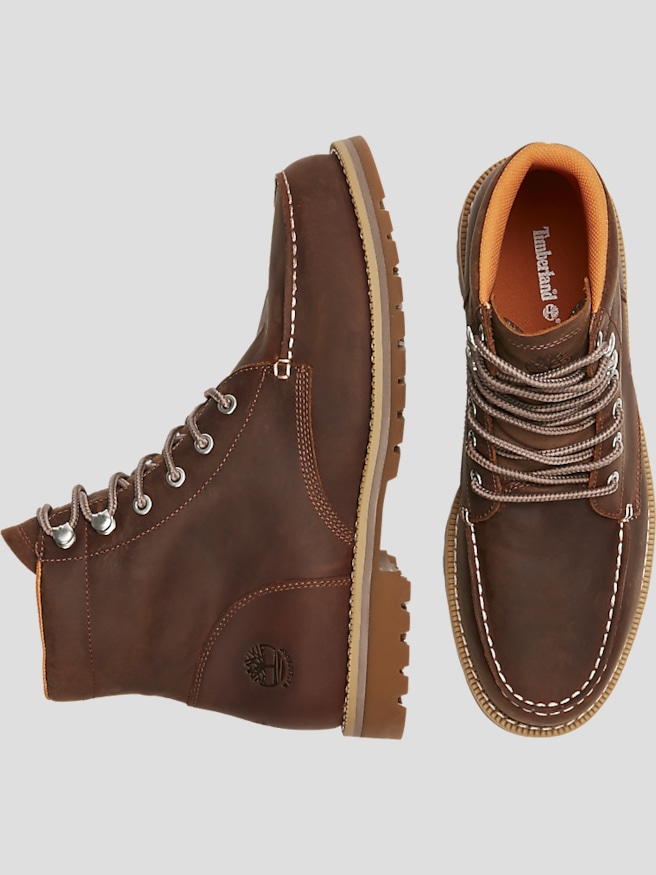
Materials and construction influence how black wide shoes feel, wear, and complement an outfit. The appeal of Wide Leather Shoes includes a structured appearance and an upper that can gradually soften with use, although leather should never need to stretch substantially just to make a shoe wearable. Smooth leather suits a crisp trouser crease and a tailored jacket, and its surface can often be cleaned and conditioned to maintain a consistent finish. Suede brings a softer, more textured look that pairs naturally with less formal trousers, but it needs a suede brush and care products intended for its nap rather than ordinary shoe cream. Synthetic and textile uppers have their own characteristics, from easy surface cleaning to a lighter feel, with performance depending on the material and construction. Inside the shoe, a smooth lining and neatly finished seams can help reduce rubbing, particularly around the heel and toe joints. Cushioning may soften the feel underfoot, but a thick footbed also occupies space, so softness alone does not establish a comfortable fit. Removable insoles can be useful for those who use an appropriate replacement footbed, provided the shoe still has enough depth afterward. Outsoles deserve equal attention. Rubber can offer flexibility and grip for everyday walking, while leather soles provide a traditional finish often associated with dress footwear. Traction depends on the sole pattern, surface, and condition, not simply the material’s name. A stable heel, a supportive midfoot, and a forefoot that bends where the foot bends contribute to a more natural step. Construction details also affect long-term use: reinforced stress points, secure sole attachment, and even stitching are worth noticing. Some constructions permit professional resoling, while others are better suited to straightforward everyday wear without that repair option. For a man who spends much of the day on his feet, these less visible details can matter as much as the shape of the toe or the shine of the upper.
The most useful black wide shoes fit both the foot and the setting. A streamlined lace-up can sit cleanly beneath suit trousers for an interview, a presentation, or a wedding, while a less formal profile can complement chinos and a button-down shirt without looking overly dressy. Trouser length changes the overall effect: too much fabric pooling over the shoe can hide its shape, while an appropriate break keeps the outfit looking intentional. Matching the formality of the shoe to the occasion is more important than assuming every black shoe serves the same purpose. Highly polished leather reads differently from a textured upper, and a substantial tread gives a different impression from a slim dress sole. Consistent care helps preserve those distinctions. Loose dust and grit are best removed before they work into creases or scuff the finish. Smooth leather generally benefits from occasional conditioning with a suitable product, followed by polish when appropriate; suede needs its own cleaning routine, and synthetic materials should be maintained according to their care instructions. Any unfamiliar treatment is best tested on a discreet area first. If shoes become damp during cleaning or ordinary use, allowing them to dry naturally away from direct heat helps protect their shape and materials. Properly sized shoe trees can help leather footwear retain its form between wears, but they should support rather than force the upper outward. Alternating pairs gives linings time to air out, and storage in a clean, ventilated space keeps shoes from being crushed beneath other belongings. Worn heel edges, thinning soles, and loose stitching are easier to address before they become larger problems. Black wide shoes can also make a thoughtful practical gift when the recipient’s preferred size, width, and style are known, since appearance alone cannot establish fit. Whether chosen for daily office use or occasional dressier plans, their lasting value comes from adequate room, dependable construction, and a finish that suits the way they will actually be worn.