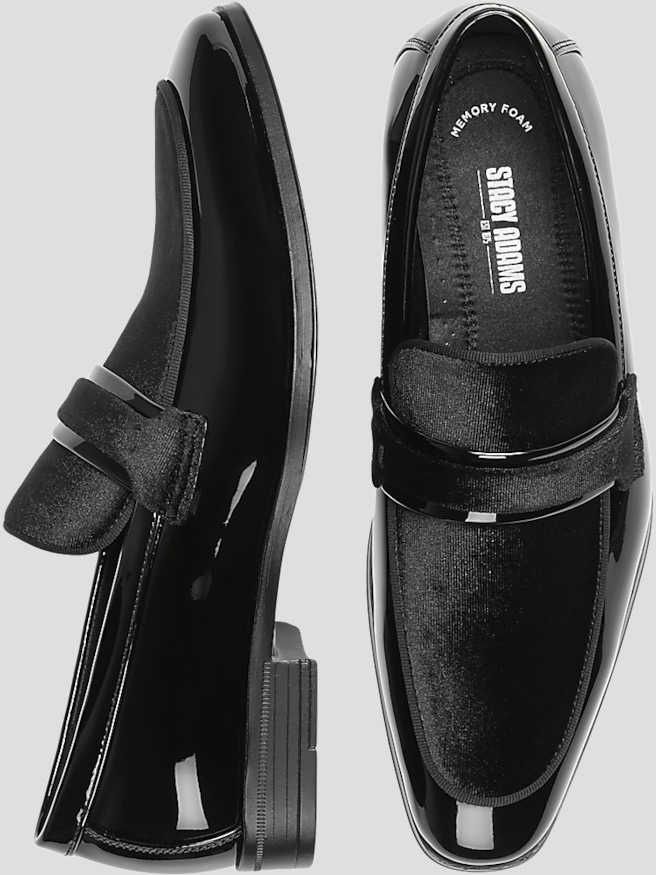
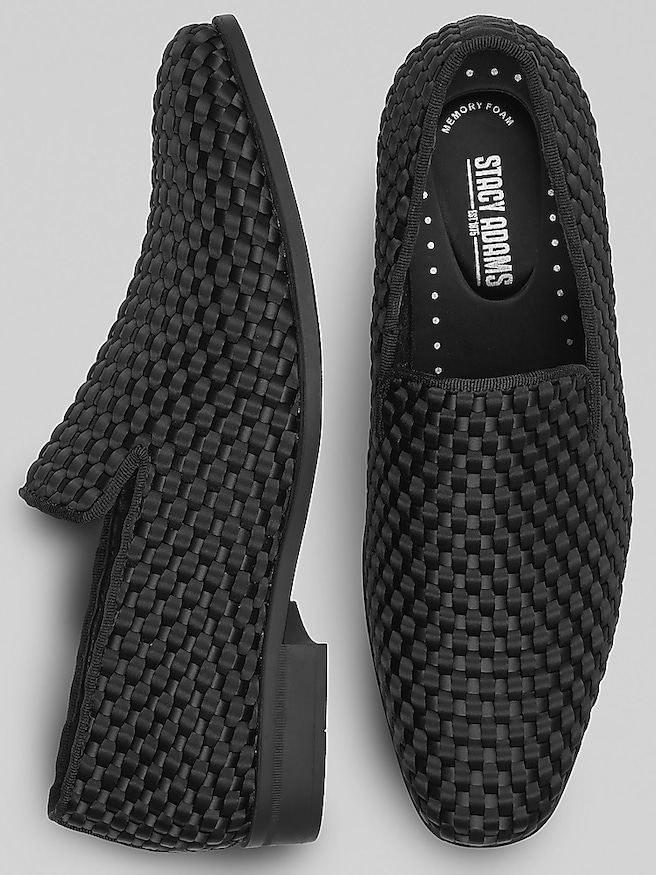
Black wide loafers bring together a clean, versatile color and a roomier fit, making them a practical foundation for polished everyday dressing. The slip-on shape keeps the look straightforward, while black works naturally with charcoal trousers, navy tailoring, gray chinos, and dark denim. A smooth leather upper with a restrained shine can look at home beneath suit trousers at a business dinner; a softer, more textured finish can give a blazer-and-chinos combination a relaxed edge. Details make a noticeable difference in the overall impression. A penny strap creates a familiar, understated profile, tassels add movement and character, and apron stitching gives the toe a more defined outline. A streamlined silhouette generally reads dressier than a broad, heavily stitched shape, though the finish, sole, and surrounding outfit all play a part. Within the broader category of Wide Width Loafers, black offers an especially useful starting point for a wardrobe built around pieces that work together without much effort. The same pair may complement tailored pants for a presentation and dark jeans for dinner, provided its construction and level of polish suit both settings. Trouser length matters, too: a clean hem that meets the top of the shoe lets the loafer’s shape show without excess fabric pooling over it. Fine-gauge black socks create a continuous line with dark trousers, while a subtle patterned sock can add personality without competing with the shoe. For occasions with a stated dress code, the required level of formality should lead the choice; a casual loafer does not automatically take the place of a formal dress shoe. The appeal is versatility with a clear point of view: an easy slip-on shape, a grounded black finish, and enough visual structure to make a simple outfit feel considered. That balance is useful for office routines, celebratory dinners, gallery visits, and other occasions that call for something more polished than sneakers.
A wide fit should provide usable space across the forefoot without leaving the entire shoe loose. For someone whose toes feel crowded in standard-width footwear, that extra room can help the foot settle more naturally instead of pressing against the sides of the upper. Width is not the same as length, however, and choosing a longer shoe simply to gain space can leave the heel shifting with each step. A well-proportioned loafer should hold the heel securely, allow the toes to rest without compression, and feel comfortably supported across the instep. Because there are no laces to adjust, the shape of the opening and the volume over the top of the foot deserve particular attention. A high instep may need more depth, while a lower-volume foot may feel loose even when the stated width seems appropriate. Trying shoes with the type of socks intended for regular wear gives a more useful sense of fit than switching between thick athletic socks and thin dress socks. Walking a few natural steps can reveal pressure across the ball of the foot, rubbing at the heel, or a tendency to grip with the toes to keep the shoe on. Leather may soften through wear, but persistent pinching is not a sensible starting point. Materials also influence the experience. Smooth leather offers a defined appearance and can develop creases and character over time; suede has a softer, matte surface that needs a different care routine. Synthetic uppers vary in flexibility and maintenance needs, so the material description matters more than appearance alone. Inside the shoe, lining, seams, cushioning, and arch contours affect how it feels through a full day. Underfoot, leather soles can create a sleek dress profile, while rubber soles may offer more flexibility and traction, depending on their construction and tread. Someone moving between meetings has different priorities from someone spending most of an event seated, and the best match accounts for both the desired appearance and the hours spent on foot.
Consistent care helps black wide loafers maintain the finish and shape that make them so useful. For smooth leather, removing surface dust with a soft brush or cloth before applying a suitable conditioner or polish keeps grit from being worked into the upper. Black polish can refresh color where appropriate, but it should be matched to the material and tested discreetly rather than treated as a universal solution. Suede needs a dedicated brush and compatible cleaning products instead of conventional leather cream. Whatever the upper material, following its care directions is more reliable than applying the same treatment to every pair. If a lining becomes damp through wear, allowing the shoes to dry naturally away from direct heat helps protect their shape and finish. Shoe trees can support the uppers between wears, and using a shoehorn reduces the need to crush the heel when slipping them on. Alternating footwear also gives the interior time to air out, an important habit for shoes worn through long workdays or extended celebrations. Durability depends on more than the thickness of the sole: secure stitching, neatly finished edges, a stable heel, and an upper that flexes comfortably all contribute to lasting usefulness. Some constructions allow professional sole or heel repairs, while others are better maintained through routine cleaning and careful storage. These considerations make black wide loafers a thoughtful gift for a father, partner, or graduate who already knows his preferred size and fit. Familiarity with the recipient’s usual footwear matters, since width labels alone cannot capture every difference in foot shape. A preference for cushioned interiors, understated details, or a dressier finish can be just as important as the number printed inside. For personal wardrobes and gifts alike, the strongest choice is one that feels natural in use: enough room where it is needed, a secure step, and a black finish that complements the clothes already hanging in the closet.