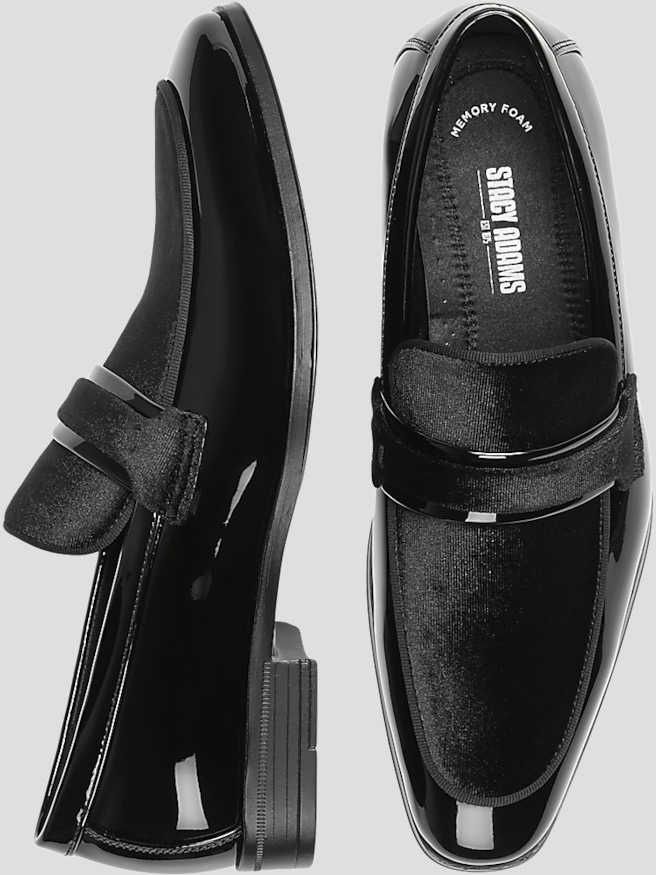
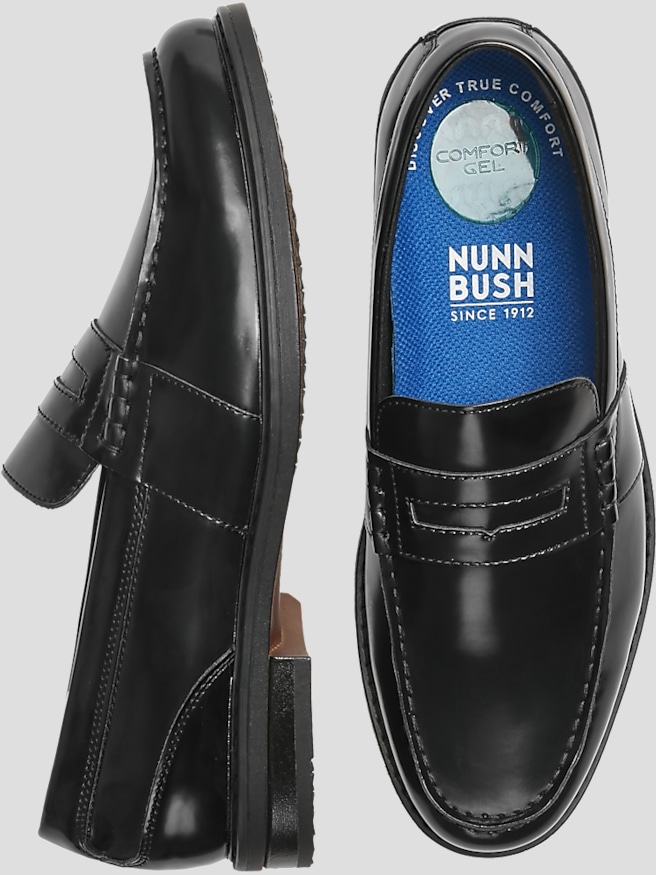
Men's wide loafers bring the easy, slip-on shape of a loafer to a fit designed with more room across the foot than a standard-width shoe. That added space is especially useful for men who feel pressure along the sides of regular loafers even when the length is correct. Depending on the shoe's shape and construction, a wider fit may also provide more room around the ball of the foot and through the forefoot, helping toes rest naturally rather than crowd together. Wide and extra-wide designations are not identical across manufacturers, so width labels are best considered alongside actual measurements and the shape of the shoe. A rounded or softly squared toe can feel more accommodating than a sharply tapered profile, but appearance alone does not establish how much usable room is inside. The right fit feels secure through the heel and comfortable across the widest part of the foot, with enough space ahead of the toes for natural movement. Because loafers do not have laces to adjust the upper, the fit across the instep matters as much as the width. A high instep may need more depth, while a lower instep can leave excess space beneath the vamp, the section covering the top of the foot. Elastic inserts can add flexibility, but they do not replace a properly proportioned fit. Slight heel movement can occur in a new loafer, particularly before the sole becomes more flexible; pronounced slipping or toes gripping to keep the shoe on suggest a mismatch. Buying a longer size solely to gain width can create that problem. Fit is best assessed on both feet, while standing and walking, with the socks intended for regular wear. For men who use orthotic inserts, adequate interior depth and a removable footbed, where the construction allows, are additional considerations. A wider shoe should offer breathing room without feeling loose, and a short break-in period should never be expected to resolve persistent pinching, numbness, or painful pressure.
The appeal of wide-width loafers extends beyond fit: their low profile and clean lines work across business, dress-casual, and relaxed settings. A smooth leather penny loafer has an understated appearance that pairs naturally with flat-front trousers, an Oxford shirt, and a sport coat. Tassel details bring a more expressive finish, while a plain vamp keeps the emphasis on the leather and silhouette. For a restrained foundation with charcoal trousers or darker denim, Black Wide Loafers offer an easy visual connection to a black belt and other dark leather accessories. Brown tones create a softer contrast with navy, gray, and earth-toned clothing, while suede adds a matte texture that suits chinos and less structured tailoring. The material affects more than appearance. Smooth leather can gradually soften at natural flex points and is generally straightforward to wipe clean and polish; suede has a velvety surface that calls for brushing rather than traditional shoe polish. Neither material should be expected to stretch enough to correct an unsuitable width. Interior construction also influences how a loafer feels through a full schedule. A smooth lining helps limit friction, cushioning can soften contact underfoot, and arch support depends on the shape and structure of the footbed rather than padding alone. Rubber outsoles often provide flexibility and cushioning, though grip varies with the tread and compound. Leather soles create a traditional dress profile but can feel slick on some surfaces, particularly before wear adds texture. A flexible forefoot can make walking feel more natural, while a stable heel helps the shoe sit securely. These distinctions matter when loafers will move between a commute, several hours at a desk, and an evening gathering. A balanced shape is useful for dressier outfits, though the event's dress code still takes priority; a loafer suited to an office or dinner is not automatically appropriate for every formal occasion. The overall effect should feel considered without making the footwear the focus of the outfit.
Regular care helps wide loafers retain both their appearance and the shape that makes them comfortable. Surface dust and grit are worth removing before they work into creases or collect around stitching. Smooth leather benefits from a soft cloth and a cleaner appropriate to its finish, followed by occasional conditioning when the leather needs it; too much conditioner can leave residue or change the surface. Polish can refresh color and add shine, but it should match the material and finish rather than serve as a universal treatment. Suede needs a dedicated brush and, for localized marks, a suede eraser used gently. Protective treatments should be tested in an inconspicuous area and used according to their directions, since some can darken or alter the texture. After wear, allowing shoes to air out away from direct heat helps the interior dry naturally. Properly sized shoe trees can support the upper and reduce deep creasing without forcing it outward, and a shoehorn helps protect the heel counter from being crushed during repeated slip-on wear. Rotating footwear gives each pair time to dry between outings, an especially useful habit for loafers worn throughout a long workday. Durability also depends on construction and use: reinforced stitching, secure sole attachment, and a resilient lining all contribute, while repair options vary by how the sole is attached. Scuffed uppers, uneven heel wear, or a worn outsole deserve attention before small issues become larger ones. For everyday use, wide loafers suit men who want a polished shoe without lace-up styling, including professionals moving between meetings, hosts greeting guests, and travelers balancing presentable footwear with easy removal. They can also make a thoughtful graduation, birthday, or milestone gift when the recipient's preferred size, width, and style are already known. Familiar measurements are more useful than guessing from another shoe's appearance. Whether worn with tailored trousers or neatly hemmed casual pants, a well-fitted wide loafer earns its place through comfortable proportions, versatile styling, and materials that respond well to consistent care.