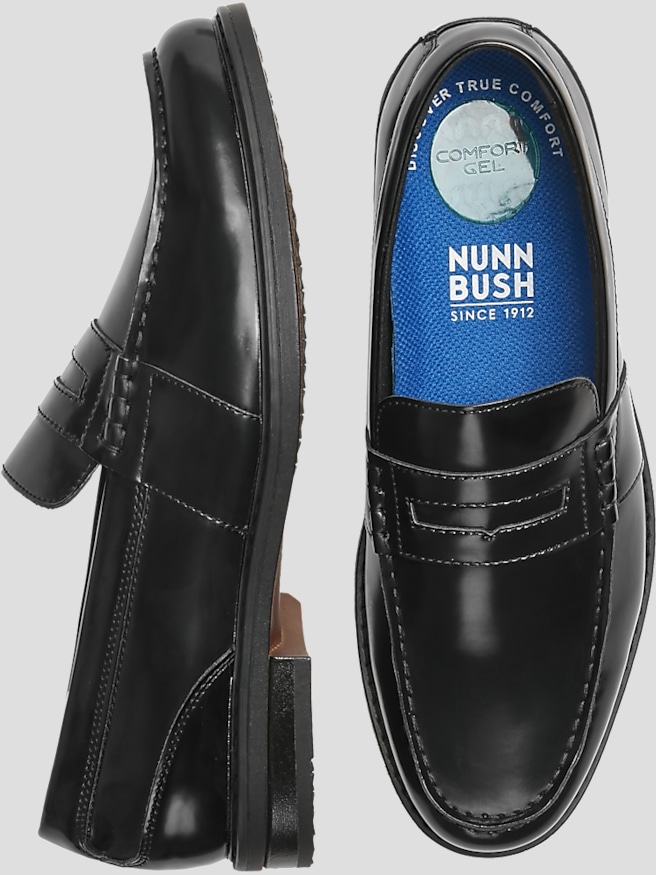
Wide width loafers are slip-on shoes made with more room across the foot than a standard-width version of the same size. That added width can make a meaningful difference for men whose feet feel squeezed at the ball or crowded along the little toe, without requiring a shoe that is too long. Their appeal is straightforward: the ease of a slip-on with a shape that looks at home beneath tailored trousers, chinos, or clean, dark denim. Penny loafers have a familiar strap across the upper and a restrained appearance that works for office days and dinner reservations alike. Tassel loafers bring a more decorative finish, while styles with metal detailing can add a sharper accent to an otherwise simple outfit. The shape matters as much as the decoration. A rounded or softly squared toe generally creates a different impression from an elongated, tapered profile, though the exterior shape alone cannot confirm how much space is inside. For dressier combinations, black wide loafers create a clean finish beneath charcoal trousers, gray tailoring, or a navy suit when the occasion allows loafers. Brown shades work naturally with tan chinos, blue trousers, and textured sport coats. Smooth leather tends to look more polished, while suede introduces a softer surface that suits relaxed tailoring and less formal plans. Neither material determines the formality of a shoe on its own; the sole, toe shape, ornamentation, and overall construction also contribute. A slim leather loafer can look quite dressy, whereas a substantial rubber sole gives the same basic silhouette a more casual presence. For men moving between a desk, a client lunch, and an evening gathering, that balance of polish and ease is often the strongest reason to choose loafers. They offer an alternative to lace-up shoes without making an outfit look unfinished, provided the fit is secure and the style suits the setting.
A comfortable wide-width fit depends on more than the label inside the shoe. Width describes part of the fit, but the last—the form used to shape the shoe—also influences toe room, heel shape, and space over the instep. Two loafers marked with the same size and width can feel noticeably different. The ball of the foot should sit near the widest part of the shoe, with enough room for the toes to rest naturally rather than overlap or press against the sides. Across the instep, the upper should feel comfortably close, not tight enough to leave persistent pressure marks. Because loafers have no laces to adjust, the relationship between the heel, instep, and forefoot is especially important. A broad forefoot paired with a narrow heel may need a different shape from a foot that is fuller throughout. Slight heel movement can occur with some new shoes, but repeated slipping, rubbing, or gripping with the toes suggests a poor match. Extra length is not a reliable substitute for width; it can shift the foot away from the shoe’s natural flex point and make the heel less secure. Fit is best assessed while standing and walking in the socks intended for everyday wear, rather than while seated for a quick try-on. The footbed and lining also affect the experience. Cushioning can soften the step, while a smooth lining helps reduce friction around the heel and sides. For someone who uses an orthotic, sufficient interior depth and a compatible removable footbed may matter as much as width. Leather can become more supple with wear, but a painful squeeze should not be treated as a normal break-in stage. Suede may feel flexible early on, while firmer leather can take longer to soften. Neither should require enduring numbness or pinching. The best-fitting wide width loafers hold the foot steadily without compressing it, leaving attention on the meeting, celebration, or walk ahead rather than on the shoes.
Materials and construction help determine how loafers feel after repeated wear and how well they retain their appearance. Smooth leather can develop attractive creasing and character, especially when surface dirt is removed regularly and an appropriate conditioner is used sparingly. Polish can refresh color and sheen on compatible finished leather, but suede needs a different approach: a suede brush and products intended for its textured surface help preserve the nap without coating it in cream or wax. Care directions for the particular material take priority, especially with specialty finishes. Soles deserve equal attention. Rubber soles often provide flexibility and grip, though traction depends on the tread and walking surface; leather soles offer a traditional look and can feel firmer underfoot. Neat stitching, secure sole attachment, and a lining that lies smoothly inside are useful details to examine when considering long-term wear. No construction makes a shoe maintenance-free. Allowing loafers to rest between wears gives interior moisture time to dissipate, and properly sized shoe trees can help maintain their shape without stretching them excessively. A shoehorn protects the heel counter from being crushed during entry, particularly with snug-fitting slip-ons. When shoes become damp, gentle air-drying away from direct heat is safer for the materials than a heater or hot dryer. That everyday attention supports the versatility that makes loafers useful in the first place. A polished pair can finish business-casual clothing, accompany tailored separates at a graduation, or bring a considered touch to a restaurant dinner. More relaxed versions work well with chinos and a knit polo for an afternoon gathering. For a father, partner, or recent graduate, wide width loafers can also be a thoughtful gift when the recipient’s usual size, width, and style preferences are known. Comfort is personal, so a familiar fit matters more than choosing solely by appearance. With the right proportions and appropriate care, loafers can become a dependable part of a wardrobe rather than shoes reserved for a single occasion.