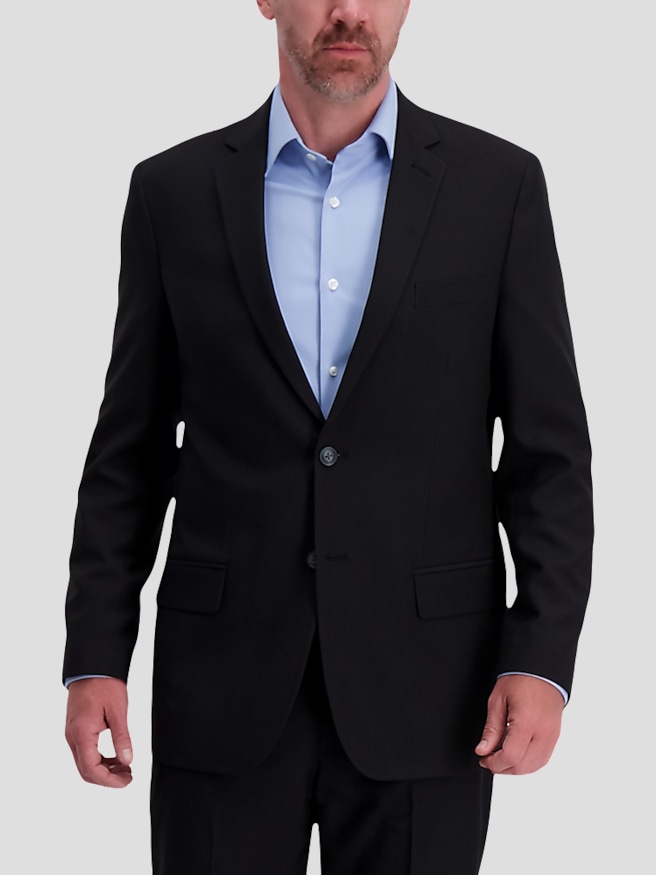
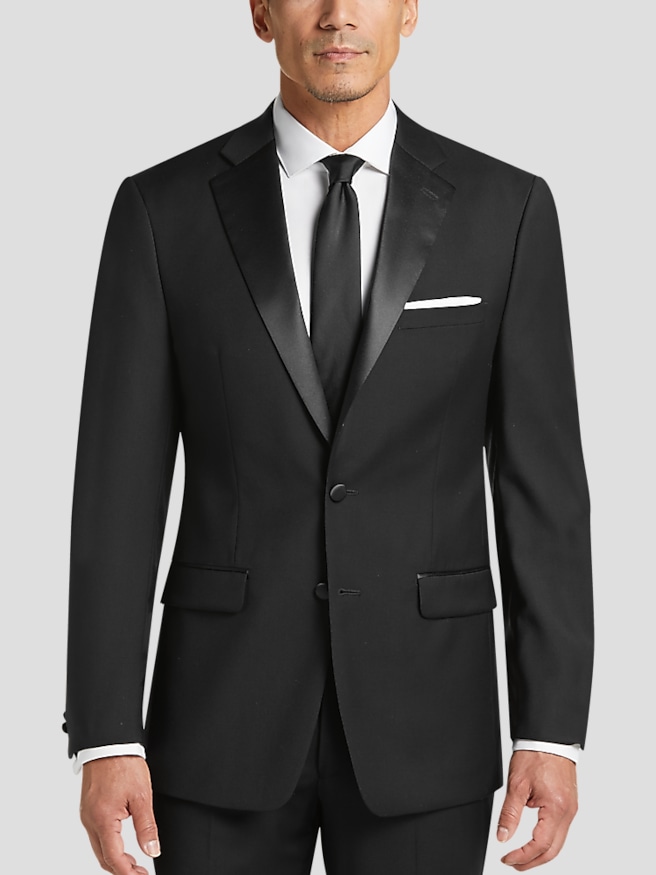
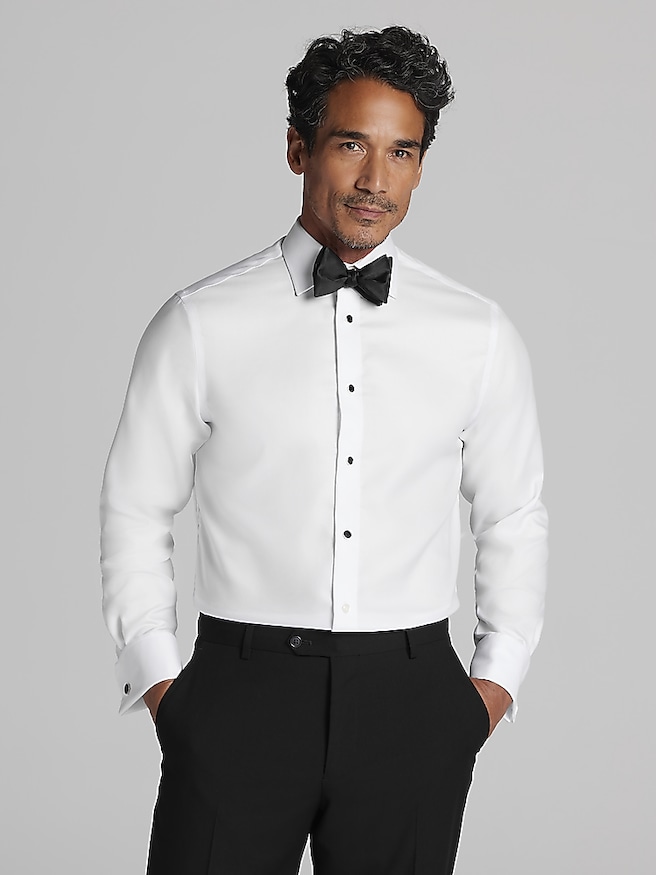
Black wedding outfits bring a clean, composed look to ceremonies, receptions, and wedding portraits, with the level of formality shaped by the clothing rather than the color alone. A black suit and a black tuxedo serve different purposes: a suit typically has lapels made from the same fabric as the jacket, while a tuxedo traditionally features satin or grosgrain lapel facings and coordinating formal details. For a traditional black-tie wedding, the standard is a tuxedo with a white formal shirt, a black bow tie, and appropriate formal footwear; a black suit is not an equivalent simply because it shares the same color. An all-black wedding dress code, by contrast, describes a color palette and does not automatically require a tuxedo. The invitation or the couple’s stated preferences establish whether that palette calls for formal eveningwear or allows a tailored suit with a black shirt. This distinction matters for grooms, groomsmen, family members, and guests who want their clothing to fit the occasion without looking out of place. At a wedding that calls for suits rather than black tie, a black suit with a white shirt creates a crisp contrast, while a black shirt and restrained accessories produce a more continuous, monochromatic look when the dress code permits it. Black wedding attire also works across a range of settings, from a courthouse ceremony to a ballroom reception, but the details should reflect the setting’s formality. Smooth fabrics, balanced proportions, and carefully maintained shoes give a simple outfit its finished appearance. For someone standing beside the couple or appearing in family photographs, a restrained black outfit can complement the wedding party without copying every detail of its clothing. The result is an outfit whose purpose is clear: respectful enough for the ceremony, comfortable enough for the reception, and considered enough to look cohesive in photographs taken throughout the celebration.
Fabric and fit determine how black wedding clothing looks after more than a few minutes in front of a mirror. Wool suiting is valued for its drape, resilience, and breathability, making it a practical choice for a jacket and trousers worn through a ceremony, dinner, and dancing. A fine, smooth weave gives black cloth a clean surface, while a subtle texture adds dimension without relying on a contrasting color. Wool blends can combine the character of wool with other performance qualities, although softness, stretch, and wrinkle resistance vary with the fabric’s composition and construction. A small amount of stretch may make sitting and moving easier, but it does not replace a well-proportioned cut. Jacket shoulders should sit close to the natural shoulder line without extending into a pronounced ridge, and the collar should rest against the shirt rather than pulling away at the neck. When the jacket is buttoned, the front should lie smoothly instead of forming tight creases around the closure. Slim fits create a closer outline; more generous cuts leave additional room through the chest, seat, and thighs. Neither needs to look loose or restrictive when the proportions suit the wearer. Trousers should remain comfortable when seated, with hems that meet the shoes cleanly rather than collecting in heavy folds. These details become especially noticeable in black clothing because a simple palette leaves the silhouette in focus. Shirts contribute to comfort as well: breathable cotton fabrics offer a familiar feel, while smoother weaves give the front of an outfit a more formal appearance. An opaque black shirt helps maintain an even look beneath strong lighting, and a white formal shirt creates the traditional contrast expected with a tuxedo. For anyone spending much of the celebration greeting guests, standing for photographs, or moving between tables, ease through the shoulders and waist matters as much as the appearance of the outfit while standing still. Good fit supports those ordinary movements without constant adjustments to cuffs, waistband, or jacket fronts.
Coordinating black wedding attire across a wedding party takes more than choosing the same general shade. Black fabrics can have different undertones, textures, and levels of sheen, so pieces intended to form a suit should come from a matching set rather than separate garments that only appear identical in isolation. This is particularly noticeable when the group stands together under bright lighting or in close-up photographs. For a coordinated party, Black Wedding Suits For Groom And Groomsmen offers a focused starting point for considering a shared look. Consistency in fabric, lapel shape, and shirt color creates unity, while individual tailoring allows each person to wear that look comfortably. A groom can be distinguished through a waistcoat, a different tie texture, or a boutonniere without disrupting the overall palette, provided those details suit the dress code. Accessories work best when they support the outfit’s level of formality: a long tie is a familiar companion to a suit, while a black bow tie belongs to traditional black-tie attire. Highly polished black lace-up shoes complement formal suiting, and patent leather or other appropriate formal shoes complete a classic tuxedo. A pocket square can add contrast where the color instructions allow it; an all-black requirement may call for that detail to remain black as well. Cuff links or a tie can also make a thoughtful gift for a groom or wedding-party member when the recipient’s shirt style and wedding plans are already known. Lasting wear depends on care as much as construction. Following each garment’s care label, brushing away surface dust, and addressing spills promptly help preserve the fabric’s appearance. A supportive hanger helps a jacket retain its shape, while airing garments before storage can reduce unnecessary cleaning. Black cloth readily shows lint and pale fibers, making a lint brush useful before photographs. With appropriate care and thoughtful accessories, black wedding clothing can remain useful for later formal celebrations and dress occasions whose requirements match the outfit.