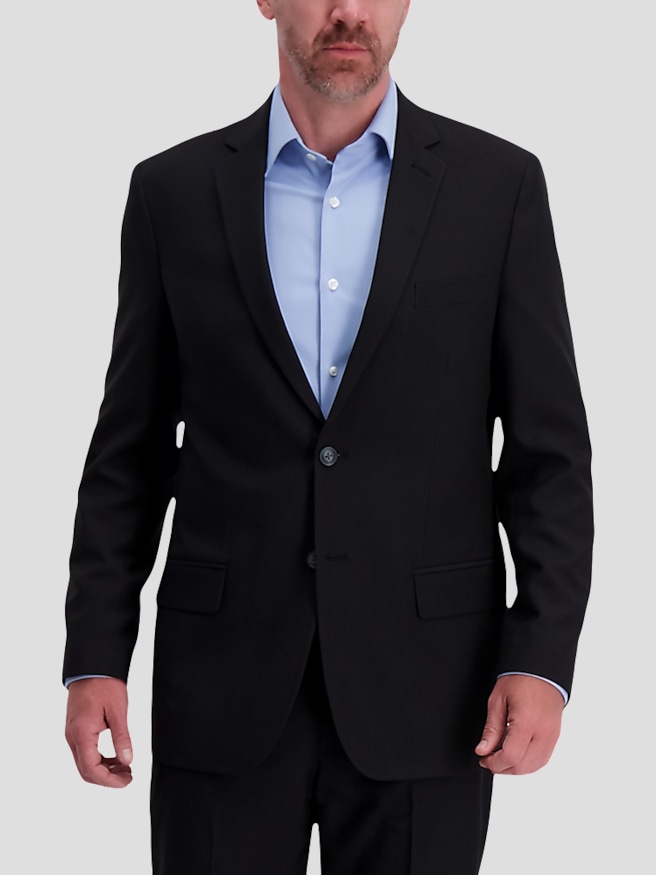
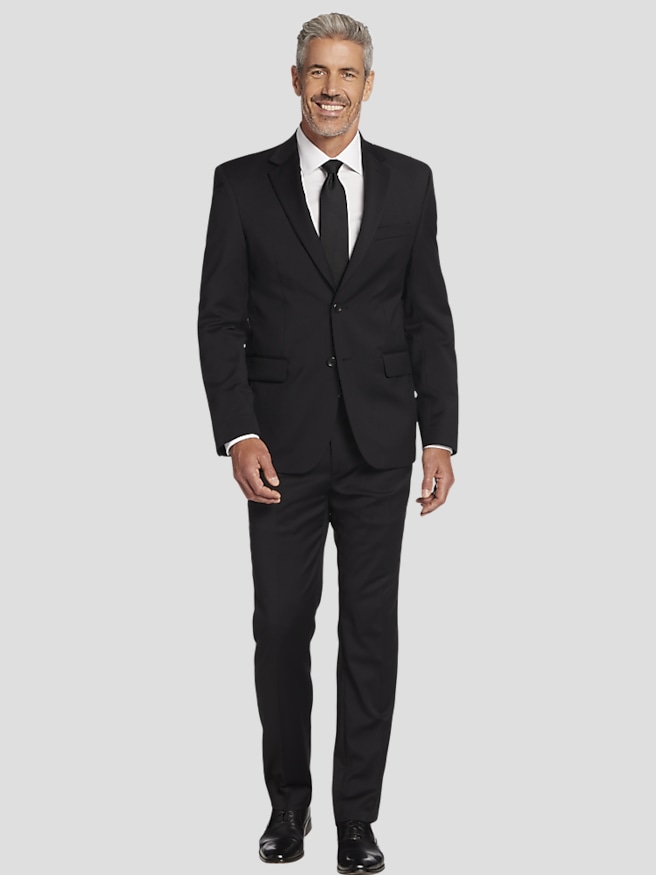
Black wedding suits bring a crisp, defined silhouette to wedding attire, with enough versatility for a groom, groomsman, father of the couple, or guest. The appeal starts with contrast: a dark jacket and matching trousers frame a dress shirt, draw attention to the face, and create a clean backdrop for a boutonnière or pocket square. A solid black suit generally works well for formal or cocktail wedding attire when the invitation and venue support that level of dress. Strict black tie traditionally calls for a tuxedo rather than a standard suit; the distinction includes details such as satin or grosgrain lapel facings and coordinating formal accessories. For a groom who prefers a suit, black offers a polished foundation without requiring those tuxedo details. A two-piece silhouette feels streamlined, while a matching vest adds depth and keeps the outfit looking considered when the jacket comes off at the reception. Notch lapels create a familiar, understated profile, and peak lapels give the chest and shoulders a more pronounced frame. Neither needs elaborate accessories to make an impression. In a wedding party, matching fabric and cut establish consistency, while a distinct tie, vest, or boutonnière can set the groom apart. Guests can keep the same color foundation quieter with a simple shirt-and-tie combination that respects the couple’s dress code. Black also works especially well against architectural settings, from a courthouse staircase to a ballroom entrance, where its uninterrupted lines look composed in photographs. The contrast associated with a Black And White Wedding Suit can be as straightforward as a black suit paired with a white shirt, creating definition without a busy pattern. For coordinated groups, using the same fabric matters as much as choosing the same color: variations in dye, weave, and surface sheen can become noticeable when everyone stands shoulder to shoulder.
Fabric and construction influence how a black wedding suit looks through the ceremony, seated dinner, and hours of conversation afterward. Worsted wool offers a smooth surface and balanced drape, helping a jacket fall cleanly rather than cling through the torso. Wool also has natural resilience, although its performance depends on the weave, weight, and construction. Wool blends can combine that familiar tailored appearance with other characteristics, while fabrics containing stretch fibers may allow added movement. Stretch content alone does not determine comfort; sufficient room through the shoulders, upper arms, seat, and thighs remains essential. A matte or subtly textured finish gives black a rich, restrained appearance, whereas a stronger sheen makes the outfit more conspicuous under direct lighting. Fine texture can add visual interest without competing with wedding flowers or patterned accessories. Fit supplies the rest of the effect. The shoulder line should sit close to the body’s natural shoulder, and the collar should rest against the shirt without a noticeable gap. When the jacket is fastened, the lapels should lie flat rather than bow outward, with enough ease to avoid an X-shaped pull across the front. A slim fit follows the body more closely; a classic fit generally leaves additional room through the chest and waist. The better choice is the silhouette that hangs cleanly and allows comfortable movement, not simply the narrowest cut. Someone standing through a ceremony and then sitting for dinner needs trousers that remain comfortable in both positions. A clean hem with little or a modest break keeps the lower half neat, while extra fabric bunching over the shoes can interrupt the line. Jacket length, sleeve length, and trouser balance work together, so tailoring is most effective when the full outfit is considered. The wedding shoes are especially useful at a fitting because their shape and height affect where the trouser hem falls. A small amount of visible shirt cuff adds a finishing detail without distracting from the suit.
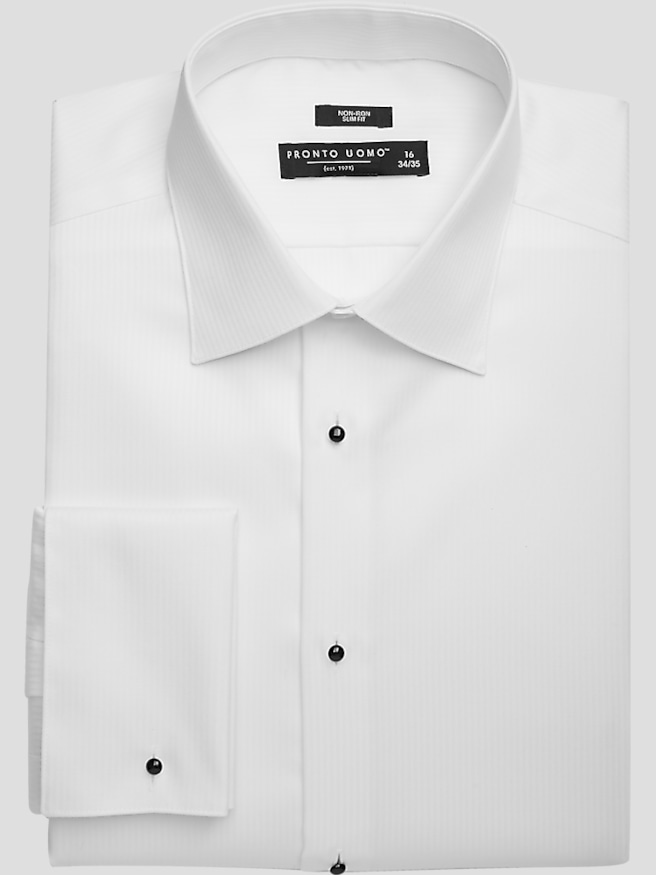
Accessories determine whether a black wedding suit feels restrained, celebratory, or more expressive. A crisp white dress shirt provides the clearest contrast, while a pale blue shirt can soften the effect when the occasion allows. A black tie creates a tonal combination, and a textured silver, muted burgundy, or deep blue tie introduces color without overwhelming the suit. A tie and pocket square do not need to match exactly; a shared tone or a simple white pocket square often looks more natural than an identical pattern repeated twice. For the groom, a boutonnière can connect the outfit to the flowers carried or displayed elsewhere in the celebration. Wedding party accessories can echo that detail without making every outfit indistinguishable. Black leather dress shoes maintain a continuous line beneath the trousers, with polished lace-ups offering a particularly formal finish. A belt, when worn, should coordinate with the shoes and sit neatly beneath the jacket; trousers designed for suspenders or side adjusters create another clean option. Beyond the wedding, a restrained black suit can remain useful for other dressy occasions, making thoughtful care important to its long-term appearance. The care label should govern cleaning, and professional cleaning is best reserved for when the garment needs it rather than treated as an automatic step after every wear. Airing the suit after use, gently brushing away surface dust, and addressing marks promptly according to the fabric’s care requirements help keep it presentable. A broad, supportive hanger helps preserve the jacket’s shoulder shape, while properly hung trousers are less likely to develop unwanted folds. During travel, a garment bag helps protect the fabric from abrasion and contact with other belongings. Excessive heat or pressure can leave shiny areas on dark cloth, so pressing requires particular care. Sound seams, a stable lining, and fabric that recovers well from ordinary movement all contribute to durability. With balanced proportions and considered upkeep, black wedding suits retain the sharp appearance that makes them a dependable choice for meaningful celebrations.